Essential · 1845
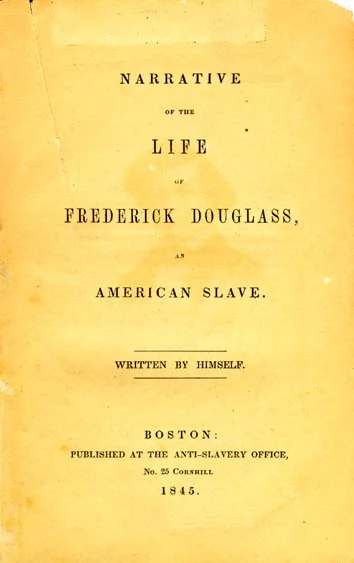
Narrative of the Life of Frederick Douglass, an American Slave
A firsthand account of slavery, literacy, resistance, and escape.
Explore book & sources → FBAGRIOTAmerican history & public policy
FBAGRIOT
Douglass published his account of enslavement and escape. William Lloyd Garrison and Wendell Phillips contributed introductory material. The book gave readers firsthand testimony that challenged defenders of slavery.
Maryland and Massachusetts · 1818 (approximate)
In his 1845 autobiography Douglass identifies Harriet Bailey, an enslaved woman in Maryland, as his mother.
Reviewed 2026-11-15 · Explore American history
Claim: Douglass’s 1845 autobiography supported his abolitionist work.
The NPS identifies publication of the Narrative and subsequent speaking and book distribution in Britain and Ireland.
Limits: Autobiographical testimony is situated evidence, not a complete account of every enslaved person’s experience.
Source: Frederick Douglass
National Park Service · 2024-03-02 · The Abolitionist Movement
In his 1845 autobiography Douglass identifies Harriet Bailey, an enslaved woman in Maryland, as his mother.
Source: Narrative of the Life of Frederick Douglass (1845), chapter I
Limits and unresolved questions: The existing primary-source PDF exceeded the research fetch size limit; an alternate university transcript timed out. The contribution was corroborated with NPS. The inherited maternal evidence was not independently re-inspected in this pass.
Reviewed 2026-11-15. Read the verification methodology
Verified FBA
Published contributor to Narrative of the Life of Frederick Douglass, an American Slave. Work spans Reconstruction, Slavery and emancipation.
In his 1845 autobiography Douglass identifies Harriet Bailey, an enslaved woman in Maryland, as his mother.
Retain and periodically review the cited public lineage evidence.
See cited biography; do not infer ancestry from appearance or genre
No claim that the author used or endorsed the contemporary FBA label.
Essential · 1845
A firsthand account of slavery, literacy, resistance, and escape.
Explore book & sources →Recommended · 1855
A fuller account of enslavement and life after escape.
Explore book & sources →Recommended · 1881
Connects abolition to the struggle over freedom after the Civil War.
Explore book & sources →