Pre-contact · Southwest
Chaco Canyon
Chaco flourished as a regional center of ancestral Pueblo life. Its roads and great houses point to connections across the Southwest.
 FBAGRIOTAmerican history & public policy
FBAGRIOT
Prefer a story to a long timeline?
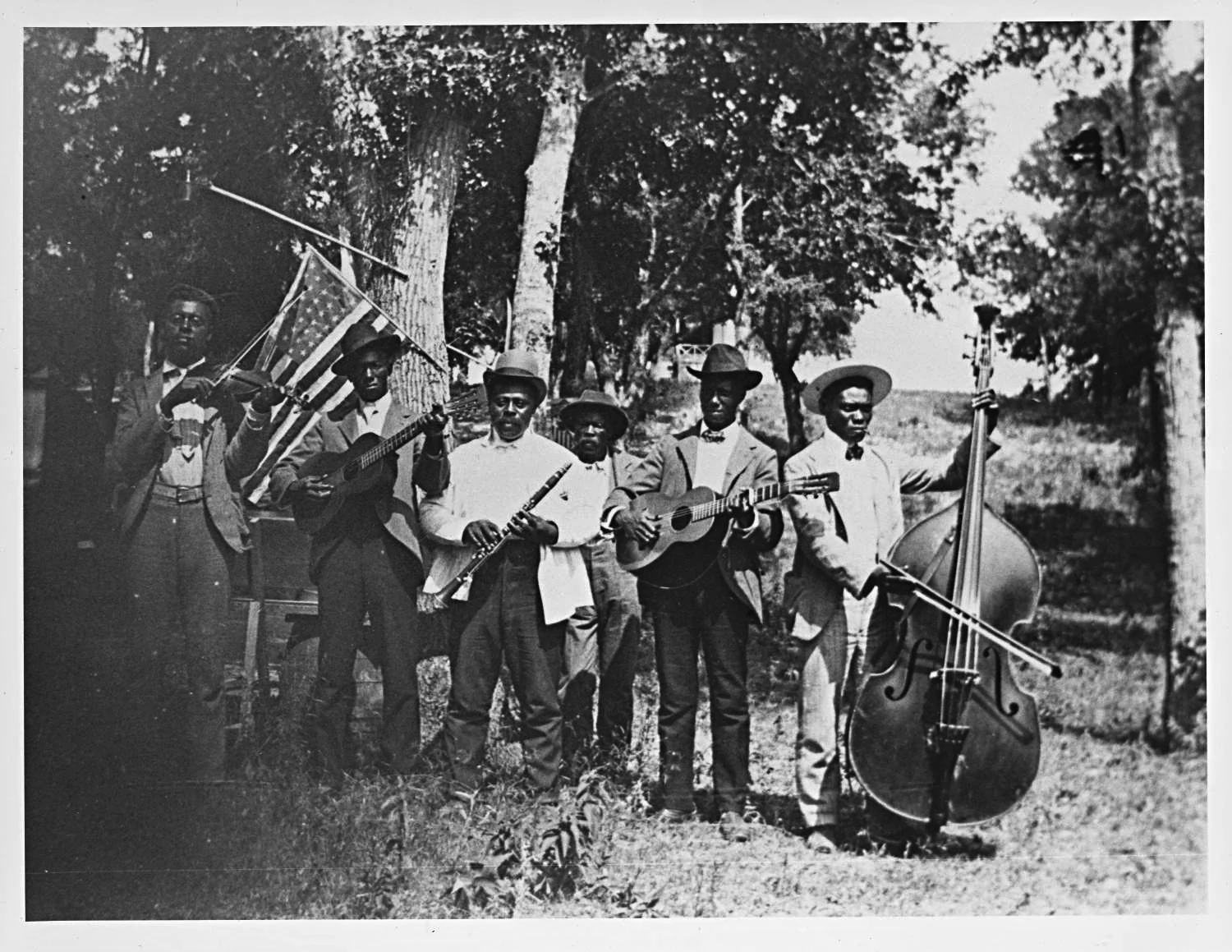
Explore the history through guided paths
Follow the national record from Indigenous societies before European contact through the present. Search people and events, or browse an era.
351 records
Pre-contact · Southwest
Chaco flourished as a regional center of ancestral Pueblo life. Its roads and great houses point to connections across the Southwest.
Connected story · Southwest
Ancestral places connect us to living nations, artists, languages and communities.
Story spans more than this starting point.
Colonial America · Virginia
A ship brought captive Africans to English Virginia. This episode belongs to a larger history of African presence and forced migration across the Americas.
Connected story · New England
Look beyond the familiar meal to diplomacy, conflict, survival and living communities.
Story spans more than this starting point.
Connected story · Florida
Near St. Augustine, people escaping slavery built a free Black community—and helped defend it.
Story spans more than this starting point.
Colonial America · New York
Hammon composed An Evening Thought in 1760 and published it in 1761. His religious poetry explored salvation and enslavement within the eighteenth-century Black Atlantic. He later addressed a poem to Phillis Wheatley Peters, linking two early Black literary voices. His surviving work needs to be read alongside the restrictions under which he remained enslaved.
Jupiter Hammon · FBA Verification PendingColonial America · Woburn, Lexington and Concord, Massachusetts
Woburn Public Library preserves a July6,1767 deed providing for Blackman’s eventual manumission from Nathan Wyman. Later historical research presented through Lexington’s commemoration records his Continental Army service and economic independence. The deed is a concrete starting point for reconstructing his transition from bondage, while the exact military chronology needs continued examination.
Pomp Blackman ·Colonial America · Framingham and Boston, Massachusetts; Atlantic ports
British soldiers killed Attucks and four other men in Boston in March 1770. Contemporary records identify a sailor at the head of a group approaching King Street; witnesses and later interpretations disagreed about responsibility for the confrontation. Abolitionist William Cooper Nell later made Attucks central to arguments that Black people belonged in the nation’s revolutionary history. His significance includes both his participation and the later struggle over public memory.
Crispus Attucks · FBA Verification PendingColonial America · Massachusetts and England
Wheatley’s poetry collection reached print in London in 1773 after barriers to colonial publication. Selina Hastings supported the publishing effort. Her poems drew on classical and biblical traditions and circulated across the Atlantic, challenging racist claims about Black intellectual capacities. Her literary achievement occurred while her freedom was controlled by the Wheatley household.
Phillis Wheatley Peters · Historical anchor · Editorial reviewRevolution and founding · Shirley, Massachusetts; Saratoga, New York; Valley Forge, Pennsylvania
Military rolls traced by the National Park Service document Coburn’s response to the Lexington alarm, service in Oliver Parker’s company at Bunker Hill, and later enlistment in the 15th Massachusetts Regiment. He died at Valley Forge on April 14, 1778. The service record is more secure than his racial identification: the original study explicitly says that his inclusion among soldiers of color relied on his first name alone.
Titus Coburn ·Revolution and founding · Cambridge, Massachusetts
The NPS study cites military rolls placing Stedman in Samuel Thatcher’s company during the April 19, 1775 alarm and in Continental service in William Shepard’s regiment in 1777. These records situate his service within the opening fighting and the Saratoga campaign. His burial is associated with Cambridge’s Old Burying Ground, but no known gravestone establishes a precise location.
Cato Stedman ·Revolution and founding · Medford and Boston, Massachusetts
The NPS study traces Tufts’s May 1775 enlistment in Oliver Parker’s company, Bunker Hill service, and subsequent artillery service in 1776. It also records his removal from service. The account’s footnote states that inclusion in the soldiers-of-color database depended on his given name alone. His military history can be retained without asserting an unsupported racial identity or genealogy.
Cato Tufts ·Revolution and founding · Lexington and Ashby, Massachusetts
Estabrook stood with John Parker’s militia on April 19, 1775 and was wounded. He recovered and served multiple later enlistments, including northern service and duty continuing into 1783. His record places an enslaved man within the opening battle for colonial independence and illustrates the difference between military participation and freedom from slavery. Dates and service periods are supported by the rolls cited in the NPS study.
Prince Estabrook · FBA Verification PendingRevolution and founding · Groton, Chelmsford, Dracut and Lowell, Massachusetts
Lew enlisted as a fifer in John Ford’s company in 1775, following earlier French and Indian War service. Muster and pay records cited by NPS trace subsequent service, including Ticonderoga in 1776. He also worked as a cooper and farmer. The musical abilities of Lew, his wife Dinah, and their children connect Revolutionary service to a broader family tradition of performance.
Barzillai Lew · Verified FBARevolution and founding · Boston, Massachusetts
After initiation into Freemasonry in March 1775, Hall and fourteen other free Black men organized African Lodge in July. The group obtained a charter from England in 1784. These collective institutions supported charitable activity, education and citizenship, laying foundations for the continuing Prince Hall Masonic tradition.
Prince Hall ·Revolution and founding · Framingham, Charlestown and Leicester, Massachusetts
Salem fought at Lexington and Concord and at Bunker Hill, then continued Continental Army service. Accounts credited him with shooting British officer John Pitcairn, but the NPS review records conflicting descriptions and multiple shooters; sole responsibility is not established here. His postwar work and poverty also show the limits of recognition and veteran support for Black revolutionary soldiers.
Peter Salem · FBA Verification PendingRevolution and founding · Andover and Charlestown, Massachusetts; Continental Army camps
Fourteen officers submitted a testimonial praising Poor’s conduct at Bunker Hill. He later served in campaigns and encampments including Saratoga and Valley Forge. The testimonial documents contemporary recognition, while later stories assigning him a particular fatal shot remain uncertain. His military service belongs alongside that of Peter Salem and other soldiers of color without collapsing their distinct records.
Salem Poor ·Revolution and founding · Virginia and Continental Army headquarters
Lee accompanied George Washington through the Revolutionary War, handling personal affairs, messages and papers. His labor helped sustain military headquarters while he remained enslaved. Later injuries limited his mobility and he worked as a shoemaker at Mount Vernon. His service illustrates work often omitted from accounts centered only on commanders; the evidence does not establish that his position made enslavement voluntary.
William Lee · Verified FBARevolution and founding · Pennsylvania
The Continental Congress adopted a declaration asserting equality and independence while slavery continued in the new states.
Revolution and founding · United States
Congress adopted the Articles in 1777; they took effect in 1781. The framework preserved substantial state power and gave each state one congressional vote. Conflicts over finance, trade and governing authority helped lead to the Constitutional Convention.
Revolution and founding · Boston, Massachusetts
Hall joined seven other men in petitioning Massachusetts lawmakers in 1777 to end enslavement. Their appeal applied natural-rights arguments to people excluded from revolutionary liberty and asked legislators to extend freedom to the petitioners and their children. The petition did not succeed that year; it documents organized Black political action within the struggle over the meaning of independence.
Prince Hall ·Revolution and founding · Portsmouth, New Hampshire
Whipple and other men of African descent petitioned New Hampshire’s legislature in 1779 to abolish slavery. Their argument applied the Revolution’s language of inherent rights to their own condition. The petition is preserved by the New Hampshire State Archives and interpreted by NPS. Whipple’s petitioning should be distinguished from later, disputed claims identifying him in the painting Washington Crossing the Delaware.
Prince Whipple ·Revolution and founding · Massachusetts and Sierra Leone
Paul Cuffe, his brother John, and other free Black petitioners challenged taxation without equal political rights in Massachusetts. Cuffe also built a maritime business with family and other partners. His later support for migration to Sierra Leone reflected his doubts about prospects for equality in the United States; it was one strategy within a wider, contested debate about Black freedom.
Paul Cuffe · Verified FBAConnected story · Northeast
Afro-Indigenous history begins with people and communities—not assumptions about how someone looks.
Story spans more than this starting point.
Revolution and founding · Connecticut; Canton, Massachusetts
Canton Public Library’s local history records Burr’s April 1781 Continental Army enlistment and subsequent life as a free veteran and pensioner. He later married Mary Wills Wilbor, whose family history connects this record with the Ponkapoag community. Later accounts assign Burr to earlier battles, but those assignments require corroboration and are not used here.
Seymour Burr ·Revolution and founding · New York and Massachusetts
Bett, later Elizabeth Freeman, and fellow plaintiff Brom sued John Ashley with lawyers Theodore Sedgwick and Tapping Reeve. The jury awarded their freedom on August 22, 1781. The case helped make slavery legally untenable under the Massachusetts constitution, alongside the Quock Walker cases. It did not itself free every enslaved person in the state. Freeman later worked as a midwife and acquired land.
Elizabeth Freeman · FBA Verification PendingRevolution and founding · New Kent County and Yorktown, Virginia
Lafayette worked as a double agent for the marquis de Lafayette, gathering information in British lines and carrying messages during the 1781 Virginia campaign. His service did not automatically end his enslavement. Repeated petitions and the marquis’s testimonial preceded legislative emancipation, completed in January 1787. The Library of Virginia identifies him as James Lafayette; later writers supplied the name James Armistead, which he did not use in known lifetime records.
James Lafayette ·Revolution and founding · Philadelphia and United States
Delegates signed the proposed Constitution on September 17, 1787. Ratification and implementation followed. The framework established federal institutions while accommodating slavery through representation, fugitive-service and importation provisions, leaving profound conflicts between liberty and bondage.
Revolution and founding · Delaware and Pennsylvania
Absalom Jones and Richard Allen organized the Free African Society to support their community through mutual aid. Jones later led the African Episcopal Church of St. Thomas and became an Episcopal priest in 1802. His work joined religious independence, education, and relief for people excluded from established institutions. In 1800 he also petitioned Congress against slavery and the slave trade.
Absalom Jones · Verified FBARevolution and founding · Maryland and District of Columbia
Banneker calculated astronomical tables for his almanac. George Ellicott lent books and instruments, and abolitionist publishers helped bring the work to readers. Banneker also assisted Andrew Ellicott’s federal district survey.
Benjamin Banneker · Verified FBARevolution and founding · Virginia, Paris, Philadelphia, and New York
James Hemings trained in French kitchens while enslaved by Thomas Jefferson and subsequently cooked in American households central to the new republic’s political life. Jefferson made his freedom conditional on teaching a replacement cook, his brother Peter. James completed that work and received manumission in 1796. The brothers’ skills and coerced labor belong in accounts of elite dining and culinary exchange; particular food-invention claims require separate evidence.
James Hemings · Verified FBARevolution and founding · Virginia, Philadelphia and New Hampshire
Judge escaped the Washington household in Philadelphia in May 1796 with help from free Black contacts and passage aboard a ship to New Hampshire. She resisted later attempts to return her to slavery. Her nineteenth-century interviews preserve her own explanation of seeking freedom and expose the conflict between national ideals and the president’s household practices, including rotating enslaved workers out of Pennsylvania to evade emancipation rules.
Ona Judge · Verified FBARevolution and founding · Boston and Danvers, Massachusetts
After serving in the Continental Army, Hall joined Boston’s campaigns against slavery and educational exclusion. In 1798 he made his Beacon Hill home available for a community-run African School after efforts to obtain a public school failed. Yellow fever interrupted the school, which later operated in other locations. His work with Prince Hall and other residents connects revolutionary military service with the continuing struggle for equal citizenship.
Primus Hall · Verified FBARevolution and founding · West Africa; Rhode Island, New York and Connecticut
Smith’s 1798 narrative describes capture in West Africa, slavery in New England, and efforts to purchase freedom and reunite his family. His account connects northern farming and commerce with the Atlantic slave trade. Contemporary advertisements and land records corroborate parts of the story. Historian John Wood Sweet notes that the often-repeated identification of Elisha Niles as the recorder lacks contemporary confirmation.
Venture Smith ·Revolution and founding · Mount Vernon, Virginia
As butler, Lee oversaw tableware and provisions, supervised cleaning, served meals and greeted visitors. The 1799 estate inventory identified a storage area under his direction. His managerial work sustained the household in which public hospitality and political relationships operated. He and his brother William Lee were separated from their mother and sisters through sale; professional responsibility did not remove the coercion of slavery.
Frank Lee · Verified FBAExpansion and antebellum · United States
The federal prohibition on importing enslaved people took effect in 1808. It did not abolish slavery or the domestic trade in enslaved people. Enforcement records reveal both government action and continuing trafficking.
Expansion and antebellum · Monticello and Charlottesville, Virginia
Peter Hemings trained as a cook under his brother James, served as Monticello’s principal cook from 1796 to 1809, and learned brewing in 1813. He then managed malting and brewing, with correspondence documenting the value assigned to his technical skill. After Jefferson’s death he obtained freedom through a relative’s purchase and worked as a tailor. His story connects skilled production, slavery, and the transfer of expertise.
Peter Hemings · Verified FBAExpansion and antebellum · Philadelphia and Delaware
Richard Allen and other Black Methodist congregations organized the African Methodist Episcopal denomination in Philadelphia in 1816, and Allen became its bishop. This grew from earlier organizing that included Absalom Jones, the Free African Society, and Bethel church. Independent institutions created space for worship, mutual aid and education amid exclusion from white-controlled churches.
Richard Allen · Verified FBAExpansion and antebellum · Philadelphia, Pennsylvania
Forten chaired an 1817 gathering at Richard Allen’s Bethel church that rejected the American Colonization Society’s project. Community participants shaped the outcome and helped change the position of leaders who had earlier entertained colonization. The episode demonstrates Black collective political deliberation and a claim to belonging in the United States, rather than presenting Forten’s views as fixed throughout his life.
James Forten · Verified FBAExpansion and antebellum · Plymouth, Massachusetts
Howe’s postwar testimony illustrates the enduring relationships formed during Revolutionary military service. In 1818, former comrade Joseph Wright sought his testimony to support a pension application despite the distance between New York and Plymouth. Howe affirmed Wright’s service. The surviving pension evidence connects military participation with the later struggle for veterans’ support; uncertain claims about specific battles are kept separate.
Cato Howe ·Expansion and antebellum · United States
Legislation balanced Maine’s admission without slavery with Missouri’s admission as a slave state and restricted slavery in part of the Louisiana territory. The settlement exposed sectional conflict over expansion; later legislation and the Dred Scott ruling overturned its restriction.
Expansion and antebellum · New York
Jennings received patent X3306 for dry scouring in 1821 while operating a tailoring and cleaning business. His entrepreneurship also supported abolitionist work. The record illustrates the opportunities available to some free Black inventors alongside legal barriers confronting enslaved inventors.
Thomas L. Jennings ·Expansion and antebellum · Wilmington, North Carolina; Boston and Atlantic circulation networks
Walker’s Appeal challenged slavery, racism and schemes to remove free Black Americans from the country. Its biblical and historical arguments called readers to resist oppression and claim citizenship. Sailors helped circulate copies into southern ports, prompting alarm among authorities. His writing emerged from Boston organizing, business and newspaper networks and influenced abolitionists including Frederick Douglass.
David Walker · Verified FBAExpansion and antebellum · Southeast
Congress authorized the president to negotiate removal treaties. Forced removals dispossessed Indigenous nations and opened land to white settlement.
Expansion and antebellum · Virginia; Rochester and Brighton, New York; Upper Canada
Steward became vice president of the 1830 Black national convention in Philadelphia after establishing a business and educational work in Rochester. He invested in the Wilberforce settlement in Upper Canada, seeking opportunities for Black families, but returned to New York after the project’s financial and administrative failures. His career demonstrates cross-border institution-building, ambition and setbacks rather than a simple narrative of inevitable progress.
Austin Steward · Verified FBAExpansion and antebellum · Philadelphia, Pennsylvania
Forten published antislavery writing under pen names including Ada and Magawisca. Her poem The Grave of the Slave was set to music by Francis Johnson, linking literary activism with Black musical performance. She also participated in the Philadelphia Female Anti-Slavery Society alongside her mother and sisters. Surviving sheet music documents the collaboration rather than assigning the song to a single creator.
Sarah Louisa Forten Purvis · Verified FBAExpansion and antebellum · Hartford, Connecticut; Boston, Massachusetts
Stewart used lectures and published essays to argue against slavery, racial exclusion and restrictions on Black women’s intellectual lives. Her 1832 Franklin Hall address challenged conventions that confined women’s political speech. David Walker influenced her thinking and William Lloyd Garrison published her work; her religious arguments made Black women’s education and political agency central to liberation.
Maria W. Stewart · FBA Verification PendingExpansion and antebellum · Wilmington, Delaware; Canada
A shoemaker and abolitionist in Wilmington, Shadd aided people escaping slavery and presided over the 1833 National Convention for the Improvement of Free People of Colour in the United States. His work connects local assistance networks with national Black political organization. His daughter Mary Ann Shadd Cary carried related educational and antislavery work into journalism and law.
Abraham Doras Shadd · Verified FBAExpansion and antebellum · Philadelphia and Byberry, Pennsylvania
Purvis helped establish the Philadelphia Female Anti-Slavery Society with her mother, sisters, Lucretia Mott, and other organizers in 1833. She supported abolition through fundraising and family assistance networks and later participated in the American Equal Rights Association and National Woman Suffrage Association. Her work shows how women sustained institutions linking the struggle against slavery to wider political rights.
Harriet Forten Purvis · Verified FBAExpansion and antebellum · Maryland
Blair obtained patents for planting machinery in 1834 and 1836. His designs mechanized parts of sowing, making him part of the broader transformation of agricultural labor and equipment. Surviving patent references document the inventions more clearly than his family history.
Henry Blair ·Expansion and antebellum · New York and Scotland
Smith completed medical study at the University of Glasgow after American schools excluded him. He returned to New York to practice medicine and became an abolitionist intellectual. Peter Williams Jr. helped support his education, and Smith worked in a network of Black reformers linking health, education, and emancipation.
James McCune Smith · Verified FBAConnected story · Southeast
Cherokee removal belongs inside the story of American transportation, land and slavery.
Story spans more than this starting point.
Expansion and antebellum · Maryland and Massachusetts
Douglass published his account of enslavement and escape. William Lloyd Garrison and Wendell Phillips contributed introductory material. The book gave readers firsthand testimony that challenged defenders of slavery.
Frederick Douglass · Verified FBAExpansion and antebellum · Virginia, Missouri, Illinois and Wisconsin Territory
In April 1846, Dred Scott and Harriet Robinson Scott filed separate freedom petitions in St. Louis, relying on their residence in places where slavery was prohibited. They pursued the family’s freedom through years of litigation with legal and community support. Later proceedings centered Dred’s name, but Harriet’s separate action must remain visible. The Supreme Court’s adverse decision in 1857 belongs alongside their sustained agency and the subsequent emancipation of the family.
Dred Scott · Verified FBAExpansion and antebellum · Virginia, Missouri, Illinois and Wisconsin Territory
In April 1846, Dred Scott and Harriet Robinson Scott filed separate freedom petitions in St. Louis, relying on their residence in places where slavery was prohibited. They pursued the family’s freedom through years of litigation with legal and community support. Later proceedings centered Dred’s name, but Harriet’s separate action must remain visible. The Supreme Court’s adverse decision in 1857 belongs alongside their sustained agency and the subsequent emancipation of the family.
Harriet Robinson Scott ·Expansion and antebellum · Louisiana and France
Rillieux developed a system that reused vapor through successive vacuum vessels to refine sugar with less fuel. Its industrial significance extended into other evaporation processes. His work took shape within a sugar economy dependent on enslaved labor and affected both production efficiency and exposure to boiling liquids.
Norbert Rillieux · Verified FBAExpansion and antebellum · United States
A package of laws attempted to settle disputes over slavery and territorial expansion. Its Fugitive Slave Act strengthened federal procedures for recovering alleged fugitives, exposing Black communities and their allies to greater coercion and sharpening resistance to slavery.
Expansion and antebellum · Ulster County, New York; Massachusetts; Michigan
Truth dictated the narrative of her life, published in 1850, and spoke at the National Women's Rights Convention in Worcester that year. Her public work connected opposition to slavery with women's rights. Her memoir was a collaborative publication; later renderings of her speeches should be distinguished from contemporary transcripts rather than treated as interchangeable quotations.
Sojourner Truth · Verified FBAExpansion and antebellum · Philadelphia, Pennsylvania
Forten worked for decades as an educator, including teaching at Sarah Mapps Douglass’s school and opening her own school in 1850. She helped draft the Philadelphia Female Anti-Slavery Society’s constitution and served as an officer. These educational and organizational contributions show the work required to sustain community learning and reform.
Margaretta Forten · Verified FBAConnected story · Borderlands
Follow communities whose pursuit of security crossed changing borders and complicated alliances.
Story spans more than this starting point.
Expansion and antebellum · Delaware, Canada and District of Columbia
Shadd Cary helped establish the Provincial Freeman in Canada with abolitionist Samuel Ringgold Ward. The newspaper argued for abolition, education, and Black self-determination across the U.S.–Canada border. Her work combined teaching, journalism, and later advocacy for women’s voting rights. The paper connected migrants and freedom seekers to debates over citizenship and opportunity.
Mary Ann Shadd Cary · Verified FBAExpansion and antebellum · Boston, Massachusetts
Nell organized petitions, boycotts, meetings and publicity against segregated schools over many years. The Massachusetts legislature prohibited public-school segregation in 1855, a collective victory involving families, activists and legislative allies. His historical writing also recovered Black revolutionary service, including Crispus Attucks, to strengthen claims to equal citizenship. His work connected research, community organization and changes in law.
William Cooper Nell · Verified FBAExpansion and antebellum · District of Columbia
Brown delivered an illustrated entomology lecture in 1855 and became a popular science educator. At the Smithsonian he prepared maps and illustrations, supported collections, and worked with Spencer Baird. His career shows how technical and intellectual labor could exceed the formal job titles available to Black staff.
Solomon Galleon Brown · Verified FBAExpansion and antebellum · United States
The Supreme Court denied Scott’s citizenship claim and rejected congressional authority to prohibit slavery in the territories. The ruling intensified conflict over slavery. The Scotts’ freedom litigation and the Court’s decision must be distinguished from the later constitutional changes that repudiated its citizenship doctrine.
Expansion and antebellum · Salem, Massachusetts; Britain; Italy
Remond lectured against American slavery in Britain and Ireland after arriving in 1859. Her transatlantic activism linked abolition, racial equality, and women’s rights, including her signature on the 1866 British women’s suffrage petition. She studied in Britain and subsequently trained in Italy, where she practiced medicine. Her career belongs alongside brother Charles Lenox Remond and the women who organized antislavery networks.
Sarah Parker Remond · Verified FBACivil War and emancipation · United States
Congress offered qualifying claimants access to surveyed federal land subject to residence and improvement requirements. The act linked federal policy to settlement and household property accumulation. Its benefits and barriers require attention to citizenship, resources and the prior dispossession of Indigenous lands.
Civil War and emancipation · South Carolina and District of Columbia
Smalls, other crew members, and their families escaped Confederate Charleston aboard the Planter. He later represented South Carolina in Congress during and after Reconstruction.
Robert Smalls · Verified FBACivil War and emancipation · Philadelphia, Pennsylvania; Salem, Massachusetts; Sea Islands, South Carolina
Forten arrived in the Sea Islands in October 1862 to teach formerly enslaved students. Her journals record classroom work, community life, and the uncertainties of wartime emancipation. Her contribution belongs alongside the students’ pursuit of education, local Black communities, and fellow teachers rather than a story in which outside educators alone created learning.
Charlotte Forten Grimké · Verified FBACivil War and emancipation · United States
The proclamation declared freedom in designated areas in rebellion and provided for Black military enlistment. Its reach depended on Union victory and enforcement.
Civil War and emancipation · Maryland and South Carolina
After guiding freedom seekers out of Maryland, Tubman used intelligence gathered through her Union scouting work to help guide a raid in South Carolina. Union troops under James Montgomery participated, and hundreds of people escaped enslavement.
Harriet Tubman · Verified FBACivil War and emancipation · Massachusetts and Virginia
Crumpler graduated from the New England Female Medical College in 1864. After the Civil War she treated formerly enslaved people in Richmond through the Freedmen’s Bureau and other organizations. Her 1883 medical book recorded practical advice for women and children.
Rebecca Lee Crumpler ·Civil War and emancipation · United States
Ratified December 6, the amendment prohibited slavery and involuntary servitude, with an exception for punishment after conviction.
Civil War and emancipation · Kent County, Maryland; New York; Washington, D.C.; Liberia
On February 12, 1865, Garnet delivered a sermon in the House chamber commemorating the House’s passage of the Thirteenth Amendment. He spoke to a worship service, not a legislative session or a joint address to Congress. The published discourse, introduced by James McCune Smith, records an abolitionist intervention at a moment when nationwide constitutional abolition still awaited ratification.
Henry Highland Garnet · Verified FBAConnected story · Texas
A Texas emancipation order became a tradition sustained by families and communities.
Story spans more than this starting point.
Connected story · Indian Territory
Cherokee Freedmen history connects the Civil War to a continuing struggle over citizenship.
Story spans more than this starting point.
Reconstruction · United States
The amendment established constitutional rules for citizenship and constrained state action through due process and equal protection.
Reconstruction · Virginia and District of Columbia
Keckly’s memoir recorded her life in slavery, skilled dressmaking, and relationship with Mary Lincoln. Her work also included philanthropy for newly freed people through the Contraband Relief Association. The memoir’s reception shows the constraints faced by a Black woman claiming authority as both a professional and an author.
Elizabeth Keckly · Verified FBAReconstruction · Kaskaskia, Illinois; Louisiana; Florida
Menard won a Louisiana congressional election in 1868, but the House did not seat him after a challenge. On February 27, 1869, he addressed the chamber to defend his claim. He also worked as a journalist and writer. His election and speech are distinct from actual service as a Member of Congress.
John Willis Menard · FBA Verification PendingReconstruction · United States
Ratified in 1870, the amendment prohibited federal and state governments from denying voting rights on account of race, color, or previous servitude and gave Congress enforcement power. Constitutional protection did not prevent subsequent violence and discriminatory barriers. Black political organizing and federal enforcement remained essential.
Reconstruction · North Carolina and Mississippi
Revels represented Mississippi in the U.S. Senate during Reconstruction, establishing a precedent for Black congressional representation.
Hiram Revels · Verified FBAReconstruction · Georgetown, South Carolina; Washington, D.C.
Rainey entered the House in December 1870 as the first African American to serve there. During Reconstruction he defended Black citizenship and federal action against racial violence. His service placed the experiences of formerly enslaved people within national legislative debate, alongside the work of other Black officeholders and the communities that elected them.
Joseph Hayne Rainey · Verified FBAReconstruction · Baltimore, Maryland; Philadelphia, Pennsylvania
From the Philadelphia home she occupied beginning in 1870, Harper continued a career spanning anti-slavery lectures, poetry, fiction, women's rights, and temperance reform. Her writing addressed African American experience, while her organizing pressed for education, employment opportunities, and political rights for Black women. This event marks the beginning of her documented residence, not the beginning of her activism.
Frances Ellen Watkins Harper · Verified FBAReconstruction · Georgia; Washington, D.C.
During his brief congressional service, Long became the first Black representative to speak on the House floor. He opposed easing restrictions on former Confederates while violence threatened Black citizens. His intervention records a Reconstruction argument that reconciliation should not take precedence over protecting the people emancipation had made citizens.
Jefferson Franklin Long ·Reconstruction · South Carolina; Washington, D.C.
De Large took part in House debates on the Ku Klux Klan Act of 1871 and the Amnesty Act of 1872, pressing colleagues to protect Black civil and political rights. His term ended in January 1873 after a contested election caused the House to declare the seat vacant. His documented service should be distinguished from the unresolved details of his early family history.
Robert Carlos De Large · FBA Verification PendingReconstruction · North Carolina; Selma, Alabama; Washington, D.C.
Turner served one House term, from 1871 to 1873, after helping establish a school for formerly enslaved people. He defended the work and aspirations of Black constituents and sought economic recovery in the postwar South. His career links community education, business, and national representation during Reconstruction.
Benjamin Sterling Turner ·Reconstruction · Burlington County, New Jersey; Philadelphia, Pennsylvania
Still's Underground Rail Road preserved accounts, correspondence, and identifying information from people escaping slavery and those assisting them. His work with the Pennsylvania Anti-Slavery Society's Vigilance Committee connected direct assistance to documentary preservation. The book records a network of freedom seekers and collaborators, and remains evidence of their individual choices and collective organizing.
William Still · Verified FBAReconstruction · Virginia; Gainesville, Florida; Washington, D.C.
Walls advocated a national education fund financed through public-land sales and argued for a stronger federal responsibility for education in a February 1872 House speech. The proposal illustrates Reconstruction debates about universal education, while his later disappointment over the omission of schools from the Civil Rights Act of 1875 shows the limits of the resulting legislation.
Josiah Thomas Walls · Verified FBAReconstruction · Louisiana; Ohio; Mississippi
Pinchback served as Louisiana’s acting governor during the political crisis of 1872–1873. His path included Union military service and Reconstruction organizing. He pursued disputed claims to seats in Congress but was never seated. His career illustrates the expansion of Black governmental authority and resistance to it; a surviving December 1872 commission documents his exercise of executive office.
Pinckney Benton Stewart Pinchback · Verified FBAReconstruction · Ohio; Shreveport, Louisiana
Peters taught in Ohio before becoming cashier of the Shreveport Freedman’s Bank branch in 1871 and serving in educational administration. He won election to the House in 1872 but died during Shreveport’s 1873 yellow-fever epidemic before taking office. His record joins Black education, financial institutions, and electoral politics while distinguishing election from congressional service.
Samuel Peters ·Reconstruction · Ontario and Michigan
McCoy patented a device that supplied oil to moving machinery during operation. While working on the Michigan Central Railroad, he developed practical improvements to locomotive lubrication and later received additional patents. Railroad engineers and manufacturers adopted automatic lubrication to reduce maintenance interruptions.
Elijah McCoy · Verified FBAReconstruction · Florence and Montgomery, Alabama; Buxton, Ontario; Washington, D.C.
Rapier served in the House from 1873 to 1875 and advocated Black civil rights during Reconstruction. His work also included political journalism through the Montgomery Republican Sentinel. His earlier education and residence in Canada place this career within cross-border Black networks as well as Alabama politics, while racial intimidation constrained his work in the South.
James Thomas Rapier · Verified FBAReconstruction · Charleston, South Carolina; Washington, D.C.
Ransier argued in 1874 for protections in schools, hotels, transportation, and jury service. He also criticized the exclusion of women’s rights from the congressional debate. His service followed work in South Carolina conventions and as lieutenant governor, connecting local political mobilization with national demands for equal citizenship.
Alonzo Jacob Ransier · Verified FBAReconstruction · South Carolina; Washington, D.C.; birthplace disputed
Elliott played a leading role in congressional debate on the legislation that became the Civil Rights Act of 1875. His arguments linked constitutional citizenship to the federal responsibility to protect Black Americans from exclusion and violence. His work with other legislators was substantial regardless of the unresolved contradictions in accounts of his birthplace and early education.
Robert Brown Elliott · FBA Verification PendingReconstruction · Virginia; Mississippi; Washington, D.C.
Bruce represented Mississippi in the Senate from 1875 to 1881, becoming the first African American senator to complete a full term. He advocated for Black veterans' pay and benefits and challenged the suppression of Black political rights. His record illustrates both Reconstruction's expansion of national representation and the violent restrictions that followed it.
Blanche Kelso Bruce · Verified FBAReconstruction · Virginia, now West Virginia; Ohio; South Carolina; Washington, D.C.
Cain was a prominent congressional advocate for the Civil Rights Act of 1875 and for federal investment in education. His work joined ministry, newspaper editing, and politics. Passage of the act was a collective legislative achievement; its protections and subsequent judicial destruction should be read alongside the speeches of Cain and his colleagues.
Richard Harvey Cain · Verified FBAReconstruction · Georgia; Alabama; Washington, D.C.
Haralson moved from service in Alabama’s legislature to one House term from 1875 to 1877. He worked to preserve Black political rights while challenging factional and self-interested behavior within the Republican Party. Violence and election fraud undermined his later campaigns. The date and circumstances of his death remain unresolved in the House biography.
Jeremiah Haralson ·Reconstruction · Warrenton, North Carolina; Alabama; Washington, D.C.
Hyman served in the House from 1875 to 1877, introducing constituent claims and a proposal for a lighthouse at Gull Rock. He also joined North Carolina colleagues seeking relief for Cherokee people forcibly expelled westward. His work demonstrates that congressional contribution includes petitions and constituent service even when a member leaves no floor speeches.
John Adams Hyman ·Reconstruction · Opelousas and New Orleans, Louisiana; Washington, D.C.
Nash, a Union veteran who lost part of a leg at Fort Blakely, served Louisiana in the House from 1875 to 1877. He submitted pension requests and constituent claims and sought a waterway survey to improve navigation. His limited legislative success must be read in the context of a Democratic-controlled House and violent instability in Louisiana.
Charles Edmund Nash · Verified FBAReconstruction · New York, Boston, and Rome
Edmonia Lewis carved The Death of Cleopatra in marble and exhibited it at Philadelphia’s 1876 Centennial Exhibition. Working in Rome, she represented the queen after death rather than merely anticipating it. The sculpture’s later rediscovery and conservation reveal how the survival of objects shapes art history. Her African American and Indigenous heritage should be described without converting broad ancestry accounts into an unsupported FBA designation.
Edmonia Lewis ·Reconstruction · Connecticut; Pennsylvania; Virginia; Ohio
Bouchet completed a Yale physics doctorate in 1876 after graduating with high undergraduate standing. Racist employment barriers limited university opportunities, and he devoted much of his career to science teaching at Philadelphia’s Institute for Colored Youth. His story links advanced physics training to the sustained work of building scientific education for Black students during Reconstruction and its aftermath.
Edward Alexander Bouchet · Verified FBAConnected story · Kansas and Detroit
Black families built towns and neighborhoods while laws and lending practices shaped the choices available.
Story spans more than this starting point.
Industrialization and Jim Crow · Massachusetts
Mahoney completed the nursing program at the New England Hospital for Women and Children in 1879. She practiced nursing and later participated in professional organizing that challenged racial exclusion. Her career links clinical care to the struggle over who could enter and advance in the profession.
Mary Eliza Mahoney · Verified FBAIndustrialization and Jim Crow · Virginia and Alabama
An educator trained at Hampton, Davidson worked with Booker T. Washington to develop Tuskegee Institute and raise support for its students and facilities.
Olivia Davidson Washington · Verified FBAIndustrialization and Jim Crow · Virginia and Alabama
Washington helped build Tuskegee into a major institution of Black education. Olivia Davidson helped build the school and raise funds. Washington emphasized vocational education, a strategy that prompted debate over political rights and educational opportunity.
Booker T. Washington · Verified FBAIndustrialization and Jim Crow · South Carolina, Alabama, and San Francisco
What Mrs. Fisher Knows About Old Southern Cooking was published in San Francisco by the Women’s Cooperative Printing Office in 1881. Its recipes preserved culinary knowledge across Fisher’s movement from the South to California. The Library of Congress documents her transition from enslaved cook to caterer and author. The book should be studied as evidence of food traditions and authorship without treating period health recipes as medical advice.
Abby Fisher ·Industrialization and Jim Crow · District of Columbia
Wormley patented shipboard rescue equipment using floats, rope, and a movable rod. His technical work accompanied a prominent hospitality business.
James Wormley · Verified FBAIndustrialization and Jim Crow · United States
Federal law suspended immigration of Chinese laborers and restricted naturalization. It institutionalized exclusion by nationality and race, making the history of Chinese communities essential to understanding American citizenship and immigration policy.
Industrialization and Jim Crow · Massachusetts and Connecticut
While working in the incandescent lighting industry associated with Hiram Maxim, Latimer patented a process for making carbon elements. He later worked as a patent investigator and expert witness for Edison’s interests, including overseas patent disputes.
Lewis Howard Latimer · Verified FBAIndustrialization and Jim Crow · New York; North Carolina; Washington, D.C.
O’Hara worked to restore civil-rights protections after the Supreme Court invalidated the Civil Rights Act of 1875. He sought equal treatment in public transportation and opposed the dilution of legislation meant to address discriminatory railroad practices. His congressional record belongs within the legal retreat from Reconstruction and the emergence of Jim Crow.
James Edward O'Hara · FBA Verification PendingIndustrialization and Jim Crow · Ohio and New York
Woods developed electrical inventions for railway communication, including induction telegraphy. His work addressed coordination and safety as rail networks expanded, alongside inventions by other engineers and manufacturers. His patents also covered additional electrical technologies.
Granville Tailer Woods · FBA Verification PendingIndustrialization and Jim Crow · Ohio, Wisconsin and Minnesota
Miles patented a mechanism coordinating elevator-car and shaft doors, addressing the danger of open shafts. His 1887 design used a belt, drums, and mechanical linkages. It improved one part of elevator operation; it did not constitute invention of the elevator itself.
Alexander Miles ·Connected story · Multiple regions
Allotment changed landholding—and created records that still shape family research.
Story spans more than this starting point.
Industrialization and Jim Crow · South Carolina and District of Columbia
Benjamin’s chair let seated users signal attendants. Her attempt to secure adoption by the House of Representatives failed; a different system was installed.
Miriam Elizabeth Benjamin ·Industrialization and Jim Crow · Henderson and Oxford, North Carolina; Washington, D.C.
Cheatham served two House terms beginning in 1889, supporting federal education appropriations and the economic interests of farmers. His public work also included teacher training and helping found an orphanage for Black children in Oxford. These efforts connect national policy advocacy with institutions serving children and rural communities.
Henry Plummer Cheatham · Verified FBAIndustrialization and Jim Crow · Virginia; Ohio; Washington, D.C.; Haiti
After challenging the reported outcome of Virginia's 1888 congressional election, Langston was seated in the House on September 23, 1890. His career combined law, education, diplomacy, and electoral politics. The contested election belongs within the history of Black voting rights under mounting disfranchisement, rather than a simple narrative of uninterrupted political progress.
John Mercer Langston · Verified FBAIndustrialization and Jim Crow · Raleigh, North Carolina; Washington, D.C.
Cooper's A Voice from the South argued for Black women's education and participation in public life. Her analysis connected racial exclusion, gender, and educational opportunity; her teaching and school leadership put educational commitments into institutional practice. Sources differ on her birth year: 1858 and 1859 both appear, so the displayed year is approximate pending reconciliation.
Anna Julia Cooper · Verified FBAIndustrialization and Jim Crow · North Carolina and Alabama
Taylor graduated from MIT in 1892 and joined Tuskegee, where he designed campus buildings and developed architectural and industrial instruction. Students and skilled workers supplied essential construction labor. His designs and teaching linked professional architecture to the institution-building ambitions of Booker T. Washington and the wider Black community.
Robert Robinson Taylor · Verified FBAIndustrialization and Jim Crow · Mississippi and Illinois
Wells worked with Frederick Douglass and other advocates on a pamphlet challenging the exclusion of Black Americans at the Chicago fair. The publication put American racial discrimination before visitors to an international exposition.
Ida B. Wells · Verified FBAIndustrialization and Jim Crow · Pennsylvania and France
Tanner portrayed intergenerational musical instruction with close attention to gesture and light. He studied with Thomas Eakins in Philadelphia and pursued much of his career in France, where his paintings reached French exhibition audiences.
Henry Ossawa Tanner · Verified FBAIndustrialization and Jim Crow · Sumter County, South Carolina; Washington, D.C.; Chicago, Illinois
Murray represented South Carolina in the 1890s and challenged laws suppressing Black political participation. His congressional work accompanied a career in farming, teaching, and invention. The state’s 1895 constitution restricted the electorate and helped defeat this political representation; his departure began a prolonged absence of Black South Carolinians from Congress.
George Washington Murray · Verified FBAIndustrialization and Jim Crow · Pennsylvania and Illinois
At Chicago’s Provident Hospital, Williams surgically repaired the sac surrounding a wounded patient’s heart in 1893. He also built institutions for medical care and professional training. The procedure is described precisely here rather than assigned an unqualified worldwide first in open-heart surgery.
Daniel Hale Williams · FBA Verification PendingIndustrialization and Jim Crow · United States
The Supreme Court upheld Louisiana’s segregated railway law, helping entrench legally enforced segregation.
Industrialization and Jim Crow · Missouri and Alabama
Carver joined Booker T. Washington’s Tuskegee Institute. His teaching and agricultural research expanded practical education for Black farmers, including soil improvement and alternatives to dependence on cotton.
George Washington Carver · Verified FBAIndustrialization and Jim Crow · Tennessee and District of Columbia
Terrell helped organize the National Association of Colored Women and served as its first president. The association connected Black women’s clubs working on education, suffrage, and community welfare.
Mary Church Terrell · Verified FBAIndustrialization and Jim Crow · Ohio
Dunbar wrote poetry in standard English as well as dialect. Critic William Dean Howells brought wider attention to his work. Dunbar also wrote fiction and lyrics, extending his work across literary and performance traditions.
Paul Laurence Dunbar · Verified FBAIndustrialization and Jim Crow · South Carolina; Pennsylvania; Washington, D.C.
After congressional and state legislative service, Miller helped establish the institution now known as South Carolina State University and became its first president in 1896. Its Black teaching staff expanded higher-education opportunities under segregation. His educational work followed unsuccessful efforts to prevent South Carolina’s 1895 constitution from stripping Black political rights.
Thomas Ezekiel Miller · FBA Verification PendingIndustrialization and Jim Crow · Brooklyn and Manhattan, New York
Garnet’s long public-school career included service as a principal. She helped organize Brooklyn’s Equal Suffrage League and later led suffrage work within the National Association of Colored Women, founded in 1896. Her seamstress shop provided organizing space. Her educational and political work linked economic independence, community institutions, and voting rights; her sister Susan Smith McKinney Steward pursued medicine.
Sarah Jane Smith Tompkins Garnet · Verified FBAIndustrialization and Jim Crow · Georgia and Little Rock, Arkansas
Carrie Still began teaching English at Little Rock’s Union School in 1896. Her later cultural organizing included staging Shakespeare performances to raise funds for books when Black residents were denied the city’s public library. The resulting collection supported a library at Capitol Hill High School. She was also the mother of composer William Grant Still; her educational and cultural work deserves a record of its own. The year 1896 marks the teaching appointment, not a verified date for the library campaign.
Carrie Lena Fambro Still Shepperson · Verified FBAIndustrialization and Jim Crow · North Carolina; Washington, D.C.; Philadelphia, Pennsylvania
White used two House terms to challenge disfranchisement and racial violence as Jim Crow expanded. His departure in 1901 left Congress without a Black member until Oscar De Priest’s election in 1928. His record also includes support for U.S. territorial expansion after the Spanish-American War, an important complication in evaluating his wider national-policy legacy.
George Henry White · Verified FBAConnected story · Hawaiʻi
Native Hawaiian voices belong at the center of the story of U.S. expansion into Hawaiʻi.
Story spans more than this starting point.
Industrialization and Jim Crow · Rutherford County and Nashville, Tennessee
House and Isaiah Dickerson built the National Ex-Slave Mutual Relief, Bounty and Pension Association, chartered in Tennessee in 1898. It combined local mutual aid with a national demand for compensation for slavery. House later worked with attorney Cornelius Jones on litigation over cotton-tax revenue. Federal prosecution and imprisonment curtailed her organizing; her movement remains central to the history of reparations claims made by people who had themselves endured slavery.
Callie Guy House · Verified FBAIndustrialization and Jim Crow · Great Barrington, Massachusetts; Philadelphia; Atlanta; international
Du Bois interviewed Philadelphia residents and combined empirical investigation with statistical analysis in The Philadelphia Negro. His later work joined scholarship, civil-rights organizing, editing The Crisis, and Pan-African advocacy. His historical writing challenged accounts that disparaged Black participation in Reconstruction. These contributions connect social science, publishing, and international political thought without treating all of his views as beyond criticism.
W. E. B. Du Bois · FBA Verification PendingIndustrialization and Jim Crow · Texas and Missouri
Joplin’s Maple Leaf Rag was published by the Stark Music Company of Sedalia in 1899. Its circulation helped establish composed piano ragtime as a major American musical form. Credit for the music belongs to Joplin, while John Stark’s publishing business helped distribute it.
Scott Joplin · Verified FBAIndustrialization and Jim Crow · Florida and New York
James Weldon Johnson wrote the words of Lift Every Voice and Sing, and his brother John Rosamond Johnson composed the music. Their collaboration grew from their Jacksonville educational and musical work. The song acquired an enduring place in Black civic life, while James later worked as a writer, diplomat, and civil rights organizer.
James Weldon Johnson · Verified FBAIndustrialization and Jim Crow · Florida and New York
John Rosamond Johnson supplied the music for words written by his brother James Weldon Johnson. His training at the New England Conservatory and work supervising music in Jacksonville schools informed a career spanning composition, teaching, and performance. The brothers’ distinct roles should be credited together.
John Rosamond Johnson · Verified FBAIndustrialization and Jim Crow · Virginia
Walker worked through the Independent Order of St. Luke to establish a bank in Richmond. Its services gave Black customers access to savings and credit in an era of exclusion.
Maggie Lena Walker · Verified FBAIndustrialization and Jim Crow · Georgia and Illinois
Abbott launched the Chicago Defender in May 1905. Henrietta Lee provided space in her home as the struggling newspaper developed. Its reporting challenged racial violence and discrimination; in 1917 it promoted migration from the South through its Great Northern Drive. Editors, distributors, and readers helped build the paper’s national influence.
Robert Sengstacke Abbott · Verified FBAIndustrialization and Jim Crow · Virginia, Michigan and District of Columbia
Pelham’s apparatus mechanized attaching statistical slips during census processing. He later helped document the Great Migration using census data.
Robert Pelham Jr. ·Industrialization and Jim Crow · Georgia, Alabama and the southern United States
Campbell brought practical farming demonstrations to rural communities through Tuskegee’s movable school, supported by Booker T. Washington, George Washington Carver, and USDA. He later supervised Black extension personnel across several southern states. His 1944 African study mission extended his engagement with rural education beyond the United States.
Thomas Monroe Campbell ·Industrialization and Jim Crow · Tennessee and the southeastern United States
Moses McKissack III designed Fisk University’s Carnegie Library in 1908. His architectural practice grew from construction skills learned in his family. In 1922 he formed a partnership with his brother Calvin, joining design, education, housing and institutional commissions within a Black-owned professional firm.
Moses McKissack III · Verified FBAGreat Migration and world wars · United States
Millions of Black Americans moved from the South, transforming labor markets, politics, and culture across the country over several decades.
Industrialization and Jim Crow · Louisiana; Indianapolis, Indiana
Sarah Breedlove, known as Madam C.J. Walker, developed a hair-care manufacturing, training, and sales business. Her Indianapolis establishment provided a base for production and beauty education. A network of women agents sold products and built businesses of their own. Walker had earlier worked with Annie Turnbo Malone’s products; her achievement belongs within a wider history of Black women’s entrepreneurship, philanthropy, and hair care.
Madam C.J. Walker · Verified FBAIndustrialization and Jim Crow · Alabama, Mississippi and Tennessee
Handy brought blues material into commercial sheet-music circulation through The Memphis Blues and subsequent compositions. His work drew on musical practices he encountered in the South and on touring performance circuits. His publishing and arranging helped popularize the blues, while the form itself had community roots preceding his publications.
W. C. Handy · Verified FBAIndustrialization and Jim Crow · Louisiana; Mississippi; Washington, D.C.; Chicago, Illinois
Lynch published The Facts of Reconstruction in 1913 to challenge interpretations that portrayed Black political participation as inherently incompetent. He drew on his own service as a Mississippi legislator and U.S. representative. His writing belongs in the history of historical scholarship as well as politics, and should be evaluated as an informed participant’s account with its own perspective.
John Roy Lynch · Verified FBAIndustrialization and Jim Crow · Virginia and District of Columbia
Woodson joined William B. Hartgrove, George Cleveland Hall, Alexander L. Jackson, and James E. Stamps to establish the Association for the Study of Negro Life and History. Through its journal, publications, and educational work, the organization built an institutional base for studying Black American history. Woodson introduced Negro History Week in 1926. Mary McLeod Bethune later led the association.
Carter G. Woodson · Verified FBAIndustrialization and Jim Crow · Washington and Hawaii
At the College of Hawaii, Ball developed chemical methods that made chaulmoogra compounds suitable for injection against Hansen’s disease. Physician Harry T. Hollmann collaborated with her and later credited her method. After her death, Arthur Dean continued the work while initially failing to acknowledge her contribution.
Alice Augusta Ball · FBA Verification PendingGreat Migration and world wars · Kentucky and Ohio
Morgan developed a breathing hood and used it during a rescue beneath Lake Erie in 1916. His work addressed the hazards faced by firefighters and tunnel workers. He later patented a traffic signal with an intermediate stop position. These were specific improvements within safety technologies developed by many inventors.
Garrett Augustus Morgan · Verified FBAGreat Migration and world wars · Kentucky, Illinois and historically Black universities
Brady completed doctoral research on oxygen chemistry under Clarence Derick at Illinois in 1916. He subsequently developed chemistry education at Tuskegee, Howard, Fisk, and Tougaloo. His importance includes both research training and the sustained institutional work that expanded opportunities for later scientists.
St. Elmo Brady ·Great Migration and world wars · Virginia and New York
Thoms added public-health instruction to Lincoln School for Nurses in 1917 while serving as an administrator and educator. As president of the National Association of Colored Graduate Nurses, she campaigned for Black nurses’ inclusion in the Red Cross and Army Nurse Corps. Her later history of Black nursing preserved practitioners’ work as part of the profession’s own historical record.
Adah Belle Samuels Thoms ·Great Migration and world wars · Illinois; St. Louis, Missouri
Annie Turnbo Malone developed hair-care products and a training and distribution system employing Black women as sales agents and beauty workers. The Poro College complex opened in St. Louis in 1918, combining business training with space for civic and community activities. Malone’s enterprise shows how beauty culture could sustain education, employment, and institutions amid racial exclusion.
Annie Turnbo Malone · Verified FBAGreat Migration and world wars · Illinois, South Dakota and New York
Micheaux moved from homesteading and writing into filmmaking with The Homesteader. His independent production and distribution created work for Black performers and crews and brought complex Black characters to audiences facing exclusion and stereotyping in mainstream cinema. The Academy Museum documents his role in more than forty films.
Oscar Micheaux · Verified FBAGreat Migration and world wars · United States
Ratified in 1920, the amendment prohibited denying voting rights on account of sex. Generations of organizing helped secure it. Its text addressed sex discrimination; it did not remove the separate racial restrictions and intimidation that obstructed many Black women’s voting rights.
Great Migration and world wars · Texas; Chicago; Negro League baseball circuits
Andrew Rube Foster combined pitching, team management, and organizational leadership. In 1920 he helped establish the Negro National League, creating a structure for Black professional clubs operating under baseball’s color barrier. His Chicago American Giants connected on-field strategy with business management. The league depended on other owners, players, and local audiences, while Foster supplied sustained coordination and leadership.
Rube Foster · Verified FBAGreat Migration and world wars · Philadelphia, Paris, and Massachusetts
Commissioned for the 1921 America’s Making exposition, Ethiopia presented a figure emerging from mummy-like bindings. Fuller used allegory to connect Black cultural renewal with African antiquity. W. E. B. Du Bois and James Weldon Johnson helped commission the work. It belongs alongside Fuller’s earlier historical tableaux as an intervention in who represents American history.
Meta Vaux Warrick Fuller · Verified FBAGreat Migration and world wars · Tennessee and the southeastern United States
Calvin McKissack brought architectural practice and teaching experience to the partnership established with his brother Moses in 1922. He had taught architectural drawing at Tennessee Agricultural and Industrial State Normal School and directed industrial arts at Pearl High School. The brothers’ firm later received a 1942 contract for the Tuskegee air base. Individual and firm responsibilities should be distinguished in project-specific records.
Calvin Lunsford McKissack · Verified FBAGreat Migration and world wars · Memphis and Chicago
The Library of Congress preserves Lil Hardin’s 1923 copyright deposits for My Sweet Lov-in Man, with Walter Melrose, and Tears, with Louis Armstrong. A pianist, composer, arranger and bandleader, she was an active creator in early jazz and later led her own ensembles. Her musical authorship and career support for Louis Armstrong are distinct contributions that should both be credited.
Lil Hardin Armstrong · Verified FBAGreat Migration and world wars · Tennessee and national touring circuits
Bessie Smith’s 1923 recording of Down-hearted Blues brought her voice to a national recording audience. Alberta Hunter and Lovie Austin wrote the song. Smith developed her performance practice in Black touring and vaudeville circuits and later recorded with musicians including Louis Armstrong. Her contribution lies in interpretation and performance as well as the commercial reach of her recordings.
Bessie Smith ·Great Migration and world wars · Virginia, District of Columbia and Massachusetts
Young published research on paramecium in Science in 1924 and subsequently worked with Ernest Everett Just at the Marine Biological Laboratory. Her career combined laboratory investigation with teaching despite institutional barriers to Black women’s scientific advancement.
Roger Arliner Young ·Great Migration and world wars · Louisiana, Illinois and New York
Armstrong’s Hot Five and Hot Seven sessions of 1925–1928 helped establish improvised solo performance as a central force in jazz. The records were ensemble achievements, with collaborators including pianist Lil Hardin Armstrong. Their preservation in the National Recording Registry recognizes their lasting influence on musical performance.
Louis Armstrong · Verified FBAGreat Migration and world wars · St. Louis, Missouri; Paris, France
Josephine Baker’s appearance in La Revue Nègre in Paris in 1925 helped establish an international performing career. Her dancing and comic stage presence emerged from Black American touring and theatrical traditions. Baker worked within a company of performers, and her reception also reflected European racial stereotypes. She later supported the French Resistance and opposed racial segregation, linking performance celebrity with political action.
Josephine Baker ·Great Migration and world wars · Indiana; West Virginia; Washington, D.C.; Montreal
Cox earned a mathematics doctorate at Cornell in 1925, working with William Lloyd Garrison Williams, including study at McGill. He then revised mathematics and physics curricula at the West Virginia Colored Institute and spent much of his career at Howard. His work links mathematical research, international academic exchange, and the institutions that trained generations of Black students despite segregated professional opportunities.
Elbert Frank Cox ·Great Migration and world wars · Missouri, Kansas, Harlem, and international travel
The Weary Blues brought blues rhythm, Black urban life, and poetic experiment into a 1926 collection. Hughes’s writing extended across poetry, fiction, drama, journalism, and translation. His work belongs within the Harlem Renaissance and the wider networks of Black publishers, performers, and readers that sustained it.
Langston Hughes · Verified FBAGreat Migration and world wars · Alabama and Florida
Hurston’s interviews with Oluale Kossola, also known as Cudjo Lewis, became the basis of Barracoon, published posthumously in 2018. Her research followed work supported by Carter G. Woodson and Elsie Clews Parsons, on Franz Boas’s recommendation. The interviews preserved an individual account of captivity, forced Atlantic passage, enslavement, and life in Africatown. NPS also documents plagiarism in her earlier 1927 article, a limitation that must accompany discussion of that article.
Zora Neale Hurston · Verified FBADepression and New Deal · Washington, D.C.; Howard University; United States
Appointed vice-dean of Howard’s law school in 1929, Houston helped transform it into a rigorous training ground for civil rights lawyers. His students and colleagues included Thurgood Marshall and Oliver Hill. His later NAACP work connected legal research, litigation, and institutional development; the campaign against segregation was sustained by a network of lawyers, plaintiffs, and communities rather than a single attorney.
Charles Hamilton Houston · Verified FBADepression and New Deal · Mississippi, Arkansas and California
Still’s Afro-American Symphony brought blues-inflected musical language into a large orchestral work. His career connected concert composition with professional arranging and performance, including work associated with W. C. Handy. The symphony helped expand the place of Black composers in American orchestral programming.
William Grant Still · Verified FBADepression and New Deal · West Virginia
King combined teaching with graduate study, earning her master’s degree in 1931. At West Virginia State she improved laboratory facilities and taught chemistry and mathematics. Katherine Johnson was among the students influenced by her instruction, illustrating the importance of educators to later scientific achievements.
Angie Lena Turner King · FBA Verification PendingDepression and New Deal · Illinois
Hall developed chemical methods for preserving foods while managing flavor and spoilage. At Griffith Laboratories, his work encompassed curing mixtures and the microbial contamination of spices. These applied-research methods helped industrial food processing and stimulated related uses in other product industries.
Lloyd Augustus Hall ·Depression and New Deal · Arkansas and Chicago, Illinois
The Chicago Symphony Orchestra premiered Florence Price’s Symphony No. 1 on June 15, 1933, conducted by Frederick Stock. Chicago Music Association leader Maude Roberts George raised funds for the concert. Price’s work brought her own treatment of musical traditions into symphonic form. The event’s significance includes the composition, performers, and Black cultural organizers who enabled its presentation.
Florence Price · Verified FBADepression and New Deal · Ohio and Washington, D.C.
After research on Mycobacterium tuberculosis at Ohio State, Moore joined Howard’s medical faculty in 1933 under Hildrus Poindexter. She organized laboratory instruction for medical, dental, and nursing students, later chaired the department, and developed research involving blood types, tuberculosis, oral health, and gut microorganisms. Her collaboration with Madison Briscoe and demanding laboratory teaching helped sustain a research and training institution during segregation.
Ruth Ella Moore ·Depression and New Deal · Florence, Alabama; Chicago, Illinois; Washington, D.C.
De Priest used a discharge petition in 1934 to challenge discrimination in the House’s restaurants. Elected from Illinois, he had returned Black representation to Congress after a prolonged absence. His effort exposes the contradiction between serving in the national legislature and confronting segregation within its facilities; the petition was a procedural challenge, not itself an end to all discrimination.
Oscar Stanton De Priest · FBA Verification PendingDepression and New Deal · Kansas, Harlem, and Nashville
Aaron Douglas created Aspects of Negro Life for the 135th Street branch of the New York Public Library in 1934. His silhouettes and overlapping planes interpreted Black history in a public institution. His illustrations for Alain Locke, James Weldon Johnson, and Black periodicals linked literary and visual modernism; teaching at Fisk extended that work through education.
Aaron Douglas ·Depression and New Deal · Barbados; Washington, D.C.; New York
Staupers led the National Association of Colored Graduate Nurses as executive secretary beginning in 1934, building membership and coalitions to challenge military and professional exclusion. Earlier, her work for the Harlem Tuberculosis Committee linked nursing to neighborhood health needs. Her organizing helped open nursing institutions to Black practitioners and connected professional access with better care for Black communities.
Mabel Keaton Staupers ·Depression and New Deal · United States
The law established federal old-age benefits. Initial coverage exclusions, including agricultural and domestic work, mattered for many Black workers.
Depression and New Deal · Illinois, New York and the Caribbean
Dunham combined anthropological fieldwork with choreography, drawing on African American and Caribbean movement traditions. Her touring company, school, and technique carried this research into concert performance and dance training. The communities she studied supplied knowledge central to the work and deserve recognition alongside her choreographic authorship.
Katherine Dunham ·Depression and New Deal · Mississippi, Chicago, New York, and international commissions
Richmond Barthé’s Feral Benga sculpture translated a dancer’s movement into bronze. The work foregrounds the Senegalese performer as its subject and places African American sculpture in a transatlantic performance context. Catalogued versions in museum collections date the design to 1935. Attribution belongs to Barthé as sculptor while preserving Benga’s identity and embodied artistic contribution.
Richmond Barthé ·Depression and New Deal · Alabama, Indiana and Illinois
Julian and Josef Pikl completed a synthesis of physostigmine at DePauw University. Julian later developed industrial methods involving soybean-derived compounds used in steroid chemistry. His laboratory achievements depended on coworkers, chemical manufacturing infrastructure, and sustained experimentation.
Percy Lavon Julian · FBA Verification PendingDepression and New Deal · South Carolina, Florida and District of Columbia
Bethune served in the National Youth Administration under Franklin D. Roosevelt. She advocated for Black youth in federal education and employment programs and brought institutional experience from her school in Daytona Beach.
Mary McLeod Bethune · Verified FBADepression and New Deal · Alabama, Ohio and Germany
Owens won the 100 meters, 200 meters, long jump, and 400-meter relay at the Berlin Olympics. His athletic achievements challenged the racial claims surrounding the Nazi-hosted Games, even as racial discrimination continued in the United States.
Jesse Owens · FBA Verification PendingDepression and New Deal · Georgia, California, Oregon, and Berlin
Matthew MacKenzie “Mack” Robinson won the 200-meter silver medal at the 1936 Berlin Olympics behind United States teammate Jesse Owens. He later competed for the University of Oregon and won national sprint titles in 1938. His achievement belongs alongside, rather than beneath, the histories of Owens and younger brother Jackie Robinson. University of Oregon reporting documents his later community work in Pasadena and support for Special Olympics participants.
Mack Robinson · Verified FBADepression and New Deal · Illinois, Kansas and Massachusetts
Hinton developed a blood test for syphilis that the U.S. Public Health Service adopted and published Syphilis and its Treatment in 1936. Barred by racial discrimination from surgical training in Boston, he built a career in laboratory medicine and serological teaching. His diagnostic research and long service in Massachusetts public-health laboratories connected clinical science with disease control.
William Augustus Hinton · Verified FBADepression and New Deal · Washington, D.C. and Chicago, Illinois
Cardozo published Immunologic Studies of Sickle Cell Anemia in October 1937 from Provident Hospital’s pediatrics and pathology departments. His Chicago investigation contributed to an emerging clinical literature that sought to explain sickling and its varied effects on patients. The original article records his authorship and institutional setting; it does not justify crediting him alone with discovering the disease or all of its genetic mechanisms.
William Warrick Cardozo · Verified FBADepression and New Deal · Boston, Washington, Paris, and Haiti
Les Fétiches brought African masks into a modernist composition in 1938. Jones worked across painting, textile and costume design, and teaching. Her American, French, and Haitian experiences shaped a career that crossed national art contexts. At Howard University she taught artists including Elizabeth Catlett, linking her own practice to the education of another generation.
Loïs Mailou Jones ·Depression and New Deal · Arkansas; national and international gospel circuits
Sister Rosetta Tharpe brought gospel singing and forceful guitar playing to recording and concert audiences. Her early recordings in 1938 and subsequent use of electric guitar helped connect sacred music with popular performance. Her musical practice developed through church, touring, and collaboration, including work with her mother Katie Bell Nubin. Her influence on later rock musicians should be understood alongside other gospel, blues, and rhythm-and-blues innovators.
Sister Rosetta Tharpe ·Depression and New Deal · Pennsylvania, District of Columbia and Europe
After exclusion from Constitution Hall, Anderson performed outdoors at the Lincoln Memorial. Accompanist Kosti Vehanen joined her in a program combining concert repertoire, patriotic song, and spirituals. The broadcast made the event a national encounter with racial exclusion in American cultural institutions.
Marian Anderson ·Depression and New Deal · Florida, Harlem, and Paris
Augusta Savage’s monumental plaster sculpture The Harp was displayed at the 1939 New York World’s Fair. Inspired by Lift Every Voice and Sing, it connected visual form to the Johnson brothers’ music and poetry. Savage also taught artists and organized community art education in Harlem. The original sculpture was destroyed after the fair when funds for durable casting were unavailable.
Augusta Savage · Verified FBADepression and New Deal · Philadelphia, Baltimore, and New York
Holiday’s 1939 recording of Strange Fruit brought an anti-lynching work to record-buying audiences. Abel Meeropol wrote the song; Holiday’s interpretation became central to its cultural impact. Her broader career included collaborations with Teddy Wilson, Lester Young, and Benny Goodman. Songwriting, performance, and political circulation should receive distinct credit.
Billie Holiday · FBA Verification PendingDepression and New Deal · South Carolina, Massachusetts and Europe
Just investigated fertilization and early development in marine organisms, emphasizing the cell surface and experimental conditions resembling natural environments. His research at Woods Hole and European laboratories placed him within international debates about cell function. Frank R. Lillie supported his early laboratory work.
Ernest Everett Just ·Depression and New Deal · Los Angeles and Southern California
Paul Revere Williams was chief architect for Pueblo del Rio, built to house Black defense workers in Los Angeles. The Southeast Housing Architects team included Richard Neutra, Gordon Kaufmann, Adrian Wilson, and Wurdeman & Becket. His work also encompassed homes, churches, hotels, and civic buildings, showing how architectural labor shaped everyday institutions as well as celebrity residences.
Paul Revere Williams ·Depression and New Deal · District of Columbia and New York
Drew worked with John Scudder and E. H. L. Corwin on Blood for Britain. As medical supervisor, he standardized collection, laboratory checks, storage, and shipment of plasma. Hospitals, laboratory staff, donors, and the Red Cross made the large-scale program possible. The work helped develop systems for wartime blood supply.
Charles Richard Drew ·Depression and New Deal · Ohio and Minnesota
Jones developed compact refrigeration equipment that could withstand transport conditions. With entrepreneur Joseph Numero, he built Thermo King’s mobile-refrigeration business. This engineering supported shipment of perishable food and wartime supplies; it belongs within a longer history of refrigeration involving many inventors, manufacturers, drivers, and logistics workers.
Frederick McKinley Jones ·Depression and New Deal · Washington, D.C.; United States Army; Europe
Davis became a brigadier general in October 1940 after decades of Army service and military teaching. During World War II he inspected Black units and advised on problems created by segregation. His administrative work and advocacy for employing Black replacement soldiers in integrated units belong to the institutional history of military desegregation, alongside the work of soldiers, organizers, and later policymakers.
Benjamin Oliver Davis Sr. · FBA Verification PendingWorld War II · United States
After pressure from A. Philip Randolph and other organizers, Roosevelt prohibited discrimination in defense employment and established a committee to investigate complaints.
World War II · Florida; New York; Washington, D.C.
Randolph mobilized a proposed march on Washington against racial discrimination in defense employment. The campaign, supported by other civil rights and labor organizers, pressured President Franklin D. Roosevelt to issue Executive Order 8802 establishing a federal fair-employment policy and committee. This was a collective pressure campaign; the order did not eliminate employment discrimination or desegregate the armed forces.
A. Philip Randolph ·World War II · New Jersey, Harlem, and Seattle
Jacob Lawrence’s sixty-panel Migration Series narrated the mass movement of Black Americans from the South through images and captions. Gwendolyn Knight prepared panels and helped with captions. Harlem teachers and institutions, including Charles Alston and Augusta Savage, supported his development. The series makes labor, violence, family decisions, and urban opportunity part of a collective historical narrative.
Jacob Lawrence ·World War II · United States
The order authorized military exclusion zones during World War II. Its implementation forced people of Japanese ancestry, including American citizens, from West Coast homes into confinement. This history belongs in the national record of civil liberties, racial discrimination and wartime government power.
World War II · New Jersey, New York and Britain
Robeson starred in a Broadway Othello directed by Margaret Webster, with Uta Hagen as Desdemona and José Ferrer as Iago. His performance followed his earlier London appearance in the role and helped challenge racial exclusion from major classical stage roles.
Paul Robeson · Verified FBAWorld War II · District of Columbia and New York
Ellington presented Black, Brown and Beige at Carnegie Hall as an extended work for jazz orchestra addressing African American history. The work expanded the scale and concert setting of jazz composition and depended on the expressive capabilities of his orchestra’s individual players.
Duke Ellington · FBA Verification PendingWorld War II · Georgia; Pittsburgh; Negro League baseball circuits
Josh Gibson’s hitting and catching helped make the Homestead Grays a leading Negro League team. Working with teammates including first baseman Buck Leonard, Gibson contributed to the Grays’ 1943 and 1944 Negro World Series championships. His career demonstrates the high level of professional baseball sustained outside segregated American and National League rosters. Incomplete surviving statistics require care when comparing totals and records across leagues.
Josh Gibson ·World War II · Washington, D.C.; Alabama; North Africa; Italy
Davis commanded the 99th Fighter Squadron and later the 332nd Fighter Group during World War II. He defended the 99th against efforts to dissolve it and led airmen whose combat record challenged claims used to justify segregation. The achievement was collective: pilots, mechanics, ground crews, trainers, and commanders made the units operational. He later held senior Air Force commands.
Benjamin Oliver Davis Jr. · FBA Verification PendingWorld War II · Washington, D.C.
Haynes completed a mathematics doctorate at Catholic University in 1943 after establishing Miner Teachers College’s mathematics department. Her later school-board leadership challenged tracking practices that restricted educational opportunity for Black and low-income students. Mathematical teaching, institutional leadership, and support for the campaign culminating in Hobson v. Hansen connected her scholarship with public education reform.
Euphemia Lofton Haynes · Verified FBAWorld War II · Georgia, Massachusetts and Cambridge, England
Reddick studied nerve-cell differentiation and tissue transplantation in chick embryos, asking how brain development depends on surrounding tissues. She earned a Radcliffe doctorate in 1944 after teaching biology at Spelman and Morehouse. A later fellowship took her to Cambridge, and she became a biology professor and department leader at Atlanta University, connecting experimental embryology with education at historically Black institutions.
Mary Logan Reddick ·Connected story · Guam
At Assan, a familiar World War II story opens onto a much longer CHamoru history.
Story spans more than this starting point.
World War II · New Haven, Connecticut; Harlem, New York
Powell entered Congress in 1945 after working in Harlem through religious leadership and local politics. His career pressed racial equality through national legislative institutions while retaining ties to the Abyssinian Baptist Church led earlier by his father. His record illustrates the relationship between urban Black institutions, electoral representation, and federal civil-rights debates.
Adam Clayton Powell Jr. · Verified FBAWorld War II · Atlanta; Pittsburgh; Kansas City; New York
Mary Lou Williams composed Zodiac Suite as twelve musical portraits associated with astrological signs. She developed the work for her radio program and recorded it in 1945. Her compositions and arrangements also shaped the repertoire of Andy Kirk’s Clouds of Joy and other bands. Manuscripts and recordings held at Rutgers document the changing forms of the suite and make her compositional labor assessable beyond performance alone.
Mary Lou Williams · FBA Verification PendingCivil rights era · Washington, Iowa, and Mexico
Catlett’s linocuts portrayed Black women’s labor, oppression, resistance, and achievement. Created in 1946–1947, the series also exists in later printings: MoMA’s 1989 edition credits the Robert Blackburn Printmaking Workshop. Catlett worked within Mexico’s Taller de Gráfica Popular and taught at UNAM. Her career connects African American experience with Mexican collective printmaking and political art.
Elizabeth Catlett · FBA Verification PendingCivil rights era · Philadelphia; Newark, New Jersey
Effa Manley co-owned the Newark Eagles with Abe Manley and handled contracts, travel, promotion, and player welfare. The team won the Negro League World Series in 1946. She also organized support for civil rights causes and advocated recognition of Negro League players. Her managerial contribution belongs alongside the achievements of the Eagles’ players and coaches.
Effa Manley ·Civil rights era · Georgia, California and New York
Robinson’s April 15 debut for the Brooklyn Dodgers broke the modern major leagues’ exclusion of Black players. His play, public visibility, and endurance of racial hostility made the season a landmark in American sports and civil rights. The event followed a much longer history of Black professional baseball.
Jackie Robinson · Verified FBACivil rights era · New York
Working with Mary Letitia Caldwell at Columbia, Daly studied the action of pancreatic amylase on corn starch. Her subsequent research addressed proteins and cardiovascular biochemistry. Her scientific work and support for future researchers broadened access to a field with substantial barriers to Black women.
Marie Maynard Daly ·Civil rights era · United States
President Harry Truman established a policy of equal treatment and opportunity in the armed services without discrimination based on race, color, religion, or national origin. A presidential committee was charged with examining practices and recommending implementation. The order marked a federal commitment whose implementation required further institutional change.
Civil rights era · Mobile, Alabama; Kansas City; Cleveland; Dominican Republic
Satchel Paige joined Cleveland in 1948 after a long career in Negro League and touring baseball. His pitching helped the club win the American League pennant and World Series. Earlier work with the Pittsburgh Crawfords and Kansas City Monarchs, and seasons abroad, linked Black baseball to national and international audiences. His career should be assessed through documented games alongside the storytelling and promotion that surrounded him.
Satchel Paige ·Civil rights era · Albany, Georgia; Tuskegee, Alabama; London
Alice Coachman won the women’s high jump at the 1948 London Olympics, becoming the first Black woman to win an Olympic gold medal. Her training included work with Tuskegee coach Cleve Abbott after unequal access had forced her to improvise childhood practice facilities. She also competed in sprinting and relay events, then became an educator and supported younger athletes.
Alice Coachman ·Civil rights era · Detroit, Michigan; Los Angeles, California; United Nations; Middle East
After the assassination of U.N. mediator Folke Bernadotte, Bunche became chief mediator and helped negotiate the 1949 armistice agreements between Israel and neighboring Arab states. The work earned him the 1950 Nobel Peace Prize. These were armistice agreements, not a permanent settlement of the conflict. His career links American political science and public service to the development of international mediation and U.N. peacekeeping.
Ralph Bunche · Verified FBACivil rights era · Albany, Georgia; Chicago, Illinois
Dawson became chair of the House Committee on Expenditures in the Executive Departments in 1949 and sponsored the Reorganization Act that year. His committee work helped establish procedures for presidential proposals to restructure federal agencies, subject to congressional review. His career connected Chicago’s Democratic organization with national legislative authority and civil-rights advocacy.
William Levi Dawson · FBA Verification PendingCivil rights era · Knoxville, Tennessee; Washington, D.C.; U.S. Virgin Islands; Philadelphia
Hastie served as dean of Howard University’s law school, civilian aide to the secretary of war, governor of the U.S. Virgin Islands, and Third Circuit judge. His 1949 recess appointment was followed by Senate confirmation in 1950. His legal and administrative work connects civil-rights advocacy with debates over military segregation and Black access to federal authority.
William Henry Hastie · FBA Verification PendingCivil rights era · Missouri, West Virginia and Virginia
Vaughan became head of NACA’s West Area Computing unit in 1949. She managed mathematicians whose calculations supported aeronautical research and helped colleagues adapt to electronic computing and FORTRAN programming. The unit included women whose later careers extended into NASA’s space program.
Dorothy Vaughan ·Civil rights era · New York
Wright joined her father Louis Tompkins Wright in testing anticancer agents at Harlem Hospital in 1949. Her work examined tissue-culture and patient responses and methods for administering chemotherapy. She subsequently led research and medical-education programs and helped establish the American Society of Clinical Oncology with six colleagues.
Jane Cooke Wright · Verified FBACivil rights era · Kansas and Chicago, Illinois
Gwendolyn Brooks’s poetry made the lives of Chicago’s Black communities central to American literary art. Annie Allen received the 1950 Pulitzer Prize for poetry. Her formal experiments drew on modernist technique and Black speech and musical traditions. Her later support of younger writers and Black publishing connects literary achievement to community institutions.
Gwendolyn Brooks · FBA Verification PendingCivil rights era · New Orleans and Madisonville, Louisiana
Leah Chase and Edgar Dooky Chase Jr. transformed the family restaurant in New Orleans into a center of Creole dining during the early 1950s. Her cooking, mentorship, and support for Black art connected food with civic life. The restaurant also welcomed civil rights organizing. Later public recognition, including the influence on Disney’s Princess Tiana, carried aspects of this local culinary history to wider audiences.
Leah Chase ·Civil rights era · Baltimore, Maryland; Durham, North Carolina; Washington, D.C.
Murray's survey assembled state segregation and civil-rights laws into a reference used by lawyers challenging discrimination. The 1951 publication provided a research tool for collective legal work; it should not be credited as the sole cause of later court victories. Murray also used family history in the 1956 book Proud Shoes to examine slavery, freedom, kinship, and education across generations.
Pauli Murray · Verified FBACivil rights era · Harlem, New York; California; international dance companies
Donald McKayle’s Games brought urban children’s play into concert dance. His later works, including Rainbow Round My Shoulder and District Storyville, explored labor, confinement, and Black cultural history. He directed his own company and worked in Broadway theater, film, and education. Carmen de Lavallade was among the performers associated with his work; the University of California, Irvine preserves his creative archive.
Donald McKayle ·Civil rights era · New Orleans; Los Angeles; New York
Janet Collins made her Metropolitan Opera debut in Aida on November 13, 1951. The institution identifies her as its first Black permanent company member and prima ballerina. Her achievement followed years of dance training, choreography, and solo performance amid exclusion from ballet opportunities. The Metropolitan Opera’s performance archive documents the debut and its larger cast rather than presenting the production as an individual achievement.
Janet Collins ·Civil rights era · Alabama, Florida, and New York
Ann Lowe designed Jacqueline Bouvier’s 1953 wedding dress and dresses for the wedding party. Her expertise came from a multigenerational dressmaking practice taught by her mother Janie Cole and grandmother Georgia Thompkins. Her custom gowns demonstrate technical skill in construction and floral ornament. Collections at the Metropolitan Museum and Smithsonian preserve her broader career beyond this prominent commission.
Ann Lowe · Verified FBACivil rights era · United States
The Supreme Court held that racial segregation in public schools violated equal protection under the Fourteenth Amendment. Families, community organizers, and attorneys including Thurgood Marshall had challenged segregated systems. The ruling established a constitutional principle; its enforcement involved continuing litigation and resistance.
Civil rights era · Decatur and Jackson, Mississippi
Evers became the NAACP's Mississippi field secretary in 1954. He organized membership and voter-registration work and pursued investigations and challenges to racial injustice. His work depended on local residents and the NAACP's wider network; his assassination in 1963 illustrates the lethal opposition faced by civil rights organizers. His contribution should remain distinct from the later prosecution pursued by his family and others.
Medgar Evers · FBA Verification PendingCivil rights era · Los Angeles; New York; international dance circuits
Carmen de Lavallade made her Broadway debut in House of Flowers alongside Alvin Ailey in 1954. She had trained with Lester Horton and helped introduce Ailey to his school. Her later career encompassed the Metropolitan Opera, choreography, film, and teaching movement to actors at Yale. Collaborations with Geoffrey Holder, John Butler, and other choreographers contributed to an extensive repertoire.
Carmen de Lavallade ·Civil rights era · Maryland and District of Columbia
Marshall led NAACP legal work in the cases associated with Brown v. Board of Education. His mentor Charles Hamilton Houston helped build the earlier litigation strategy. Plaintiffs, local organizers, and a team of attorneys brought challenges that resulted in the Supreme Court declaring state-imposed public school segregation unconstitutional. Implementation required further litigation and organizing.
Thurgood Marshall · Verified FBACivil rights era · Illinois; Washington, D.C.; California
Blackwell joined Berkeley in 1954 after teaching at Howard and other institutions. His research helped establish methods for improving statistical estimates, renewal theory, and decision-making under uncertainty. The Rao–Blackwell theorem preserves credit for independently related work by C. R. Rao. His teaching and international educational activity extended the influence of mathematics beyond his own research papers.
David Harold Blackwell ·Civil rights era · Lowndes County and Montgomery, Alabama
Nixon helped secure Rosa Parks’s release, convened support for a boycott, and worked with the Women’s Political Council and other organizers to establish the Montgomery Improvement Association. As a Brotherhood of Sleeping Car Porters leader, he connected the campaign to labor and civil-rights support beyond Montgomery. His later disputes over MIA administration are part of the record of a collective movement with real internal disagreements.
Edgar Daniel Nixon ·Civil rights era · Culloden and Macon, Georgia; Montgomery, Alabama; Los Angeles, California
Robinson’s Women’s Political Council had already challenged bus mistreatment before Rosa Parks’s arrest. Robinson, John Cannon, and two students then produced and distributed thousands of leaflets calling for the December 5 boycott. She subsequently edited the MIA newsletter and assisted its work while teaching at Alabama State. This organizing explains how community preparation made a rapid mass response possible.
Jo Ann Gibson Robinson ·Civil rights era · Macon, Georgia; New Orleans, Louisiana
Little Richard’s 1955 recording of Tutti Frutti brought his explosive vocal style and piano-driven performance to a wide audience. Dorothy LaBostrie helped reshape the lyrics, producer Robert Blackwell directed the session, and Cosimo Matassa’s New Orleans studio supplied the recording setting. Its enduring influence belongs to this collaborative history as well as Little Richard’s distinctive performance.
Little Richard ·Civil rights era · Georgia, Alabama and District of Columbia
The Montgomery Improvement Association elected King president during the boycott launched after Rosa Parks’s arrest. Jo Ann Robinson and the Women’s Political Council helped mobilize residents, E. D. Nixon organized support, and thousands of participants sustained carpools and walking. The 1955–1956 campaign demonstrated the force of sustained collective protest against segregation. The federal lawsuit Browder v. Gayle provided a separate legal route to desegregation.
Martin Luther King Jr. · Verified FBACivil rights era · Alabama and Michigan
Parks had served as a Montgomery NAACP secretary and worked with E. D. Nixon before her December 1 arrest for refusing to give up her seat. The Women’s Political Council and other local organizers mobilized a boycott, and the Montgomery Improvement Association coordinated the sustained campaign. Her action grew from years of organizing.
Rosa Parks · Verified FBACivil rights era · Alabama and Ohio
Easley joined NACA in 1955 as a human computer, then developed programming expertise as electronic computation expanded. Her later code supported energy-conversion research, alternative power technologies, and the Centaur upper stage. She also tutored students and promoted opportunities for women and underrepresented groups in technical careers.
Annie Jean Easley ·Civil rights era · Birmingham and Montgomery, Alabama; New York
Arrested on March 2, 1955, after refusing to surrender her Montgomery bus seat, Colvin later became a plaintiff in Browder v. Gayle. Alongside Aurelia Browder, Susie McDonald, and Mary Louise Smith, her participation helped challenge the segregation laws in federal court. The case and the boycott were complementary parts of the struggle; Colvin’s action should not be erased by an account beginning only with Rosa Parks’s later arrest.
Claudette Colvin ·Civil rights era · Alabama, Chicago, and Los Angeles
Jazz pianist and singer Nat King Cole hosted a television variety series beginning in 1956. His broadcasting career encountered discriminatory sponsor resistance while his music reached audiences through records, film, and television. His piano training began with his mother, a church choir director, connecting his commercial career to family and church musical education.
Nat King Cole ·Civil rights era · South Carolina, New York, and international tennis
Althea Gibson won the French singles championship in 1956 and partnered with Angela Buxton to win the doubles title. These accomplishments preceded singles championships at Wimbledon and the United States Nationals in both 1957 and 1958. Her career challenged exclusion from elite tennis while demonstrating the importance of doubles partnerships and Black tennis institutions.
Althea Gibson ·Civil rights era · Virginia, New York, and international touring
Fitzgerald’s 1956 Cole Porter Song Book launched a major series interpreting American composers and lyricists. Her career combined lyric interpretation, rhythmic invention, and scat singing. Producer Norman Granz and arrangers including Buddy Bregman and Nelson Riddle contributed to the broader songbook project; the Library of Congress preserves arrangements and performance materials that allow those roles to be examined.
Ella Fitzgerald ·Civil rights era · St. Louis, Missouri; national recording circuits
Chuck Berry combined sharply observed lyrics, guitar figures, and rhythmic drive in Roll Over Beethoven. Pianist Johnnie Johnson and other musicians contributed to the sound of his recordings. Berry drew on existing blues and rhythm-and-blues practices, and his songs became important material for later rock performers. The National Recording Registry essay places his achievement within those musical relationships rather than attributing an entire genre to one inventor.
Chuck Berry · FBA Verification PendingCivil rights era · Charleston and Johns Island, South Carolina; the South
Clark helped develop Citizenship Schools that connected literacy instruction to practical participation in civic life. Beginning on Johns Island and spreading through the South, the schools relied heavily on women as teachers and students. Clark's educational leadership worked through local teachers and organizing networks, helping communities confront literacy tests and other barriers to voting.
Septima Poinsette Clark · Verified FBACivil rights era · Huttig and Little Rock, Arkansas
As Arkansas NAACP president, Bates advised and supported the nine Black students who desegregated Little Rock Central High School in 1957. She and L. C. Bates used the Arkansas State Press to challenge segregation and publicize injustice. The students’ own actions, their families, legal advocates, and federal intervention must remain visible alongside Bates’s organizing.
Daisy Lee Gatson Bates ·Civil rights era · Virginia
After working under Dorothy Vaughan and with engineer Kazimierz Czarnecki, Jackson completed required training and became an engineer in 1958. Her research examined boundary-layer airflow in wind-tunnel experiments. Later she worked to improve advancement opportunities for women at Langley.
Mary Winston Jackson ·Civil rights era · New Jersey, Massachusetts and France
Amos’s research at Harvard included a 1958 finding of 5-methylcytosine in Escherichia coli RNA and later studies of protein synthesis, glucose starvation, and cellular transport. Training with Howard Mueller and work in Georges Cohen’s Pasteur Institute laboratory connected his career to an international research community. He also mentored biomedical researchers and led Harvard Medical School departments during an era of expanding educational access.
Harold Amos ·Civil rights era · Texas, Illinois and France
Boykin received a 1959 patent for a precision resistor, followed by additional resistor improvements. With experience in industrial laboratories and a business partnership with Hal Fruth, he developed components used in electronic systems. His contribution should be credited at the component level rather than described as invention of the pacemaker itself.
Otis Frank Boykin ·Civil rights era · Virginia; North Carolina; New York
Baker organized the April 1960 student conference at Shaw University that produced the Student Nonviolent Coordinating Committee. Drawing on years of NAACP and Southern Christian Leadership Conference organizing, she encouraged students to build their own organization and cultivate leadership in local communities. The achievement belongs also to the student delegates and organizers who developed SNCC's campaigns; Baker's role was convening, advising, and sustaining their independent work.
Ella Baker · Verified FBACivil rights era · Texas, California and New York
Revelations drew on spirituals and Ailey’s memories of Black life in Texas. His development included training with Lester Horton and encouragement from Carmen de Lavallade. The work became central to the Alvin Ailey American Dance Theater’s touring repertoire, bringing Black American experiences to audiences around the world.
Alvin Ailey ·Civil rights era · Tennessee; Rome, Italy
Wilma Rudolph won three track-and-field gold medals at the 1960 Rome Olympics, after earning relay bronze in 1956. Her achievement included both individual sprinting and a team relay. Back in Tennessee, she insisted that her homecoming celebration be integrated. She later worked in education and community sports, extending her influence beyond competitive athletics.
Wilma Rudolph ·Civil rights era · Chicago, Illinois; Nashville, Tennessee; Alabama; Mississippi
When attacks in Alabama interrupted the first Freedom Ride organized by CORE, Nash insisted that the campaign continue and helped coordinate student riders. Her work drew on Nashville's nonviolence movement and SNCC networks. James Farmer and CORE, the original riders, Nashville students, and local supporters all contributed; continuing the rides challenged both segregation and the use of mob violence to stop protest.
Diane Nash ·Civil rights era · Trinidad; New York; African research locations
Pearl Primus combined modern dance with study of African and Caribbean movement traditions. The Wedding drew on Congolese ritual dances; Alvin Ailey American Dance Theater brought the work into its repertoire in 1974. Primus also choreographed responses to American racial violence and Langston Hughes’s poetry. Her work connects American concert dance with a wider African diaspora and the communities whose traditions informed it.
Pearl Primus ·Civil rights era · New Haven, Connecticut; New York; southern United States
As an NAACP Legal Defense Fund attorney, Motley worked with Thurgood Marshall and colleagues on litigation against segregation. She represented James Meredith in his effort to enter the University of Mississippi and became a federal district judge in 1966. Her later service as chief judge extended her career from advocacy into administration of the courts. Her contribution belongs in American history regardless of whether a qualifying FBA line is established.
Constance Baker Motley ·Civil rights era · Florida; Kansas City; Chicago
John Jordan Buck O’Neil became the first Black coach on an American or National League roster in 1962. His earlier work with the Kansas City Monarchs encompassed playing and managing; his scouting helped develop later major-league talent. He also helped establish and lead the Negro Leagues Baseball Museum, preserving the record of players and institutions excluded from older mainstream baseball narratives.
Buck O’Neil · FBA Verification PendingCivil rights era · West Virginia and Virginia
Johnson checked computer-generated orbital calculations for John Glenn’s Friendship 7 mission. Her mathematical work formed part of the larger Langley and NASA effort that combined human analysis, electronic computing, tracking networks, and flight operations.
Katherine Johnson · FBA Verification PendingCivil rights era · Virginia and New Jersey
At Bell Laboratories, West and Gerhard Sessler developed a compact, sensitive microphone based on electret film. The technology entered commercial production and became widely used in communications, hearing devices, and recording equipment. West also helped expand research opportunities for underrepresented scientists.
James Edward West · FBA Verification PendingCivil rights era · Massachusetts
Hill founded National Polychemicals to supply intermediates to polymer manufacturers, drawing on earlier research in synthetic rubber, firefighting foam, and coatings. He later established a research laboratory and, as ACS president in 1977, addressed professional working relationships in chemistry.
Henry Aaron Hill ·Civil rights era · Washington, D.C.; California; Texas
Granville developed software for satellite-orbit analysis on Project Mercury at IBM and worked on the Apollo program as a North American Aviation contractor in 1962. Her earlier National Bureau of Standards work involved mathematics for missile electronics. She later taught programming and mathematics, coauthored a textbook, and worked with schoolchildren, connecting industrial computing with broader mathematical education.
Evelyn Boyd Granville ·Civil rights era · West Chester, Pennsylvania; New York; Washington, D.C.
Rustin coordinated the organization of the March on Washington for Jobs and Freedom, working closely with A. Philip Randolph and a coalition of civil rights, labor, and religious organizations. His contribution included turning a mass protest proposal into a functioning national event. The march's economic demands and coalition work are essential to understanding it alongside its best-known speeches.
Bayard Rustin · Verified FBACivil rights era · Mount Meigs and Birmingham, Alabama; Cincinnati, Ohio
Shuttlesworth and the Alabama Christian Movement for Human Rights built the local movement with which SCLC joined in the 1963 Birmingham campaign. He led demonstrations and pressed for confrontation with segregation despite bombings and assaults. The campaign’s public impact arose from years of local work and the actions of many participants, including young demonstrators, rather than the arrival of national leaders alone.
Fred Lee Shuttlesworth ·Civil rights era · New Iberia, Louisiana; Harlem, New York
Moore developed her political work through Garveyism, labor and communist organizing, Black nationalism, and reparations advocacy. In 1963 she established a reparations committee calling for compensation to descendants of enslaved people. Her later participation in the Republic of New Africa connects demands for repair with debates about self-determination. Her relationships with other organizers illustrate that these movements developed through collective networks and disagreement as well as individual leadership.
Queen Mother Audley Moore · FBA Verification PendingCivil rights era · New York and France
The Fire Next Time paired a letter to Baldwin’s nephew with an essay examining religion and race. Its personal address connected family experience to the national history of racial power, making it an important literary intervention during the civil rights movement.
James Baldwin ·Civil rights era · South Carolina; Georgia; Harlem, New York
Recorded at Harlem’s Apollo Theater in October 1962 and released in 1963, Live at the Apollo preserved James Brown’s singing, dramatic pacing, and interaction with an audience. The Famous Flames and accompanying musicians were integral to the performance. The album helped bring a Black theatrical performance tradition to a wider record-buying public and documents the collaborative musical discipline behind Brown’s stage presence.
James Brown ·Civil rights era · Georgia, Alabama and District of Columbia
King delivered his I Have a Dream speech at the August 28 march. A. Philip Randolph and Bayard Rustin organized the event with a coalition of civil rights, labor, and religious organizations. The march linked demands for equal citizenship with employment and economic opportunity and increased national pressure for federal civil rights legislation.
Martin Luther King Jr. · Verified FBACivil rights era · Birmingham, Alabama
King and SCLC worked with Fred Shuttlesworth’s Alabama Christian Movement for Human Rights in a campaign of demonstrations and economic pressure. Local organizers, adults and young protesters sustained the struggle. The campaign exposed violent enforcement of segregation and helped force national attention to civil rights. Its achievements depended on Birmingham’s existing movement, not a single visiting leader.
Martin Luther King Jr. · Verified FBACivil rights era · Birmingham, Alabama
Imprisoned during the Birmingham campaign, King answered clergy who criticized direct action. The letter defended nonviolent pressure and challenged demands that people wait for justice. Its circulation through pamphlets, periodicals and congressional testimony extended its audience; King later revised it for Why We Can’t Wait. The letter belongs in the history of political and religious argument as well as movement organizing.
Martin Luther King Jr. · Verified FBACivil rights era · Oregon and Colorado
At NCAR, Washington collaborated with Akira Kasahara on atmospheric computer models, later helping integrate oceans and sea ice. Such models enabled research into climate responses to natural and human influences. His textbook with Claire Parkinson and his mentoring extended this work across research and education.
Warren Morton Washington ·Civil rights era · United States
Congress outlawed discrimination in public accommodations and employment under specified titles and strengthened federal civil rights enforcement.
Civil rights era · Montgomery County and Ruleville, Mississippi; Atlantic City, New Jersey
Hamer testified before the Democratic National Convention's credentials committee in support of the Mississippi Freedom Democratic Party's challenge to Mississippi's segregationist delegation. Her testimony described intimidation and violence surrounding Black voter registration. The challenge made the party's exclusion visible to a national audience and reflected sustained organizing by Hamer and many other Mississippi residents and movement workers.
Fannie Lou Hamer · FBA Verification PendingCivil rights era · Richmond, Virginia; Pennsylvania; Washington, D.C.; Mississippi
Height and Polly Cowan developed Wednesdays in Mississippi through the National Council of Negro Women during Freedom Summer. Teams of Black and white women traveled to Mississippi to support local women and build relationships across racial divisions. The program makes visible organizing performed through women's institutions and local contacts, alongside the more frequently documented mass demonstrations.
Dorothy Irene Height ·Civil rights era · Tallahassee and St. Augustine, Florida
Hayling, a dentist and local organizer, helped lead St. Augustine’s movement against segregation and worked with young activists and national civil-rights organizations. Local demonstrations and the violent response drew national attention during the struggle for the Civil Rights Act of 1964. The movement connected professional community leadership, youth activism, and national networks; the law should not be attributed to this campaign alone.
Robert Bagner Hayling ·Civil rights era · Omaha, Nebraska; New York; international
After becoming a prominent Nation of Islam spokesman, Malcolm X broke with the organization in 1964, traveled abroad, and formed the Organization of Afro-American Unity. His speeches challenged racial inequality and debated strategy with the civil-rights movement. His contacts included John Lewis and Fannie Lou Hamer; in 1965 he met Coretta Scott King in Selma. His changing positions should be read chronologically rather than reduced to a single fixed doctrine.
Malcolm X · FBA Verification PendingCivil rights era · North Carolina; national and international performance
Nina Simone composed Mississippi Goddam in response to racist violence, including the murder of Medgar Evers and the bombing of Birmingham’s Sixteenth Street Baptist Church. Her 1964 recording paired direct political language with an energetic musical setting. The song became part of her sustained engagement with the civil rights struggle, demonstrating how composition and performance could confront national audiences with racial injustice.
Nina Simone · FBA Verification PendingCivil rights era · Georgia, Alabama and District of Columbia
Robert Hayling and local activists had already challenged segregation in St. Augustine when King and the Southern Christian Leadership Conference joined the campaign. Demonstrations confronted violent resistance and placed the local struggle before a national audience during debate over federal civil rights legislation.
Martin Luther King Jr. · Verified FBACivil rights era · Georgia, Alabama and District of Columbia
King accepted the Nobel Peace Prize in Oslo on December 10, recognizing the wider movement’s contribution to nonviolent struggle. He distributed the monetary award among civil rights organizations. The prize brought international attention to American campaigns against racial injustice and to his arguments about poverty and war.
Martin Luther King Jr. · Verified FBACivil rights era · United States
Signed August 6, 1965, the law created federal enforcement tools against racial discrimination in voting. It addressed barriers that had survived constitutional amendments and earlier laws. The Selma campaign and years of local organizing helped build pressure for action. Its original provisions and later amendments should be distinguished from subsequent judicial changes.
Civil rights era · United States
The Social Security Amendments signed July 30, 1965 established Medicare and Medicaid. The programs expanded federal involvement in medical coverage through different eligibility and financing structures. Their creation is part of the history behind current debates over healthcare affordability and household security.
Civil rights era · Troy and Selma, Alabama; Atlanta, Georgia; Washington, D.C.
Lewis and Hosea Williams led marchers from Selma toward Montgomery on March 7, 1965. State troopers and other law-enforcement personnel attacked the marchers at the Edmund Pettus Bridge. The march grew out of sustained local and national organizing for voting rights; Lewis's leadership belongs alongside that of local residents, SNCC, SCLC, and the other participants who helped build pressure for federal protection.
John Lewis · Verified FBACivil rights era · Savannah, Georgia; Selma and Tuskegee, Alabama
Boynton Robinson and her husband Samuel had organized voter-registration and agricultural education work long before the 1965 Selma campaign. She helped invite national support and participated in the March 7 march, where police beat her unconscious. Her work with the Dallas County Voters League and other local organizers shows the community foundations beneath the nationally remembered marches.
Amelia Boynton Robinson · FBA Verification PendingCivil rights era · Georgia, Alabama and District of Columbia
King and SCLC joined organizers including SNCC and the Dallas County Voters League in Selma. After state troopers attacked marchers on Bloody Sunday, a later protected march reached Montgomery on March 25. The campaign helped create pressure for the Voting Rights Act, enacted that August. Local organizing preceded King’s arrival and remained essential.
Martin Luther King Jr. · Verified FBACivil rights era · Alabama and Michigan
After volunteering in John Conyers’s 1964 campaign, Parks joined his Detroit congressional office in March 1965. Her work as a receptionist and administrative assistant placed her in direct contact with constituents. Her Detroit activism extended her civil rights work beyond the Montgomery boycott.
Rosa Parks · Verified FBACivil rights era · New Jersey and Delaware
Cooper researched heat-resistant fluorine-containing rubber compounds used for demanding applications such as jet-engine seals. A 1965 DuPont laboratory account places him alongside Arthur Nersasian and supervisor John Littlefield, documenting his role in product and process development within a larger industrial team.
John Richard Cooper ·Civil rights era · Virginia and Maryland
Finney investigated cereal-grain drying and instruments for assessing food quality. Beginning at Beltsville in 1965, his work connected engineering to agricultural production and handling. He later directed research programs and served in federal science-policy roles, extending technical expertise into public administration.
Essex E. Finney Jr. ·Post-1965 America · Washington, D.C.; New York
Weaver became the first secretary of Housing and Urban Development in January 1966 after earlier work in federal housing administration. He advocated affordable housing and fair-housing legislation, bringing experience in economics and urban policy. His service connects New Deal-era efforts to include Black Americans in federal programs with the housing reforms of the 1960s.
Robert Clifton Weaver · Verified FBAPost-1965 America · Chicago, Illinois
King and SCLC joined the Coordinating Council of Community Organizations, convened by Albert Raby, in Chicago’s fair-housing campaign. The work extended movement methods into northern housing, education and employment discrimination. Demonstrations and negotiations confronted institutional exclusion beyond formal southern segregation; the campaign also revealed the difficulty of translating agreements into durable changes in housing access.
Martin Luther King Jr. · Verified FBAPost-1965 America · Tennessee, Michigan and New York
Franklin’s recording reinterpreted Otis Redding’s song through a gospel-informed vocal approach. It became associated with demands for dignity and women’s equality. Credit includes Redding’s original songwriting and Franklin’s transformative performance and arrangement.
Aretha Franklin ·Post-1965 America · Georgia, Alabama and District of Columbia
King and SCLC planned a multiracial campaign for jobs, adequate income, and economic security. Marian Wright helped suggest the approach. After King’s assassination, Ralph Abernathy and Coretta Scott King helped carry the campaign forward in 1968. Its demands connected civil rights to material conditions across communities.
Martin Luther King Jr. · Verified FBAPost-1965 America · New York City
At Riverside Church on April 4, King condemned the Vietnam War and connected militarism with poverty and racism. Volunteers including Vincent Harding and John Maguire helped prepare the address. The speech widened his public critique of American policy and provoked disagreement among allies as well as opponents. It demonstrates that his national-policy agenda extended beyond domestic desegregation.
Martin Luther King Jr. · Verified FBAPost-1965 America · Maryland and District of Columbia
After service as a federal appeals judge and U.S. solicitor general, Marshall joined the Supreme Court on October 2, 1967. He became its first Black justice and served until retirement in 1991.
Thurgood Marshall · Verified FBAPost-1965 America · Arkansas and California
Kountz joined UCSF in 1967 and led its kidney-transplant service. With Folkert Belzer and collaborators, he developed organ-preservation technology and investigated approaches to transplant care. He also advocated organ donation, research support, broader access to treatment, and recruitment of underrepresented medical students.
Samuel Lee Kountz · FBA Verification PendingPost-1965 America · Illinois; Ohio; California
The Air Force selected Lawrence for the Manned Orbiting Laboratory program in June 1967. A physical chemist and experienced test pilot, he also instructed landing techniques later used in the shuttle program. He died that December during an F-104 training flight. His documented selection and flight-test work should be distinguished from a completed space mission, which he did not fly.
Robert Henry Lawrence Jr. ·Post-1965 America · United States
Federal law prohibited specified forms of discrimination in housing. The history of unequal housing opportunity continued to shape access to ownership.
Post-1965 America · Marion, Alabama; Boston, Massachusetts; Atlanta, Georgia; international
After Martin Luther King Jr.’s assassination, Coretta Scott King led a Memphis sanitation-workers march and helped launch the Poor People’s Campaign. She founded the King Center and later led efforts for the federal King holiday. Her independent activism also included disarmament, freedom concerts, women’s organizations, and opposition to apartheid; her contribution should not be reduced to supporting her husband.
Coretta Scott King · Verified FBAPost-1965 America · Linden and Montgomery, Alabama; Atlanta, Georgia; Washington, D.C.
Abernathy became president of the Southern Christian Leadership Conference after King’s assassination and continued organizing the Poor People’s Campaign. His earlier work included helping create the Montgomery Improvement Association and founding SCLC. His leadership combined local institution-building, mass meetings, and organizing; those contributions involved networks of residents, ministers, workers, and fellow activists.
Ralph David Abernathy · Verified FBAPost-1965 America · Memphis, Tennessee
King supported workers demanding union recognition, safer conditions and adequate wages. T. O. Jones, AFSCME organizers, James Lawson and local religious and community groups had sustained the struggle before King’s arrival. His participation linked labor rights with economic justice. The strike continued after his assassination and reached an agreement in April, underscoring both local leadership and national solidarity.
Martin Luther King Jr. · Verified FBAConnected story · Southwest
Native education is a story of harm, survival and institution-building.
Story spans more than this starting point.
Post-1965 America · Kansas, District of Columbia and New York
Parks adapted his autobiographical novel The Learning Tree into a feature film. His career had already included Farm Security Administration photography under Roy Stryker and photo essays for Life. Moving between photographs, prose, music, and film, he documented racial inequality and developed narratives drawn from Black American life.
Gordon Parks ·Post-1965 America · Lenox, Massachusetts, and Harlem, New York
James Van Der Zee photographed Harlem families, storefronts, ceremonies, and associations through studio and community work. His images received renewed attention in the Metropolitan Museum’s controversial 1969 Harlem on My Mind exhibition. Gaynella Greenlee helped establish his studio enterprise. His photographs record community self-presentation, including deliberate staging and retouching, rather than offering neutral windows into the past.
James Van Der Zee ·Post-1965 America · Missouri, Arkansas, California, and international travel
Angelou’s 1969 memoir brought childhood, racial violence, gender, family, and language into an influential autobiographical narrative. Her work also encompassed performance and civil rights activism. In 1993 she read On the Pulse of Morning at a presidential inauguration, connecting literary voice to national civic ritual.
Maya Angelou · FBA Verification PendingPost-1965 America · Texas and California
Harris worked in Berkeley’s Heavy Isotopes Production Group and contributed to research on elements 104 and 105. His work belonged to a laboratory team rather than a solitary discovery. The contemporary 1969 news record and later ACS account provide entry points for investigating his experimental role and credit.
James Andrew Harris ·Post-1965 America · Maryland
Thomas began Landsat work in 1970 and managed development of image-processing software and digital-tape formats at Goddard. Her role in the multiagency Large Area Crop Inventory Experiment helped demonstrate satellite-based crop monitoring. Her work connected computing infrastructure with international access to Earth-observation data.
Valerie L. Thomas ·Post-1965 America · Detroit, Michigan; Washington, D.C.; Africa
Diggs helped build the Congressional Black Caucus and advocated District of Columbia home rule and greater U.S. engagement with African independence and development. He brought attention to Mississippi civil-rights struggles, including the Emmett Till case. His work linked Black political representation at home with debates over self-government abroad; these contributions are documented independently of lineage.
Charles Coles Diggs Jr. ·Post-1965 America · Washington, D.C., and New York
Hal Jackson joined other Black entrepreneurs in establishing Inner City Broadcasting in 1971. His work combined radio programming, sports coverage, television, and scholarship initiatives. His long-running Sunday Classics program connected music and community memory. The National Association of Broadcasters inducted him into its broadcasting hall of fame in 1990.
Hal Jackson ·Post-1965 America · Mississippi, Illinois and California
Sampson and George H. Miley shared a 1971 patent for a device converting gamma-radiation energy into electrical power. His career also encompassed rocket propulsion and electrical-system research. The gamma-electric cell was an energy-conversion device; it was not the invention of the cellular telephone.
Henry Thomas Sampson Jr. ·Connected story · Alaska
Alaska’s history includes living relationships with land and water—not only a purchase and statehood.
Story spans more than this starting point.
Post-1965 America · Scott, Arkansas; Los Angeles, California; Washington, D.C.
Tillmon organized Aid to Needy Children Mothers Anonymous with fellow residents of the Nickerson Gardens housing project and became a leader of the National Welfare Rights Organization. Her 1972 essay Welfare Is a Women’s Issue argued for adequate income and dignity regardless of the kind of work women performed. She became NWRO executive director that year, bringing welfare recipients’ own organizing experience into national debates over poverty and women’s economic position.
Johnnie Tillmon ·Post-1965 America · District of Columbia and lunar exploration
Carruthers developed the Far Ultraviolet Camera/Spectrograph used by the Apollo 16 crew on the Moon in 1972. It recorded Earth’s extended hydrogen atmosphere in ultraviolet light. The achievement combined his instrument work with Naval Research Laboratory colleagues, mission engineers, and the astronauts who operated it.
George Robert Carruthers ·Post-1965 America · North Carolina and Virginia
Darden moved from computing into aerospace engineering at NASA Langley in 1973. Her research addressed predicting and reducing sonic booms and designing aircraft for supersonic flight. She later led a sonic-boom research team and published technical work with colleagues across government and industry.
Christine Darden ·Post-1965 America · Houston, Texas; Washington, D.C.
As a member of the House Judiciary Committee, Jordan delivered a nationally influential statement during the 1974 Nixon impeachment proceedings. Her argument centered on the Constitution and Congress's responsibility to evaluate presidential conduct. Her work belongs within the committee's collective investigation and the wider Watergate record, alongside her earlier Texas legislative service.
Barbara Jordan · FBA Verification PendingPost-1965 America · Georgia and Massachusetts
Sullivan developed a medical education program at Morehouse beginning in 1975, building on his hematology research and teaching career. The program grew into an accredited medical school. His later service as U.S. health secretary linked medical education, health access, and federal public-health administration.
Louis Wade Sullivan ·Post-1965 America · Florida; Alabama; United States and Canada
James assumed command of the North American Air Defense Command and Aerospace Defense Command in 1975, with responsibilities covering warning and defense for the United States and Canada. Earlier, he trained pilots at Tuskegee, served in Korea and Vietnam, and held command and Pentagon assignments. His career illustrates both Black advancement within military institutions and the responsibilities of multinational defense leadership.
Daniel Chappie James Jr. ·Post-1965 America · Lula and Mayersville, Mississippi
After participating in the Mississippi voting-rights movement, Blackwell won election as mayor of Mayersville in 1976. Her career connects grassroots civil rights organizing with the responsibilities of local government and community development. The National Park Service places her work within the history of Black women's political leadership; local governance should be represented alongside national officeholding in the timeline.
Unita Blackwell ·Post-1965 America · Virginia and New York
Lewis organized The Taste of Country Cooking around seasonal meals and the agricultural life of Freetown, Virginia. Her writing preserved Black Southern food knowledge and the social relationships behind the recipes, bringing that tradition to a national cookbook readership.
Edna Lewis · Verified FBAPost-1965 America · Michigan; national and international recording industry
Stevie Wonder’s Songs in the Key of Life combined soul, jazz, pop, and other musical forms with songs about relationships and social experience. His work as composer, singer, instrumentalist, and producer extended the possibilities of the studio album. The recording involved additional musicians and collaborators; its recognition in the National Recording Registry documents its enduring cultural significance.
Stevie Wonder ·Post-1965 America · Michigan and United States
Geneva Smitherman’s Talkin and Testifyin: The Language of Black America appeared in 1977. Her scholarship connected African American language to cultural expression and challenged judgments that treated it as deficient English. Her later institutional work included cofounding Michigan State University’s African American and African Studies doctoral program. Purdue preserves recordings of her 1982 lecture and radio interview for further research.
Geneva Smitherman ·Post-1965 America · North Carolina, New York, and Pittsburgh
Back Porch Serenade uses collage to depict three musicians and evoke Southern community life. Bearden repeatedly returned to music, trains, neighborhoods, and memories in his visual narratives. The Mint Museum connects this work to his 1977–1978 exploration of Southern recollection. His art’s cultural meanings should be distinguished from unverified assumptions about individual relatives.
Romare Bearden · FBA Verification PendingPost-1965 America · Shreveport, Louisiana; Los Angeles, California
Hawkins worked with Senator Hubert Humphrey on legislation that became the Full Employment and Balanced Growth Act of 1978. The law established employment goals and reporting obligations but was considerably weaker than his initial proposal for a right to useful employment. His broader service included California legislation on housing, employment, and workers’ protections. Enacted goals should not be confused with a guaranteed federal job.
Augustus Freeman Hawkins ·Post-1965 America · Virginia
West’s mathematical and programming work at the Naval weapons laboratory in Dahlgren supported models of Earth’s shape derived from satellite measurements. This geodetic foundation contributed to the precision needed for satellite navigation. GPS development involved many researchers, engineers, satellites, and ground systems.
Gladys Mae West ·Post-1965 America · Tennessee, Florida and Texas
Dean worked on the IBM PC team and, with Dennis Moeller, developed technology connecting the processor with peripheral devices. IBM’s wider team included Don Estridge and engineers responsible for hardware and software. Standardized interfaces helped a large ecosystem of compatible products emerge.
Mark Dean ·Post-1965 America · Gary, Indiana; national and international recording industry
Michael Jackson’s Thriller joined his singing and songwriting with producer Quincy Jones’s studio leadership. The album included collaborations with Paul McCartney, Eddie Van Halen, and Vincent Price. Its recordings crossed pop, rock, and rhythm-and-blues audiences and became part of an international entertainment phenomenon. Library of Congress catalog and preservation materials document both the album and the production partnership.
Michael Jackson · FBA Verification PendingPost-1965 America · Louisiana; Chicago; national and international dance companies
Talley Beatty built a career as dancer and choreographer after training and performing with Katherine Dunham. Stack-Up became one of several Beatty works performed by Alvin Ailey American Dance Theater. His dances reached companies in Europe, Israel, and the United States. His oral history distinguishes the literary inspiration for Southern Landscape from his family’s own experience of racial violence and displacement.
Talley Beatty ·Post-1965 America · Sacramento; American television and literacy education
LeVar Burton began hosting Reading Rainbow in 1983 and served as its host and executive producer through 2006. The series used books and documentary-style experiences to encourage children’s engagement with reading. Burton worked with a production team, authors, and illustrators; the program’s educational contribution followed his acting work in Roots and continued alongside Star Trek: The Next Generation.
LeVar Burton · FBA Verification PendingPost-1965 America · Pennsylvania and NASA spaceflight
Bluford became the first Black American in space on STS-8 in August 1983. He served as a mission specialist and ultimately flew four shuttle missions, spanning satellite operations, Spacelab research, and defense payloads. His flight achievements depended on crews and extensive engineering and ground-support teams.
Guion Stewart Bluford Jr. ·Post-1965 America · Minneapolis, Minnesota
Purple Rain joined Prince’s songwriting, instrumental work, and production with the Revolution’s performances. The album connected rock, funk, pop, and rhythm-and-blues practices and accompanied a film that widened its reach. Its catalog credits and National Recording Registry essay provide a basis for distinguishing Prince’s multiple roles from the contributions of his band and other collaborators.
Prince · FBA Verification PendingPost-1965 America · South Carolina and NASA spaceflight
McNair’s research concerned lasers and their applications to communications. During STS-41B in 1984 he operated the Canadarm, conducted experiments, and worked on motion-picture documentation. He died with six fellow crew members during the Challenger disaster in January 1986.
Ronald Erwin McNair ·Post-1965 America · Florida and District of Columbia
Owens earned a geology doctorate in 1985 after returning to scientific study. Using Smithsonian specimens, she investigated the evolutionary relationships of button corals and identified previously undescribed forms. Her museum-based work demonstrates the research value of historical collections and alternative approaches to studying deep-sea life.
Joan Murrell Owens ·Post-1965 America · Ghana and United States
Mensah worked on manufacturing methods that helped lower optical-fiber production costs during the 1980s. His engineering contributed to the practical expansion of fiber communication alongside other researchers and industrial teams. He also participated in chemical-engineering professional organizations and aerospace materials development.
Thomas Owusu Mensah ·Post-1965 America · Mississippi; Chicago, Illinois; national broadcasting
The Oprah Winfrey Show entered national syndication in 1986 and continued for twenty-five seasons. Winfrey’s work as host and media entrepreneur helped reshape daytime television through interviews, personal narratives, and cultural discussion. Producers, researchers, guests, and audiences also shaped the program. Smithsonian exhibitions document her broadcasting career and the relationship between her public influence and changes in American society.
Oprah Winfrey · Verified FBAPost-1965 America · Louisiana and New Mexico
Harris is the named inventor on U.S. patent 4,618,452, granted in 1986 for a spot test identifying TATB. Her work at Los Alamos combined analytical chemistry with explosives-related research and safety needs. The patent documents this specific detection method rather than invention of the explosive itself.
Betty Wright Harris ·Post-1965 America · Ohio and New York
Beloved examines slavery, memory, family, and the enduring effects of violence through fiction. Alfred A. Knopf published the novel in 1987. Its preservation in the Smithsonian collection documents its place in the American literary record.
Toni Morrison · FBA Verification PendingPost-1965 America · New York and California
Bath received U.S. Patent 4,744,360 for apparatus to remove cataract lenses. Her Laserphaco research combined surgical experience with laser technology. She also promoted community ophthalmology, connecting screening and prevention with access to treatment.
Patricia Era Bath · FBA Verification PendingPost-1965 America · Detroit, Michigan; Washington, D.C.
Conyers introduced legislation in 1989 to establish a commission examining slavery, its continuing effects, and possible remedies. The proposal later became associated with the bill number H.R. 40. Introduction was an agenda-setting act, not enactment of reparations or creation of a functioning federal commission. His role belongs within a much longer reparations movement involving community organizations, researchers, and other legislators.
John Conyers Jr. ·Post-1965 America · Atlanta; Brooklyn, New York
Spike Lee wrote, directed, and acted in Do the Right Thing, a film set on a Brooklyn block during a hot summer day. Its ensemble and the recurring Public Enemy song Fight the Power build an account of neighborhood life, racial conflict, and police violence. The film connects an individual filmmaker’s perspective with collective performance and contemporary urban history.
Spike Lee · Verified FBAPost-1965 America · Alabama, California and Georgia
Johnson licensed the invention that became the Super Soaker to Larami in 1989. It emerged from experimentation connected to heat-pump research. His broader career included Air Force work and engineering on NASA’s Galileo, Mars Observer, and Cassini projects with large mission teams.
Lonnie George Johnson ·Post-1965 America · Oregon, California, and New York
Carrie Mae Weems’s Kitchen Table Series stages a woman’s relationships and domestic life through photographs and text. The artist appears as the central character; the work examines race, gender, and representation. The National Gallery’s 2003 portfolio edition credits Pamela VanderZwan for design, John Marcy for photograph printing, and Peter Kruty Editions for text printing, preserving the distinction between the 1990 work and later production.
Carrie Mae Weems ·Post-1965 America · South Carolina; NASA; Earth orbit
Bolden flew four shuttle missions, including STS-31, which deployed the Hubble Space Telescope in 1990. His work formed part of a larger astronaut, engineering, and operations team. As NASA administrator from 2009 to 2017, he subsequently led the agency through the end of shuttle operations and the transition toward new approaches to American space exploration.
Charles Frank Bolden Jr. ·Post-1965 America · Alabama, Illinois and NASA spaceflight
Jemison served as a science mission specialist on the 1992 Spacelab-J mission, a United States–Japan collaboration. Her responsibilities included experiments concerning bone cells, motion sickness, and frog fertilization. She became the first Black woman in space while contributing medical and engineering expertise within the larger flight and research team.
Mae Carol Jemison · FBA Verification PendingPost-1965 America · New York; Florida; American stage and film industry
Angela Bassett portrayed Tina Turner in What’s Love Got to Do with It, earning an Academy Award nomination for the performance. Her wider screen work includes portrayals of Betty Shabazz and Rosa Parks and roles in contemporary drama and speculative fiction. The Academy’s career account documents a sustained range of performances; screen portrayals should be read alongside independent histories of the people represented.
Angela Bassett · FBA Verification PendingPost-1965 America · Vicksburg and Jackson, Mississippi; California
Evers-Williams pursued justice for Medgar Evers for decades after his assassination. The 1994 conviction of Byron De La Beckwith followed earlier trials that had failed to produce convictions. Her persistence was part of a broader legal and investigative effort, and her independent leadership and civil rights work extend beyond her role in preserving her husband's legacy.
Myrlie Evers-Williams · FBA Verification PendingPost-1965 America · Chattanooga; Atlanta; American film industry
Samuel L. Jackson played Jules Winnfield in Quentin Tarantino’s Pulp Fiction. His performance was part of an ensemble that included John Travolta and Uma Thurman. The film’s interwoven stories and distinctive dialogue made the cast’s timing and characterization central to its effect. The British Film Institute identifies Jackson’s portrayal as a defining contribution to this influential 1990s film.
Samuel L. Jackson · FBA Verification PendingPost-1965 America · Mississippi; national stage and film industry
Morgan Freeman portrayed Red opposite Tim Robbins in The Shawshank Redemption, written and directed by Frank Darabont from Stephen King’s novella. His characterization and narration helped shape the story of imprisonment and friendship. The Library of Congress’s National Film Registry account credits the two lead performances alongside the film’s music and larger production.
Morgan Freeman · FBA Verification PendingPost-1965 America · Maryland
Thompson investigated steroid hormones involved in insect molting at USDA’s Beltsville research laboratories. His biochemical discoveries helped establish knowledge relevant to insect development and pest-management research. USDA recognized this work with induction into its Science Hall of Fame in 1994.
Malcolm J. Thompson ·Post-1965 America · Hawaii, Oregon and Pacific Ocean
Wright joined Oregon State’s faculty in 1995, developing research and teaching in oceanography and geographic information systems. Her later work connected ocean mapping, marine planning, and shared geographic data, including mapping around American Samoa. These projects draw on oceanographic teams, survey instruments, and data infrastructures.
Dawn Wright ·Post-1965 America · District of Columbia and New Jersey
After research in theoretical, solid-state, quantum, and optical physics at Bell Laboratories and teaching at Rutgers, Jackson became Nuclear Regulatory Commission chair in 1995. Her work linked scientific expertise to nuclear oversight. These documented roles do not establish the frequently repeated claim that she invented caller ID.
Shirley Ann Jackson · Verified FBAPost-1965 America · New York; California; Texas; international aerospace medicine
Selected for NASA’s astronaut program in 1996, Cagle brought flight-surgeon and occupational-medicine experience to human-spaceflight work. Her contributions included astronaut health research, space telemedicine consultation, and participation in developing international medical procedures. Her work connects clinical care, operational readiness, and research on how people function in demanding flight environments; astronaut selection is not represented as a flown mission.
Yvonne Darlene Cagle ·Post-1965 America · Hawaii
Harris established a laboratory colony of a wasp that parasitizes fruit-fly eggs. John Spencer, Renato Bautista, and other colleagues refined rearing methods for biological pest control. USDA documented the approach in 1998; related techniques found international use against crop-damaging fruit flies.
Ernest James Harris ·Post-1965 America · Georgia; New York; American film industry
Laurence Fishburne played Morpheus in The Matrix, alongside Keanu Reeves and Carrie-Anne Moss. The character guides the central protagonist through questions about perception, freedom, and control. The film’s effect combines ensemble acting with the Wachowskis’ direction, action choreography, design, and visual effects. Cornell Cinema and the American Film Institute document the film and its principal cast.
Laurence Fishburne · FBA Verification PendingContemporary America · Missouri; American film industry; international film audiences
Don Cheadle played hotel manager Paul Rusesabagina in Hotel Rwanda, directed by Terry George, with Sophie Okonedo as Tatiana Rusesabagina. His acting brought audiences into a dramatized account set during the 1994 genocide against the Tutsi. The American Film Institute catalog records the film and its collaborators. A dramatic portrayal is distinct from evidence establishing every event depicted in the screenplay.
Don Cheadle · FBA Verification PendingContemporary America · North Carolina and South Carolina
Simmons worked with geneticist Amnon Levi and plant pathologist Judy Thies on pest resistance in watermelons. Their research sought to transfer useful resistance from wild relatives into commercial crops, supporting reduced reliance on chemical controls. His wider work addresses whiteflies and integrated pest management.
Alvin M. Simmons ·Contemporary America · Virginia Beach; international recording industry
Pharrell Williams wrote and performed Happy for Despicable Me 2, and the recording subsequently reached international audiences. His work also includes the Neptunes production partnership with Chad Hugo and the group N.E.R.D. with Hugo and Shay Haley. These distinct roles show how songwriting, production, performance, and collaboration connect film music with popular recording culture.
Pharrell Williams · FBA Verification PendingContemporary America · Houston, Texas; international performance and recording
Beyoncé’s visual album Lemonade combined songs and film to explore relationships, Black women’s experiences, and Southern cultural memory. Her solo career followed work in Destiny’s Child and included performance, songwriting, and business leadership. The National Women’s History Museum documents her career and the album’s cultural context. A full production account should preserve individual song and film credits rather than treating the collaborative album as the work of one person alone.
Beyoncé · FBA Verification PendingContemporary America · United States
Congress made Juneteenth National Independence Day a federal holiday, recognizing a commemoration rooted in the announcement of emancipation in Galveston in 1865.
Contemporary America · Philadelphia; New York
Ahmir Questlove Thompson directed Summer of Soul, bringing archival footage of the 1969 Harlem Cultural Festival into a documentary combining performance and historical reflection. The film reconnects music with the audience and community that sustained the event. Its contribution rests on earlier performers and recording crews as well as contemporary editing and direction. The American Film Institute recognized the documentary in its 2021 awards.
Ahmir Questlove Thompson · FBA Verification PendingContemporary America · Florida
Traylor-Knowles and thirteen coauthors analyzed gene-expression responses during experimental transmission of stony coral tissue loss disease. The study involved Smithsonian Marine Station and Mote Marine Laboratory experiments. It identified immune, cell-death, and tissue-rearrangement responses, informing further research rather than establishing a cure.
Nikki Traylor-Knowles ·Contemporary America · Texas, Indiana and Pennsylvania
Francisco applies experimental and theoretical physical chemistry to atmospheric reactions. His work examines the atmosphere at molecular scale, connecting chemical mechanisms to environmental understanding. The 2025 Pittsburgh Spectroscopy Award recognized this research; his career also includes scientific leadership and training.
Joseph Salvadore Francisco ·