Essential · 1964
Why We Can't Wait
Explains direct action and the urgency of civil rights.
Explore book & sources → FBAGRIOTAmerican history & public policy
FBAGRIOT
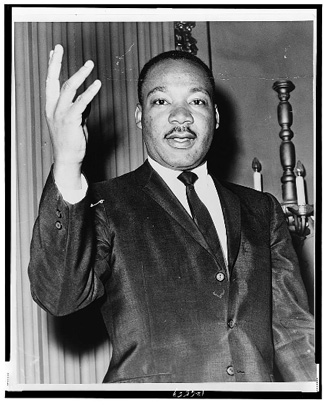
The Montgomery Improvement Association elected King president during the boycott launched after Rosa Parks’s arrest. Jo Ann Robinson and the Women’s Political Council helped mobilize residents, E. D. Nixon organized support, and thousands of participants sustained carpools and walking. The 1955–1956 campaign demonstrated the force of sustained collective protest against segregation. The federal lawsuit Browder v. Gayle provided a separate legal route to desegregation.
Georgia, Alabama and District of Columbia · 1929–1968
Also known as Michael King Jr., Martin Luther King, Jr., MLK
Civil Rights · National Policy
Stanford’s King Papers traces King Jr. through his father Martin Luther King Sr. to his grandmother Delia Linsey King and her father Jim Long, who was enslaved in Georgia. The same scholarly family history documents the maternal Williams line in Georgia before emancipation.
Reviewed 2026-11-15 · Explore American history
Claim: King led the Montgomery Improvement Association during a collectively organized boycott.
The account identifies King’s presidency, Women’s Political Council organizing, and community participation.
Limits: Leadership did not mean sole authorship of the movement. Boycott organizing and litigation were distinct, connected efforts.
Source: Montgomery Bus Boycott
Stanford University, King Institute · Publication date not established · Boycott organization and community participation
Stanford’s King Papers traces King Jr. through his father Martin Luther King Sr. to his grandmother Delia Linsey King and her father Jim Long, who was enslaved in Georgia. The same scholarly family history documents the maternal Williams line in Georgia before emancipation.
Source: Family History of Martin Luther King, Jr.
Limits and unresolved questions: No new designation is made by this panel; the existing editorial status is preserved.
Reviewed 2026-11-15. Read the verification methodology
Verified FBA
Published contributor to Why We Can't Wait. Work spans Civil rights, Political thought.
Stanford’s King Papers traces King Jr. through his father Martin Luther King Sr. to his grandmother Delia Linsey King and her father Jim Long, who was enslaved in Georgia. The same scholarly family history documents the maternal Williams line in Georgia before emancipation.
Retain and periodically review the cited public lineage evidence.
See cited biography; do not infer ancestry from appearance or genre
No claim that the author used or endorsed the contemporary FBA label.
Essential · 1964
Explains direct action and the urgency of civil rights.
Explore book & sources →Recommended · 1967
Examines the movement's next tasks, including economic justice.
Explore book & sources →