Explore documented contributors and their work. Verified FBA marks supported lineage; other entries remain part of the historical record without that designation.
Nursing education and public health
Contribution documented · lineage not verified
Virginia and New York · Great Migration and world wars
Thoms added public-health instruction to Lincoln School for Nurses in 1917 while serving as an administrator and educator. As president of the National Association of Colored Graduate Nurses, she campaigned for Black nurses’ inclusion in the Red Cross and Army Nurse Corps. Her later history of Black nursing preserved practitioners’ work as part of the profession’s own historical record.
Adah Belle Samuel Thoms · Adah Smith
Elevator safety engineering
Contribution documented · lineage not verified
Ohio, Wisconsin and Minnesota · Industrialization and Jim Crow
Miles patented a mechanism coordinating elevator-car and shaft doors, addressing the danger of open shafts. His 1887 design used a belt, drums, and mechanical linkages. It improved one part of elevator operation; it did not constitute invention of the elevator itself.
Medicinal chemistry
FBA Verification Pending
Washington and Hawaii · Industrialization and Jim Crow
At the College of Hawaii, Ball developed chemical methods that made chaulmoogra compounds suitable for injection against Hansen’s disease. Physician Harry T. Hollmann collaborated with her and later credited her method. After her death, Arthur Dean continued the work while initially failing to acknowledge her contribution.
Entomology and crop protection
Contribution documented · lineage not verified
North Carolina and South Carolina · Contemporary America
Simmons worked with geneticist Amnon Levi and plant pathologist Judy Thies on pest resistance in watermelons. Their research sought to transfer useful resistance from wild relatives into commercial crops, supporting reduced reliance on chemical controls. His wider work addresses whiteflies and integrated pest management.
Chemistry and mathematics education
FBA Verification Pending
West Virginia · Depression and New Deal
King combined teaching with graduate study, earning her master’s degree in 1931. At West Virginia State she improved laboratory facilities and taught chemistry and mathematics. Katherine Johnson was among the students influenced by her instruction, illustrating the importance of educators to later scientific achievements.
Computing and energy research
Contribution documented · lineage not verified
Alabama and Ohio · Civil rights era
Easley joined NACA in 1955 as a human computer, then developed programming expertise as electronic computation expanded. Her later code supported energy-conversion research, alternative power technologies, and the Centaur upper stage. She also tutored students and promoted opportunities for women and underrepresented groups in technical careers.
Astronomy and surveying
Verified FBA
Maryland and District of Columbia · Revolution and founding
Banneker calculated astronomical tables for his almanac. George Ellicott lent books and instruments, and abolitionist publishers helped bring the work to readers. Banneker also assisted Andrew Ellicott’s federal district survey.
Analytical chemistry
Contribution documented · lineage not verified
Louisiana and New Mexico · Post-1965 America
Harris is the named inventor on U.S. patent 4,618,452, granted in 1986 for a spot test identifying TATB. Her work at Los Alamos combined analytical chemistry with explosives-related research and safety needs. The patent documents this specific detection method rather than invention of the explosive itself.
Architecture and architectural education
Verified FBA
Tennessee and the southeastern United States · Great Migration and world wars
Calvin McKissack brought architectural practice and teaching experience to the partnership established with his brother Moses in 1922. He had taught architectural drawing at Tennessee Agricultural and Industrial State Normal School and directed industrial arts at Pearl High School. The brothers’ firm later received a 1942 contract for the Tuskegee air base. Individual and firm responsibilities should be distinguished in project-specific records.
Spaceflight operations and space administration
Contribution documented · lineage not verified
South Carolina; NASA; Earth orbit · Post-1965 America
Bolden flew four shuttle missions, including STS-31, which deployed the Hubble Space Telescope in 1990. His work formed part of a larger astronaut, engineering, and operations team. As NASA administrator from 2009 to 2017, he subsequently led the agency through the end of shuttle operations and the transition toward new approaches to American space exploration.
Blood banking
Contribution documented · lineage not verified
District of Columbia and New York · Depression and New Deal
Drew worked with John Scudder and E. H. L. Corwin on Blood for Britain. As medical supervisor, he standardized collection, laboratory checks, storage, and shipment of plasma. Hospitals, laboratory staff, donors, and the Red Cross made the large-scale program possible. The work helped develop systems for wartime blood supply.
Aerodynamics and sonic booms
Contribution documented · lineage not verified
North Carolina and Virginia · Post-1965 America
Darden moved from computing into aerospace engineering at NASA Langley in 1973. Her research addressed predicting and reducing sonic booms and designing aircraft for supersonic flight. She later led a sonic-boom research team and published technical work with colleagues across government and industry.
Surgery and hospital development
FBA Verification Pending
Pennsylvania and Illinois · Industrialization and Jim Crow
At Chicago’s Provident Hospital, Williams surgically repaired the sac surrounding a wounded patient’s heart in 1893. He also built institutions for medical care and professional training. The procedure is described precisely here rather than assigned an unqualified worldwide first in open-heart surgery.
Statistics, probability and decision theory
Contribution documented · lineage not verified
Illinois; Washington, D.C.; California · Civil rights era
Blackwell joined Berkeley in 1954 after teaching at Howard and other institutions. His research helped establish methods for improving statistical estimates, renewal theory, and decision-making under uncertainty. The Rao–Blackwell theorem preserves credit for independently related work by C. R. Rao. His teaching and international educational activity extended the influence of mathematics beyond his own research papers.
Oceanography and geographic information systems
Contribution documented · lineage not verified
Hawaii, Oregon and Pacific Ocean · Post-1965 America
Wright joined Oregon State’s faculty in 1995, developing research and teaching in oceanography and geographic information systems. Her later work connected ocean mapping, marine planning, and shared geographic data, including mapping around American Samoa. These projects draw on oceanographic teams, survey instruments, and data infrastructures.
Computing and numerical analysis
Contribution documented · lineage not verified
Missouri, West Virginia and Virginia · Civil rights era
Vaughan became head of NACA’s West Area Computing unit in 1949. She managed mathematicians whose calculations supported aeronautical research and helped colleagues adapt to electronic computing and FORTRAN programming. The unit included women whose later careers extended into NASA’s space program.
Physics and science education
Verified FBA
Connecticut; Pennsylvania; Virginia; Ohio · Reconstruction
Bouchet completed a Yale physics doctorate in 1876 after graduating with high undergraduate standing. Racist employment barriers limited university opportunities, and he devoted much of his career to science teaching at Philadelphia’s Institute for Colored Youth. His story links advanced physics training to the sustained work of building scientific education for Black students during Reconstruction and its aftermath.
Edward Bouchet · Edward A. Bouchet
Mathematics and science education
Contribution documented · lineage not verified
Indiana; West Virginia; Washington, D.C.; Montreal · Great Migration and world wars
Cox earned a mathematics doctorate at Cornell in 1925, working with William Lloyd Garrison Williams, including study at McGill. He then revised mathematics and physics curricula at the West Virginia Colored Institute and spent much of his career at Howard. His work links mathematical research, international academic exchange, and the institutions that trained generations of Black students despite segregated professional opportunities.
Mechanical engineering
Verified FBA
Ontario and Michigan · Reconstruction
McCoy patented a device that supplied oil to moving machinery during operation. While working on the Michigan Central Railroad, he developed practical improvements to locomotive lubrication and later received additional patents. Railroad engineers and manufacturers adopted automatic lubrication to reduce maintenance interruptions.
Cell biology
Contribution documented · lineage not verified
South Carolina, Massachusetts and Europe · Depression and New Deal
Just investigated fertilization and early development in marine organisms, emphasizing the cell surface and experimental conditions resembling natural environments. His research at Woods Hole and European laboratories placed him within international debates about cell function. Frank R. Lillie supported his early laboratory work.
Entomology and biological pest control
Contribution documented · lineage not verified
Hawaii · Post-1965 America
Harris established a laboratory colony of a wasp that parasitizes fruit-fly eggs. John Spencer, Renato Bautista, and other colleagues refined rearing methods for biological pest control. USDA documented the approach in 1998; related techniques found international use against crop-damaging fruit flies.
Agricultural engineering and instrumentation
Contribution documented · lineage not verified
Virginia and Maryland · Civil rights era
Finney investigated cereal-grain drying and instruments for assessing food quality. Beginning at Beltsville in 1965, his work connected engineering to agricultural production and handling. He later directed research programs and served in federal science-policy roles, extending technical expertise into public administration.
Mathematics education and education policy
Verified FBA
Washington, D.C. · World War II
Haynes completed a mathematics doctorate at Catholic University in 1943 after establishing Miner Teachers College’s mathematics department. Her later school-board leadership challenged tracking practices that restricted educational opportunity for Black and low-income students. Mathematical teaching, institutional leadership, and support for the campaign culminating in Hobson v. Hansen connected her scholarship with public education reform.
Martha Euphemia Lofton Haynes
Mathematics and scientific computing
Contribution documented · lineage not verified
Washington, D.C.; California; Texas · Civil rights era
Granville developed software for satellite-orbit analysis on Project Mercury at IBM and worked on the Apollo program as a North American Aviation contractor in 1962. Her earlier National Bureau of Standards work involved mathematics for missile electronics. She later taught programming and mathematics, coauthored a textbook, and worked with schoolchildren, connecting industrial computing with broader mathematical education.
Refrigeration and manufacturing
Contribution documented · lineage not verified
Ohio and Minnesota · Depression and New Deal
Jones developed compact refrigeration equipment that could withstand transport conditions. With entrepreneur Joseph Numero, he built Thermo King’s mobile-refrigeration business. This engineering supported shipment of perishable food and wartime supplies; it belongs within a longer history of refrigeration involving many inventors, manufacturers, drivers, and logistics workers.
Safety engineering
Verified FBA
Kentucky and Ohio · Great Migration and world wars
Morgan developed a breathing hood and used it during a rescue beneath Lake Erie in 1916. His work addressed the hazards faced by firefighters and tunnel workers. He later patented a traffic signal with an intermediate stop position. These were specific improvements within safety technologies developed by many inventors.
Ultraviolet astronomy and instrumentation
Contribution documented · lineage not verified
District of Columbia and lunar exploration · Post-1965 America
Carruthers developed the Far Ultraviolet Camera/Spectrograph used by the Apollo 16 crew on the Moon in 1972. It recorded Earth’s extended hydrogen atmosphere in ultraviolet light. The achievement combined his instrument work with Naval Research Laboratory colleagues, mission engineers, and the astronauts who operated it.
Agricultural education
Verified FBA
Missouri and Alabama · Industrialization and Jim Crow
Carver joined Booker T. Washington’s Tuskegee Institute. His teaching and agricultural research expanded practical education for Black farmers, including soil improvement and alternatives to dependence on cotton.
Satellite geodesy
Contribution documented · lineage not verified
Virginia · Post-1965 America
West’s mathematical and programming work at the Naval weapons laboratory in Dahlgren supported models of Earth’s shape derived from satellite measurements. This geodetic foundation contributed to the precision needed for satellite navigation. GPS development involved many researchers, engineers, satellites, and ground systems.
Electrical and railway engineering
FBA Verification Pending
Ohio and New York · Industrialization and Jim Crow
Woods developed electrical inventions for railway communication, including induction telegraphy. His work addressed coordination and safety as rail networks expanded, alongside inventions by other engineers and manufacturers. His patents also covered additional electrical technologies.
Aerospace engineering and astronautics
Contribution documented · lineage not verified
Pennsylvania and NASA spaceflight · Post-1965 America
Bluford became the first Black American in space on STS-8 in August 1983. He served as a mission specialist and ultimately flew four shuttle missions, spanning satellite operations, Spacelab research, and defense payloads. His flight achievements depended on crews and extensive engineering and ground-support teams.
Microbiology and molecular biology
Contribution documented · lineage not verified
New Jersey, Massachusetts and France · Civil rights era
Amos’s research at Harvard included a 1958 finding of 5-methylcytosine in Escherichia coli RNA and later studies of protein synthesis, glucose starvation, and cellular transport. Training with Howard Mueller and work in Georges Cohen’s Pasteur Institute laboratory connected his career to an international research community. He also mentored biomedical researchers and led Harvard Medical School departments during an era of expanding educational access.
Polymer chemistry and industrial research
Contribution documented · lineage not verified
Massachusetts · Civil rights era
Hill founded National Polychemicals to supply intermediates to polymer manufacturers, drawing on earlier research in synthetic rubber, firefighting foam, and coatings. He later established a research laboratory and, as ACS president in 1977, addressed professional working relationships in chemistry.
Agricultural machinery
Contribution documented · lineage not verified
Maryland · Expansion and antebellum
Blair obtained patents for planting machinery in 1834 and 1836. His designs mechanized parts of sowing, making him part of the broader transformation of agricultural labor and equipment. Surviving patent references document the inventions more clearly than his family history.
Nuclear engineering
Contribution documented · lineage not verified
Mississippi, Illinois and California · Post-1965 America
Sampson and George H. Miley shared a 1971 patent for a device converting gamma-radiation energy into electrical power. His career also encompassed rocket propulsion and electrical-system research. The gamma-electric cell was an energy-conversion device; it was not the invention of the cellular telephone.
Radiochemistry
Contribution documented · lineage not verified
Texas and California · Post-1965 America
Harris worked in Berkeley’s Heavy Isotopes Production Group and contributed to research on elements 104 and 105. His work belonged to a laboratory team rather than a solitary discovery. The contemporary 1969 news record and later ACS account provide entry points for investigating his experimental role and credit.
Acoustics
FBA Verification Pending
Virginia and New Jersey · Civil rights era
At Bell Laboratories, West and Gerhard Sessler developed a compact, sensitive microphone based on electret film. The technology entered commercial production and became widely used in communications, hearing devices, and recording equipment. West also helped expand research opportunities for underrepresented scientists.
Medicine and public health
Verified FBA
New York and Scotland · Expansion and antebellum
Smith completed medical study at the University of Glasgow after American schools excluded him. He returned to New York to practice medicine and became an abolitionist intellectual. Peter Williams Jr. helped support his education, and Smith worked in a network of Black reformers linking health, education, and emancipation.
Marine safety invention
Verified FBA
District of Columbia · Industrialization and Jim Crow
Wormley patented shipboard rescue equipment using floats, rope, and a movable rod. His technical work accompanied a prominent hospitality business.
Oncology and clinical research
Verified FBA
New York · Civil rights era
Wright joined her father Louis Tompkins Wright in testing anticancer agents at Harlem Hospital in 1949. Her work examined tissue-culture and patient responses and methods for administering chemotherapy. She subsequently led research and medical-education programs and helped establish the American Society of Clinical Oncology with six colleagues.
Marine biology and coral systematics
Contribution documented · lineage not verified
Florida and District of Columbia · Post-1965 America
Owens earned a geology doctorate in 1985 after returning to scientific study. Using Smithsonian specimens, she investigated the evolutionary relationships of button corals and identified previously undescribed forms. Her museum-based work demonstrates the research value of historical collections and alternative approaches to studying deep-sea life.
Industrial polymer chemistry
Contribution documented · lineage not verified
New Jersey and Delaware · Civil rights era
Cooper researched heat-resistant fluorine-containing rubber compounds used for demanding applications such as jet-engine seals. A 1965 DuPont laboratory account places him alongside Arthur Nersasian and supervisor John Littlefield, documenting his role in product and process development within a larger industrial team.
Atmospheric chemistry
Contribution documented · lineage not verified
Texas, Indiana and Pennsylvania · Contemporary America
Francisco applies experimental and theoretical physical chemistry to atmospheric reactions. His work examines the atmosphere at molecular scale, connecting chemical mechanisms to environmental understanding. The 2025 Pittsburgh Spectroscopy Award recognized this research; his career also includes scientific leadership and training.
Orbital mathematics
FBA Verification Pending
West Virginia and Virginia · Civil rights era
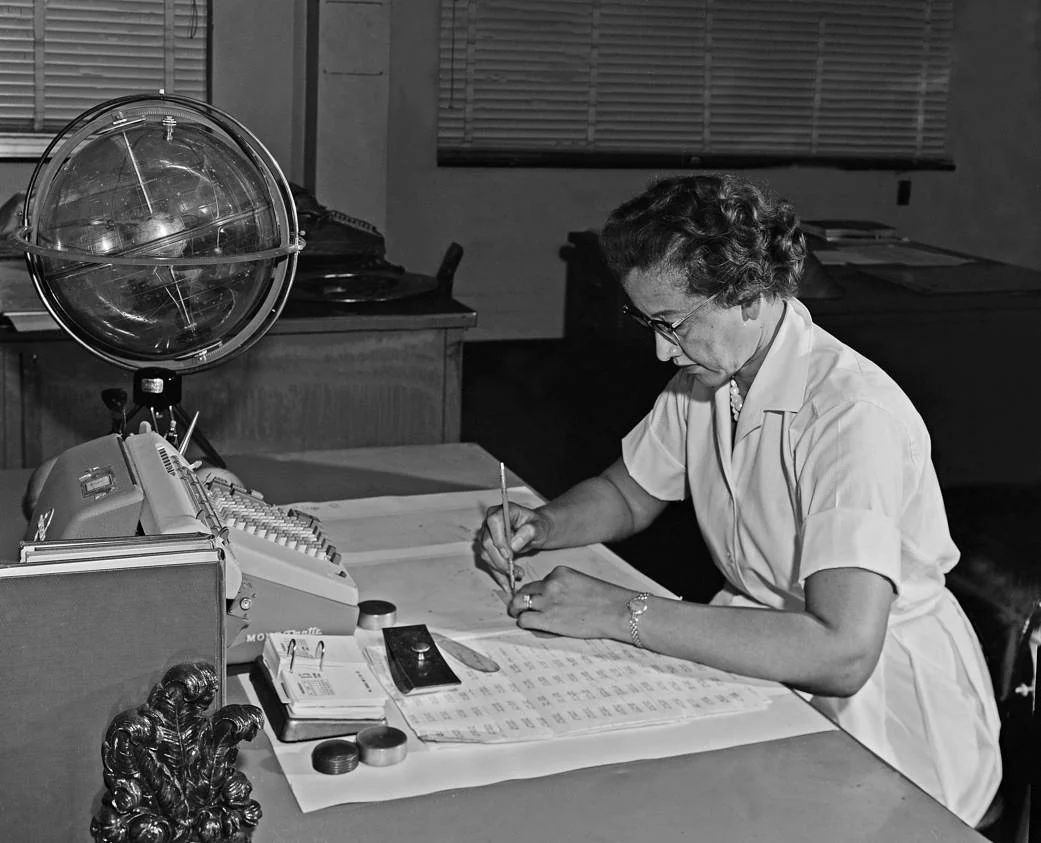
Johnson checked computer-generated orbital calculations for John Glenn’s Friendship 7 mission. Her mathematical work formed part of the larger Langley and NASA effort that combined human analysis, electronic computing, tracking networks, and flight operations.
Electrical engineering and patent drafting
Verified FBA
Massachusetts and Connecticut · Industrialization and Jim Crow
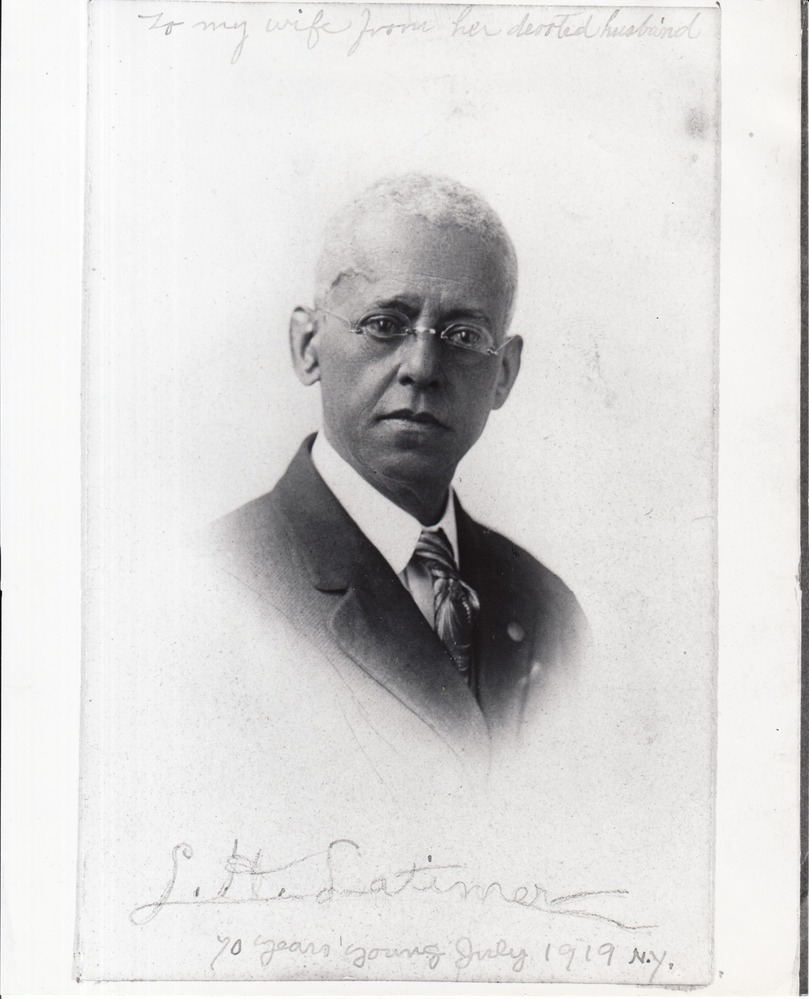
While working in the incandescent lighting industry associated with Hiram Maxim, Latimer patented a process for making carbon elements. He later worked as a patent investigator and expert witness for Edison’s interests, including overseas patent disputes.
Food chemistry and preservation
Contribution documented · lineage not verified
Illinois · Depression and New Deal
Hall developed chemical methods for preserving foods while managing flavor and spoilage. At Griffith Laboratories, his work encompassed curing mixtures and the microbial contamination of spices. These applied-research methods helped industrial food processing and stimulated related uses in other product industries.
Mechanical engineering and invention
Contribution documented · lineage not verified
Alabama, California and Georgia · Post-1965 America
Johnson licensed the invention that became the Super Soaker to Larami in 1989. It emerged from experimentation connected to heat-pump research. His broader career included Air Force work and engineering on NASA’s Galileo, Mars Observer, and Cassini projects with large mission teams.
Hematology and medical education
Contribution documented · lineage not verified
Georgia and Massachusetts · Post-1965 America
Sullivan developed a medical education program at Morehouse beginning in 1975, building on his hematology research and teaching career. The program grew into an accredited medical school. His later service as U.S. health secretary linked medical education, health access, and federal public-health administration.
Nursing and public health
Contribution documented · lineage not verified
Barbados; Washington, D.C.; New York · Depression and New Deal
Staupers led the National Association of Colored Graduate Nurses as executive secretary beginning in 1934, building membership and coalitions to challenge military and professional exclusion. Earlier, her work for the Harlem Tuberculosis Committee linked nursing to neighborhood health needs. Her organizing helped open nursing institutions to Black practitioners and connected professional access with better care for Black communities.
Medicine and astronautics
FBA Verification Pending
Alabama, Illinois and NASA spaceflight · Post-1965 America
Jemison served as a science mission specialist on the 1992 Spacelab-J mission, a United States–Japan collaboration. Her responsibilities included experiments concerning bone cells, motion sickness, and frog fertilization. She became the first Black woman in space while contributing medical and engineering expertise within the larger flight and research team.
Insect biochemistry and agriculture
Contribution documented · lineage not verified
Maryland · Post-1965 America
Thompson investigated steroid hormones involved in insect molting at USDA’s Beltsville research laboratories. His biochemical discoveries helped establish knowledge relevant to insect development and pest-management research. USDA recognized this work with induction into its Science Hall of Fame in 1994.
Biochemistry
Contribution documented · lineage not verified
New York · Civil rights era
Working with Mary Letitia Caldwell at Columbia, Daly studied the action of pancreatic amylase on corn starch. Her subsequent research addressed proteins and cardiovascular biochemistry. Her scientific work and support for future researchers broadened access to a field with substantial barriers to Black women.
Computer engineering
Contribution documented · lineage not verified
Tennessee, Florida and Texas · Post-1965 America
Dean worked on the IBM PC team and, with Dennis Moeller, developed technology connecting the processor with peripheral devices. IBM’s wider team included Don Estridge and engineers responsible for hardware and software. Standardized interfaces helped a large ecosystem of compatible products emerge.
Nursing
Verified FBA
Massachusetts · Industrialization and Jim Crow
Mahoney completed the nursing program at the New England Hospital for Women and Children in 1879. She practiced nursing and later participated in professional organizing that challenged racial exclusion. Her career links clinical care to the struggle over who could enter and advance in the profession.
Neuroembryology and biology education
Contribution documented · lineage not verified
Georgia, Massachusetts and Cambridge, England · World War II
Reddick studied nerve-cell differentiation and tissue transplantation in chick embryos, asking how brain development depends on surrounding tissues. She earned a Radcliffe doctorate in 1944 after teaching biology at Spelman and Morehouse. A later fellowship took her to Cambridge, and she became a biology professor and department leader at Atlanta University, connecting experimental embryology with education at historically Black institutions.
Aeronautical engineering
Contribution documented · lineage not verified
Virginia · Civil rights era
After working under Dorothy Vaughan and with engineer Kazimierz Czarnecki, Jackson completed required training and became an engineer in 1958. Her research examined boundary-layer airflow in wind-tunnel experiments. Later she worked to improve advancement opportunities for women at Langley.
Signaling devices and invention
Contribution documented · lineage not verified
South Carolina and District of Columbia · Industrialization and Jim Crow
Benjamin’s chair let seated users signal attendants. Her attempt to secure adoption by the House of Representatives failed; a different system was installed.
Architecture and architectural education
Verified FBA
Tennessee and the southeastern United States · Industrialization and Jim Crow
Moses McKissack III designed Fisk University’s Carnegie Library in 1908. His architectural practice grew from construction skills learned in his family. In 1922 he formed a partnership with his brother Calvin, joining design, education, housing and institutional commissions within a Black-owned professional firm.
Marine biology and coral immunity
Contribution documented · lineage not verified
Florida · Contemporary America
Traylor-Knowles and thirteen coauthors analyzed gene-expression responses during experimental transmission of stony coral tissue loss disease. The study involved Smithsonian Marine Station and Mote Marine Laboratory experiments. It identified immune, cell-death, and tissue-rearrangement responses, informing further research rather than establishing a cure.
Chemical engineering
Verified FBA
Louisiana and France · Expansion and antebellum
Rillieux developed a system that reused vapor through successive vacuum vessels to refine sugar with less fuel. Its industrial significance extended into other evaporation processes. His work took shape within a sugar economy dependent on enslaved labor and affected both production efficiency and exposure to boiling liquids.
Electronic components
Contribution documented · lineage not verified
Texas, Illinois and France · Civil rights era
Boykin received a 1959 patent for a precision resistor, followed by additional resistor improvements. With experience in industrial laboratories and a business partnership with Hal Fruth, he developed components used in electronic systems. His contribution should be credited at the component level rather than described as invention of the pacemaker itself.
Ophthalmology and medical devices
FBA Verification Pending
New York and California · Post-1965 America
Bath received U.S. Patent 4,744,360 for apparatus to remove cataract lenses. Her Laserphaco research combined surgical experience with laser technology. She also promoted community ophthalmology, connecting screening and prevention with access to treatment.
Architecture and housing design
Contribution documented · lineage not verified
Los Angeles and Southern California · Depression and New Deal
Paul Revere Williams was chief architect for Pueblo del Rio, built to house Black defense workers in Los Angeles. The Southeast Housing Architects team included Richard Neutra, Gordon Kaufmann, Adrian Wilson, and Wurdeman & Becket. His work also encompassed homes, churches, hotels, and civic buildings, showing how architectural labor shaped everyday institutions as well as celebrity residences.
Organic chemistry
FBA Verification Pending
Alabama, Indiana and Illinois · Depression and New Deal
Julian and Josef Pikl completed a synthesis of physostigmine at DePauw University. Julian later developed industrial methods involving soybean-derived compounds used in steroid chemistry. His laboratory achievements depended on coworkers, chemical manufacturing infrastructure, and sustained experimentation.
Medicine
Contribution documented · lineage not verified
Massachusetts and Virginia · Civil War and emancipation
Crumpler graduated from the New England Female Medical College in 1864. After the Civil War she treated formerly enslaved people in Richmond through the Freedmen’s Bureau and other organizations. Her 1883 medical book recorded practical advice for women and children.
Physical chemistry and aerospace flight testing
Contribution documented · lineage not verified
Illinois; Ohio; California · Post-1965 America
The Air Force selected Lawrence for the Manned Orbiting Laboratory program in June 1967. A physical chemist and experienced test pilot, he also instructed landing techniques later used in the shuttle program. He died that December during an F-104 training flight. His documented selection and flight-test work should be distinguished from a completed space mission, which he did not fly.
Office machinery and public statistics
Contribution documented · lineage not verified
Virginia, Michigan and District of Columbia · Industrialization and Jim Crow
Pelham’s apparatus mechanized attaching statistical slips during census processing. He later helped document the Great Migration using census data.
Architecture and technical education
Verified FBA
North Carolina and Alabama · Industrialization and Jim Crow
Taylor graduated from MIT in 1892 and joined Tuskegee, where he designed campus buildings and developed architectural and industrial instruction. Students and skilled workers supplied essential construction labor. His designs and teaching linked professional architecture to the institution-building ambitions of Booker T. Washington and the wider Black community.
Zoology and marine biology
Contribution documented · lineage not verified
Virginia, District of Columbia and Massachusetts · Great Migration and world wars
Young published research on paramecium in Science in 1924 and subsequently worked with Ernest Everett Just at the Marine Biological Laboratory. Her career combined laboratory investigation with teaching despite institutional barriers to Black women’s scientific advancement.
Laser physics and astronautics
Contribution documented · lineage not verified
South Carolina and NASA spaceflight · Post-1965 America
McNair’s research concerned lasers and their applications to communications. During STS-41B in 1984 he operated the Canadarm, conducted experiments, and worked on motion-picture documentation. He died with six fellow crew members during the Challenger disaster in January 1986.
Microbiology and laboratory education
Contribution documented · lineage not verified
Ohio and Washington, D.C. · Depression and New Deal
After research on Mycobacterium tuberculosis at Ohio State, Moore joined Howard’s medical faculty in 1933 under Hildrus Poindexter. She organized laboratory instruction for medical, dental, and nursing students, later chaired the department, and developed research involving blood types, tuberculosis, oral health, and gut microorganisms. Her collaboration with Madison Briscoe and demanding laboratory teaching helped sustain a research and training institution during segregation.
Transplant surgery
FBA Verification Pending
Arkansas and California · Post-1965 America
Kountz joined UCSF in 1967 and led its kidney-transplant service. With Folkert Belzer and collaborators, he developed organ-preservation technology and investigated approaches to transplant care. He also advocated organ donation, research support, broader access to treatment, and recruitment of underrepresented medical students.
Transatlantic abolition, suffrage, and medicine
Verified FBA
Salem, Massachusetts; Britain; Italy · Expansion and antebellum
Remond lectured against American slavery in Britain and Ireland after arriving in 1859. Her transatlantic activism linked abolition, racial equality, and women’s rights, including her signature on the 1866 British women’s suffrage petition. She studied in Britain and subsequently trained in Italy, where she practiced medicine. Her career belongs alongside brother Charles Lenox Remond and the women who organized antislavery networks.
Theoretical physics and nuclear regulation
Verified FBA
District of Columbia and New Jersey · Post-1965 America
After research in theoretical, solid-state, quantum, and optical physics at Bell Laboratories and teaching at Rutgers, Jackson became Nuclear Regulatory Commission chair in 1995. Her work linked scientific expertise to nuclear oversight. These documented roles do not establish the frequently repeated claim that she invented caller ID.
Natural history and science education
Verified FBA
District of Columbia · Expansion and antebellum
Brown delivered an illustrated entomology lecture in 1855 and became a popular science educator. At the Smithsonian he prepared maps and illustrations, supported collections, and worked with Spencer Baird. His career shows how technical and intellectual labor could exceed the formal job titles available to Black staff.
Chemistry and science education
Contribution documented · lineage not verified
Kentucky, Illinois and historically Black universities · Great Migration and world wars
Brady completed doctoral research on oxygen chemistry under Clarence Derick at Illinois in 1916. He subsequently developed chemistry education at Tuskegee, Howard, Fisk, and Tougaloo. His importance includes both research training and the sustained institutional work that expanded opportunities for later scientists.
Textile treatment and invention
Contribution documented · lineage not verified
New York · Expansion and antebellum
Jennings received patent X3306 for dry scouring in 1821 while operating a tailoring and cleaning business. His entrepreneurship also supported abolitionist work. The record illustrates the opportunities available to some free Black inventors alongside legal barriers confronting enslaved inventors.
Agricultural extension
Contribution documented · lineage not verified
Georgia, Alabama and the southern United States · Industrialization and Jim Crow
Campbell brought practical farming demonstrations to rural communities through Tuskegee’s movable school, supported by Booker T. Washington, George Washington Carver, and USDA. He later supervised Black extension personnel across several southern states. His 1944 African study mission extended his engagement with rural education beyond the United States.
Fiber-optic manufacturing
Contribution documented · lineage not verified
Ghana and United States · Post-1965 America
Mensah worked on manufacturing methods that helped lower optical-fiber production costs during the 1980s. His engineering contributed to the practical expansion of fiber communication alongside other researchers and industrial teams. He also participated in chemical-engineering professional organizations and aerospace materials development.
Remote sensing and computer science
Contribution documented · lineage not verified
Maryland · Post-1965 America
Thomas began Landsat work in 1970 and managed development of image-processing software and digital-tape formats at Goddard. Her role in the multiagency Large Area Crop Inventory Experiment helped demonstrate satellite-based crop monitoring. Her work connected computing infrastructure with international access to Earth-observation data.
Climate science and computational modeling
Contribution documented · lineage not verified
Oregon and Colorado · Civil rights era
At NCAR, Washington collaborated with Akira Kasahara on atmospheric computer models, later helping integrate oceans and sea ice. Such models enabled research into climate responses to natural and human influences. His textbook with Claire Parkinson and his mentoring extended this work across research and education.
Bacteriology and diagnostic medicine
Verified FBA
Illinois, Kansas and Massachusetts · Depression and New Deal
Hinton developed a blood test for syphilis that the U.S. Public Health Service adopted and published Syphilis and its Treatment in 1936. Barred by racial discrimination from surgical training in Boston, he built a career in laboratory medicine and serological teaching. His diagnostic research and long service in Massachusetts public-health laboratories connected clinical science with disease control.
Pediatrics and hematology
Verified FBA
Washington, D.C. and Chicago, Illinois · Depression and New Deal
Cardozo published Immunologic Studies of Sickle Cell Anemia in October 1937 from Provident Hospital’s pediatrics and pathology departments. His Chicago investigation contributed to an emerging clinical literature that sought to explain sickling and its varied effects on patients. The original article records his authorship and institutional setting; it does not justify crediting him alone with discovering the disease or all of its genetic mechanisms.
Aerospace medicine and human spaceflight research
Contribution documented · lineage not verified
New York; California; Texas; international aerospace medicine · Post-1965 America
Selected for NASA’s astronaut program in 1996, Cagle brought flight-surgeon and occupational-medicine experience to human-spaceflight work. Her contributions included astronaut health research, space telemedicine consultation, and participation in developing international medical procedures. Her work connects clinical care, operational readiness, and research on how people function in demanding flight environments; astronaut selection is not represented as a flown mission.