American history, connected
Learning on a community’s own terms
Native education is a story of harm, survival and institution-building.
A short read · Nineteenth century–present
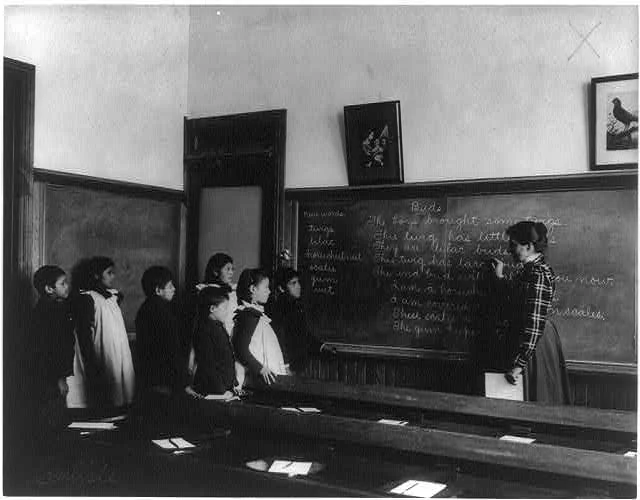
Education can connect children to their communities—or be used to pull them apart. Federal Indian boarding-school policies sought to assimilate Native children and suppress their cultures. Interior’s recent investigation documents institutions, deaths, burial sites and the participation of government and religious organizations. These histories call for care, not sensational images.
Native communities also built educational futures of their own. In 1968, the Navajo Nation chartered Navajo Community College, now Diné College. The tribal-college movement linked higher education to community priorities, cultural knowledge and self-government. Students could pursue new opportunities without treating their own histories as obstacles to learning.
The wider American story
The Indian Self-Determination and Education Assistance Act of 1975 opened greater opportunities for tribes to take responsibility for federally administered services through agreements. That change belongs in the national history of public policy and political organizing.
Read this alongside Bethune and Black institution-building. Both invite questions about who controls education, but their legal and historical circumstances differ. The connection is a useful comparison, not a claim that HBCUs and tribal colleges have the same origin or mission.
Pause and connect
What does this story add to the American history you already know?
Explore next
Sources and further reading
- BIA: Federal Indian Boarding School Initiative
- American Indian Higher Education Consortium: History
- BIA: Indian Self-Determination and Education Assistance Act
Sources checked November 16, 2026. This is an introductory story, not a complete account of every community.