Explore documented contributors and their work. Verified FBA marks supported lineage; other entries remain part of the historical record without that designation.
Labor organizing and fair employment
Contribution documented · lineage not verified
Florida; New York; Washington, D.C. · World War II
Randolph mobilized a proposed march on Washington against racial discrimination in defense employment. The campaign, supported by other civil rights and labor organizers, pressured President Franklin D. Roosevelt to issue Executive Order 8802 establishing a federal fair-employment policy and committee. This was a collective pressure campaign; the order did not eliminate employment discrimination or desegregate the armed forces.
Abolition and civic institutions
Verified FBA
Wilmington, Delaware; Canada · Expansion and antebellum
A shoemaker and abolitionist in Wilmington, Shadd aided people escaping slavery and presided over the 1833 National Convention for the Improvement of Free People of Colour in the United States. His work connects local assistance networks with national Black political organization. His daughter Mary Ann Shadd Cary carried related educational and antislavery work into journalism and law.
Religious institutions and mutual aid
Verified FBA
Delaware and Pennsylvania · Revolution and founding
Absalom Jones and Richard Allen organized the Free African Society to support their community through mutual aid. Jones later led the African Episcopal Church of St. Thomas and became an Episcopal priest in 1802. His work joined religious independence, education, and relief for people excluded from established institutions. In 1800 he also petitioned Congress against slavery and the slave trade.
Nursing education and public health
Contribution documented · lineage not verified
Virginia and New York · Great Migration and world wars
Thoms added public-health instruction to Lincoln School for Nurses in 1917 while serving as an administrator and educator. As president of the National Association of Colored Graduate Nurses, she campaigned for Black nurses’ inclusion in the Red Cross and Army Nurse Corps. Her later history of Black nursing preserved practitioners’ work as part of the profession’s own historical record.
Adah Belle Samuel Thoms · Adah Smith
Congressional civil-rights leadership
Verified FBA
New Haven, Connecticut; Harlem, New York · World War II
Powell entered Congress in 1945 after working in Harlem through religious leadership and local politics. His career pressed racial equality through national legislative institutions while retaining ties to the Abyssinian Baptist Church led earlier by his father. His record illustrates the relationship between urban Black institutions, electoral representation, and federal civil-rights debates.
Congressional representation and civil rights
Verified FBA
Charleston, South Carolina; Washington, D.C. · Reconstruction
Ransier argued in 1874 for protections in schools, hotels, transportation, and jury service. He also criticized the exclusion of women’s rights from the congressional debate. His service followed work in South Carolina conventions and as lieutenant governor, connecting local political mobilization with national demands for equal citizenship.
Civil rights organizing and public leadership
FBA Verification Pending
Savannah, Georgia; Selma and Tuskegee, Alabama · Civil rights era
Boynton Robinson and her husband Samuel had organized voter-registration and agricultural education work long before the 1965 Selma campaign. She helped invite national support and participated in the March 7 march, where police beat her unconscious. Her work with the Dallas County Voters League and other local organizers shows the community foundations beneath the nationally remembered marches.
Education and Black feminist thought
Verified FBA
Raleigh, North Carolina; Washington, D.C. · Industrialization and Jim Crow
Cooper's A Voice from the South argued for Black women's education and participation in public life. Her analysis connected racial exclusion, gender, and educational opportunity; her teaching and school leadership put educational commitments into institutional practice. Sources differ on her birth year: 1858 and 1859 both appear, so the displayed year is approximate pending reconciliation.
Soul and gospel performance
Contribution documented · lineage not verified
Tennessee, Michigan and New York · Post-1965 America
Franklin’s recording reinterpreted Otis Redding’s song through a gospel-informed vocal approach. It became associated with demands for dignity and women’s equality. Credit includes Redding’s original songwriting and Franklin’s transformative performance and arrangement.
Employment and education policy
Contribution documented · lineage not verified
Shreveport, Louisiana; Los Angeles, California · Post-1965 America
Hawkins worked with Senator Hubert Humphrey on legislation that became the Full Employment and Balanced Growth Act of 1978. The law established employment goals and reporting obligations but was considerably weaker than his initial proposal for a right to useful employment. His broader service included California legislation on housing, employment, and workers’ protections. Enacted goals should not be confused with a guaranteed federal job.
Abolition, business and cross-border community building
Verified FBA
Virginia; Rochester and Brighton, New York; Upper Canada · Expansion and antebellum
Steward became vice president of the 1830 Black national convention in Philadelphia after establishing a business and educational work in Rochester. He invested in the Wilberforce settlement in Upper Canada, seeking opportunities for Black families, but returned to New York after the project’s financial and administrative failures. His career demonstrates cross-border institution-building, ambition and setbacks rather than a simple narrative of inevitable progress.
Legislation and constitutional accountability
FBA Verification Pending
Houston, Texas; Washington, D.C. · Post-1965 America
As a member of the House Judiciary Committee, Jordan delivered a nationally influential statement during the 1974 Nixon impeachment proceedings. Her argument centered on the Constitution and Congress's responsibility to evaluate presidential conduct. Her work belongs within the committee's collective investigation and the wider Watergate record, alongside her earlier Texas legislative service.
Nonviolent strategy and mass organizing
Verified FBA
West Chester, Pennsylvania; New York; Washington, D.C. · Civil rights era
Rustin coordinated the organization of the March on Washington for Jobs and Freedom, working closely with A. Philip Randolph and a coalition of civil rights, labor, and religious organizations. His contribution included turning a mass protest proposal into a functioning national event. The march's economic demands and coalition work are essential to understanding it alongside its best-known speeches.
Military aviation leadership and integration
FBA Verification Pending
Washington, D.C.; Alabama; North Africa; Italy · World War II
Davis commanded the 99th Fighter Squadron and later the 332nd Fighter Group during World War II. He defended the 99th against efforts to dissolve it and led airmen whose combat record challenged claims used to justify segregation. The achievement was collective: pilots, mechanics, ground crews, trainers, and commanders made the units operational. He later held senior Air Force commands.
Military administration and racial integration
FBA Verification Pending
Washington, D.C.; United States Army; Europe · Depression and New Deal
Davis became a brigadier general in October 1940 after decades of Army service and military teaching. During World War II he inspected Black units and advised on problems created by segregation. His administrative work and advocacy for employing Black replacement soldiers in integrated units belong to the institutional history of military desegregation, alongside the work of soldiers, organizers, and later policymakers.
Congressional representation and civil rights
Contribution documented · lineage not verified
North Carolina; Selma, Alabama; Washington, D.C. · Reconstruction
Turner served one House term, from 1871 to 1873, after helping establish a school for formerly enslaved people. He defended the work and aspirations of Black constituents and sought economic recovery in the postwar South. His career links community education, business, and national representation during Reconstruction.
Reconstruction governance and veterans policy
Verified FBA
Virginia; Mississippi; Washington, D.C. · Reconstruction
Bruce represented Mississippi in the Senate from 1875 to 1881, becoming the first African American senator to complete a full term. He advocated for Black veterans' pay and benefits and challenged the suppression of Black political rights. His record illustrates both Reconstruction's expansion of national representation and the violent restrictions that followed it.
Education and institution-building
Verified FBA
Virginia and Alabama · Industrialization and Jim Crow
Washington helped build Tuskegee into a major institution of Black education. Olivia Davidson helped build the school and raise funds. Washington emphasized vocational education, a strategy that prompted debate over political rights and educational opportunity.
Reparations organizing and mutual aid
Verified FBA
Rutherford County and Nashville, Tennessee · Industrialization and Jim Crow
House and Isaiah Dickerson built the National Ex-Slave Mutual Relief, Bounty and Pension Association, chartered in Tennessee in 1898. It combined local mutual aid with a national demand for compensation for slavery. House later worked with attorney Cornelius Jones on litigation over cotton-tax revenue. Federal prosecution and imprisonment curtailed her organizing; her movement remains central to the history of reparations claims made by people who had themselves endured slavery.
Education, theater, and library building
Verified FBA
Georgia and Little Rock, Arkansas · Industrialization and Jim Crow
Carrie Still began teaching English at Little Rock’s Union School in 1896. Her later cultural organizing included staging Shakespeare performances to raise funds for books when Black residents were denied the city’s public library. The resulting collection supported a library at Capitol Hill High School. She was also the mother of composer William Grant Still; her educational and cultural work deserves a record of its own. The year 1896 marks the teaching appointment, not a verified date for the library campaign.
Historical scholarship and education
Verified FBA
Virginia and District of Columbia · Industrialization and Jim Crow
Woodson joined William B. Hartgrove, George Cleveland Hall, Alexander L. Jackson, and James E. Stamps to establish the Association for the Study of Negro Life and History. Through its journal, publications, and educational work, the organization built an institutional base for studying Black American history. Woodson introduced Negro History Week in 1926. Mary McLeod Bethune later led the association.
Congressional civil rights and African affairs
Contribution documented · lineage not verified
Detroit, Michigan; Washington, D.C.; Africa · Post-1965 America
Diggs helped build the Congressional Black Caucus and advocated District of Columbia home rule and greater U.S. engagement with African independence and development. He brought attention to Mississippi civil-rights struggles, including the Emmett Till case. His work linked Black political representation at home with debates over self-government abroad; these contributions are documented independently of lineage.
Congressional representation and civil rights
Verified FBA
Opelousas and New Orleans, Louisiana; Washington, D.C. · Reconstruction
Nash, a Union veteran who lost part of a leg at Fort Blakely, served Louisiana in the House from 1875 to 1877. He submitted pension requests and constituent claims and sought a waterway survey to improve navigation. His limited legislative success must be read in the context of a Democratic-controlled House and violent instability in Louisiana.
Legal education and anti-segregation litigation
Verified FBA
Washington, D.C.; Howard University; United States · Depression and New Deal
Appointed vice-dean of Howard’s law school in 1929, Houston helped transform it into a rigorous training ground for civil rights lawyers. His students and colleagues included Thurgood Marshall and Oliver Hill. His later NAACP work connected legal research, litigation, and institutional development; the campaign against segregation was sustained by a network of lawyers, plaintiffs, and communities rather than a single attorney.
Education and documentary writing
Verified FBA
Philadelphia, Pennsylvania; Salem, Massachusetts; Sea Islands, South Carolina · Civil War and emancipation
Forten arrived in the Sea Islands in October 1862 to teach formerly enslaved students. Her journals record classroom work, community life, and the uncertainties of wartime emancipation. Her contribution belongs alongside the students’ pursuit of education, local Black communities, and fellow teachers rather than a story in which outside educators alone created learning.
Civil rights organizing and public leadership
Contribution documented · lineage not verified
Birmingham and Montgomery, Alabama; New York · Civil rights era
Arrested on March 2, 1955, after refusing to surrender her Montgomery bus seat, Colvin later became a plaintiff in Browder v. Gayle. Alongside Aurelia Browder, Susie McDonald, and Mary Louise Smith, her participation helped challenge the segregation laws in federal court. The case and the boycott were complementary parts of the struggle; Colvin’s action should not be erased by an account beginning only with Rosa Parks’s later arrest.
Civil-rights litigation and federal judging
Contribution documented · lineage not verified
New Haven, Connecticut; New York; southern United States · Civil rights era
As an NAACP Legal Defense Fund attorney, Motley worked with Thurgood Marshall and colleagues on litigation against segregation. She represented James Meredith in his effort to enter the University of Mississippi and became a federal district judge in 1966. Her later service as chief judge extended her career from advocacy into administration of the courts. Her contribution belongs in American history regardless of whether a qualifying FBA line is established.
Civil rights organizing and public leadership
Verified FBA
Marion, Alabama; Boston, Massachusetts; Atlanta, Georgia; international · Post-1965 America
After Martin Luther King Jr.’s assassination, Coretta Scott King led a Memphis sanitation-workers march and helped launch the Poor People’s Campaign. She founded the King Center and later led efforts for the federal King holiday. Her independent activism also included disarmament, freedom concerts, women’s organizations, and opposition to apartheid; her contribution should not be reduced to supporting her husband.
Revolutionary protest and historical memory
FBA Verification Pending
Framingham and Boston, Massachusetts; Atlantic ports · Colonial America
British soldiers killed Attucks and four other men in Boston in March 1770. Contemporary records identify a sailor at the head of a group approaching King Street; witnesses and later interpretations disagreed about responsibility for the confrontation. Abolitionist William Cooper Nell later made Attucks central to arguments that Black people belonged in the nation’s revolutionary history. His significance includes both his participation and the later struggle over public memory.
Michael Johnson
Civil rights organizing and public leadership
Contribution documented · lineage not verified
Huttig and Little Rock, Arkansas · Civil rights era
As Arkansas NAACP president, Bates advised and supported the nine Black students who desegregated Little Rock Central High School in 1957. She and L. C. Bates used the Arkansas State Press to challenge segregation and publicize injustice. The students’ own actions, their families, legal advocates, and federal intervention must remain visible alongside Bates’s organizing.
Abolitionist publishing and political thought
Verified FBA
Wilmington, North Carolina; Boston and Atlantic circulation networks · Expansion and antebellum
Walker’s Appeal challenged slavery, racism and schemes to remove free Black Americans from the country. Its biblical and historical arguments called readers to resist oppression and claim citizenship. Sailors helped circulate copies into southern ports, prompting alarm among authorities. His writing emerged from Boston organizing, business and newspaper networks and influenced abolitionists including Frederick Douglass.
Student organizing and nonviolent direct action
Contribution documented · lineage not verified
Chicago, Illinois; Nashville, Tennessee; Alabama; Mississippi · Civil rights era
When attacks in Alabama interrupted the first Freedom Ride organized by CORE, Nash insisted that the campaign continue and helped coordinate student riders. Her work drew on Nashville's nonviolence movement and SNCC networks. James Farmer and CORE, the original riders, Nashville students, and local supporters all contributed; continuing the rides challenged both segregation and the use of mob violence to stop protest.
Women's organizing and interracial cooperation
Contribution documented · lineage not verified
Richmond, Virginia; Pennsylvania; Washington, D.C.; Mississippi · Civil rights era
Height and Polly Cowan developed Wednesdays in Mississippi through the National Council of Negro Women during Freedom Summer. Teams of Black and white women traveled to Mississippi to support local women and build relationships across racial divisions. The program makes visible organizing performed through women's institutions and local contacts, alongside the more frequently documented mass demonstrations.
Freedom litigation and citizenship
Verified FBA
Virginia, Missouri, Illinois and Wisconsin Territory · Expansion and antebellum
In April 1846, Dred Scott and Harriet Robinson Scott filed separate freedom petitions in St. Louis, relying on their residence in places where slavery was prohibited. They pursued the family’s freedom through years of litigation with legal and community support. Later proceedings centered Dred’s name, but Harriet’s separate action must remain visible. The Supreme Court’s adverse decision in 1857 belongs alongside their sustained agency and the subsequent emancipation of the family.
Civil rights organizing and public leadership
Contribution documented · lineage not verified
Lowndes County and Montgomery, Alabama · Civil rights era
Nixon helped secure Rosa Parks’s release, convened support for a boycott, and worked with the Women’s Political Council and other organizers to establish the Montgomery Improvement Association. As a Brotherhood of Sleeping Car Porters leader, he connected the campaign to labor and civil-rights support beyond Montgomery. His later disputes over MIA administration are part of the record of a collective movement with real internal disagreements.
Freedom litigation
FBA Verification Pending
New York and Massachusetts · Revolution and founding
Bett, later Elizabeth Freeman, and fellow plaintiff Brom sued John Ashley with lawyers Theodore Sedgwick and Tapping Reeve. The jury awarded their freedom on August 22, 1781. The case helped make slavery legally untenable under the Massachusetts constitution, alongside the Quock Walker cases. It did not itself free every enslaved person in the state. Freeman later worked as a midwife and acquired land.
Bett · Mum Bett · Mumbet
Dressmaking and memoir
Verified FBA
Virginia and District of Columbia · Reconstruction
Keckly’s memoir recorded her life in slavery, skilled dressmaking, and relationship with Mary Lincoln. Her work also included philanthropy for newly freed people through the Contraband Relief Association. The memoir’s reception shows the constraints faced by a Black woman claiming authority as both a professional and an author.
Grassroots organizing and movement institutions
Verified FBA
Virginia; North Carolina; New York · Civil rights era
Baker organized the April 1960 student conference at Shaw University that produced the Student Nonviolent Coordinating Committee. Drawing on years of NAACP and Southern Christian Leadership Conference organizing, she encouraged students to build their own organization and cultivate leadership in local communities. The achievement belongs also to the student delegates and organizers who developed SNCC's campaigns; Baker's role was convening, advising, and sustaining their independent work.
Mathematics education and education policy
Verified FBA
Washington, D.C. · World War II
Haynes completed a mathematics doctorate at Catholic University in 1943 after establishing Miner Teachers College’s mathematics department. Her later school-board leadership challenged tracking practices that restricted educational opportunity for Black and low-income students. Mathematical teaching, institutional leadership, and support for the campaign culminating in Hobson v. Hansen connected her scholarship with public education reform.
Martha Euphemia Lofton Haynes
Voting rights and democratic representation
FBA Verification Pending
Montgomery County and Ruleville, Mississippi; Atlantic City, New Jersey · Civil rights era
Hamer testified before the Democratic National Convention's credentials committee in support of the Mississippi Freedom Democratic Party's challenge to Mississippi's segregationist delegation. Her testimony described intimidation and violence surrounding Black voter registration. The challenge made the party's exclusion visible to a national audience and reflected sustained organizing by Hamer and many other Mississippi residents and movement workers.
Literature, abolition, and women's rights
Verified FBA
Baltimore, Maryland; Philadelphia, Pennsylvania · Reconstruction
From the Philadelphia home she occupied beginning in 1870, Harper continued a career spanning anti-slavery lectures, poetry, fiction, women's rights, and temperance reform. Her writing addressed African American experience, while her organizing pressed for education, employment opportunities, and political rights for Black women. This event marks the beginning of her documented residence, not the beginning of her activism.
Civil rights organizing and public leadership
Contribution documented · lineage not verified
Mount Meigs and Birmingham, Alabama; Cincinnati, Ohio · Civil rights era
Shuttlesworth and the Alabama Christian Movement for Human Rights built the local movement with which SCLC joined in the 1963 Birmingham campaign. He led demonstrations and pressed for confrontation with segregation despite bombings and assaults. The campaign’s public impact arose from years of local work and the actions of many participants, including young demonstrators, rather than the arrival of national leaders alone.
Literature and abolition
Verified FBA
Maryland and Massachusetts · Expansion and antebellum
Douglass published his account of enslavement and escape. William Lloyd Garrison and Wendell Phillips contributed introductory material. The book gave readers firsthand testimony that challenged defenders of slavery.
Congressional representation and civil rights
Verified FBA
North Carolina; Washington, D.C.; Philadelphia, Pennsylvania · Industrialization and Jim Crow
White used two House terms to challenge disfranchisement and racial violence as Jim Crow expanded. His departure in 1901 left Congress without a Black member until Oscar De Priest’s election in 1928. His record also includes support for U.S. territorial expansion after the Spanish-American War, an important complication in evaluating his wider national-policy legacy.
Congressional representation and civil rights
Verified FBA
Sumter County, South Carolina; Washington, D.C.; Chicago, Illinois · Industrialization and Jim Crow
Murray represented South Carolina in the 1890s and challenged laws suppressing Black political participation. His congressional work accompanied a career in farming, teaching, and invention. The state’s 1895 constitution restricted the electorate and helped defeat this political representation; his departure began a prolonged absence of Black South Carolinians from Congress.
Abolition and women’s suffrage
Verified FBA
Philadelphia and Byberry, Pennsylvania · Expansion and antebellum
Purvis helped establish the Philadelphia Female Anti-Slavery Society with her mother, sisters, Lucretia Mott, and other organizers in 1833. She supported abolition through fundraising and family assistance networks and later participated in the American Equal Rights Association and National Woman Suffrage Association. Her work shows how women sustained institutions linking the struggle against slavery to wider political rights.
Freedom litigation and citizenship
Contribution documented · lineage not verified
Virginia, Missouri, Illinois and Wisconsin Territory · Expansion and antebellum
In April 1846, Dred Scott and Harriet Robinson Scott filed separate freedom petitions in St. Louis, relying on their residence in places where slavery was prohibited. They pursued the family’s freedom through years of litigation with legal and community support. Later proceedings centered Dred’s name, but Harriet’s separate action must remain visible. The Supreme Court’s adverse decision in 1857 belongs alongside their sustained agency and the subsequent emancipation of the family.
Abolition and wartime emancipation
Verified FBA
Maryland and South Carolina · Civil War and emancipation
After guiding freedom seekers out of Maryland, Tubman used intelligence gathered through her Union scouting work to help guide a raid in South Carolina. Union troops under James Montgomery participated, and hundreds of people escaped enslavement.
Abolition, public oratory, and religion
Verified FBA
Kent County, Maryland; New York; Washington, D.C.; Liberia · Civil War and emancipation
On February 12, 1865, Garnet delivered a sermon in the House chamber commemorating the House’s passage of the Thirteenth Amendment. He spoke to a worship service, not a legislative session or a joint address to Congress. The published discourse, introduced by James McCune Smith, records an abolitionist intervention at a moment when nationwide constitutional abolition still awaited ratification.
Congressional representation and civil rights
Verified FBA
Henderson and Oxford, North Carolina; Washington, D.C. · Industrialization and Jim Crow
Cheatham served two House terms beginning in 1889, supporting federal education appropriations and the economic interests of farmers. His public work also included teacher training and helping found an orphanage for Black children in Oxford. These efforts connect national policy advocacy with institutions serving children and rural communities.
Investigative journalism
Verified FBA
Mississippi and Illinois · Industrialization and Jim Crow
Wells worked with Frederick Douglass and other advocates on a pamphlet challenging the exclusion of Black Americans at the Chicago fair. The publication put American racial discrimination before visitors to an international exposition.
Baseball
Verified FBA
Georgia, California and New York · Civil rights era
Robinson’s April 15 debut for the Brooklyn Dodgers broke the modern major leagues’ exclusion of Black players. His play, public visibility, and endurance of racial hostility made the season a landmark in American sports and civil rights. The event followed a much longer history of Black professional baseball.
Essays and literature
Contribution documented · lineage not verified
New York and France · Civil rights era
The Fire Next Time paired a letter to Baldwin’s nephew with an essay examining religion and race. Its personal address connected family experience to the national history of racial power, making it an important literary intervention during the civil rights movement.
Congressional representation and civil rights
FBA Verification Pending
New York; North Carolina; Washington, D.C. · Industrialization and Jim Crow
O’Hara worked to restore civil-rights protections after the Supreme Court invalidated the Civil Rights Act of 1875. He sought equal treatment in public transportation and opposed the dilution of legislation meant to address discriminatory railroad practices. His congressional record belongs within the legal retreat from Reconstruction and the emergence of Jim Crow.
Abolition, business, and community political organizing
Verified FBA
Philadelphia, Pennsylvania · Expansion and antebellum
Forten chaired an 1817 gathering at Richard Allen’s Bethel church that rejected the American Colonization Society’s project. Community participants shaped the outcome and helped change the position of leaders who had earlier entertained colonization. The episode demonstrates Black collective political deliberation and a claim to belonging in the United States, rather than presenting Forten’s views as fixed throughout his life.
Reconstruction legislation and political journalism
Verified FBA
Florence and Montgomery, Alabama; Buxton, Ontario; Washington, D.C. · Reconstruction
Rapier served in the House from 1873 to 1875 and advocated Black civil rights during Reconstruction. His work also included political journalism through the Montgomery Republican Sentinel. His earlier education and residence in Canada place this career within cross-border Black networks as well as Alabama politics, while racial intimidation constrained his work in the South.
Literature and songwriting
Verified FBA
Florida and New York · Industrialization and Jim Crow
James Weldon Johnson wrote the words of Lift Every Voice and Sing, and his brother John Rosamond Johnson composed the music. Their collaboration grew from their Jacksonville educational and musical work. The song acquired an enduring place in Black civic life, while James later worked as a writer, diplomat, and civil rights organizer.
Congressional representation and civil rights
Contribution documented · lineage not verified
Georgia; Washington, D.C. · Reconstruction
During his brief congressional service, Long became the first Black representative to speak on the House floor. He opposed easing restrictions on former Confederates while violence threatened Black citizens. His intervention records a Reconstruction argument that reconciliation should not take precedence over protecting the people emancipation had made citizens.
Congressional representation and civil rights
Contribution documented · lineage not verified
Georgia; Alabama; Washington, D.C. · Reconstruction
Haralson moved from service in Alabama’s legislature to one House term from 1875 to 1877. He worked to preserve Black political rights while challenging factional and self-interested behavior within the Republican Party. Violence and election fraud undermined his later campaigns. The date and circumstances of his death remain unresolved in the House biography.
Civil rights organizing and public leadership
Contribution documented · lineage not verified
Culloden and Macon, Georgia; Montgomery, Alabama; Los Angeles, California · Civil rights era
Robinson’s Women’s Political Council had already challenged bus mistreatment before Rosa Parks’s arrest. Robinson, John Cannon, and two students then produced and distributed thousands of leaflets calling for the December 5 boycott. She subsequently edited the MIA newsletter and assisted its work while teaching at Alabama State. This organizing explains how community preparation made a rapid mass response possible.
Congressional representation and civil rights
Contribution documented · lineage not verified
Warrenton, North Carolina; Alabama; Washington, D.C. · Reconstruction
Hyman served in the House from 1875 to 1877, introducing constituent claims and a proposal for a lighthouse at Gull Rock. He also joined North Carolina colleagues seeking relief for Cherokee people forcibly expelled westward. His work demonstrates that congressional contribution includes petitions and constituent service even when a member leaves no floor speeches.
Reparations legislation and congressional advocacy
Contribution documented · lineage not verified
Detroit, Michigan; Washington, D.C. · Post-1965 America
Conyers introduced legislation in 1989 to establish a commission examining slavery, its continuing effects, and possible remedies. The proposal later became associated with the bill number H.R. 40. Introduction was an agenda-setting act, not enactment of reparations or creation of a functioning federal commission. His role belongs within a much longer reparations movement involving community organizations, researchers, and other legislators.
Voting rights and nonviolent organizing
Verified FBA
Troy and Selma, Alabama; Atlanta, Georgia; Washington, D.C. · Civil rights era
Lewis and Hosea Williams led marchers from Selma toward Montgomery on March 7, 1965. State troopers and other law-enforcement personnel attacked the marchers at the Edmund Pettus Bridge. The march grew out of sustained local and national organizing for voting rights; Lewis's leadership belongs alongside that of local residents, SNCC, SCLC, and the other participants who helped build pressure for federal protection.
Law, diplomacy, and electoral representation
Verified FBA
Virginia; Ohio; Washington, D.C.; Haiti · Industrialization and Jim Crow
After challenging the reported outcome of Virginia's 1888 congressional election, Langston was seated in the House on September 23, 1890. His career combined law, education, diplomacy, and electoral politics. The contested election belongs within the history of Black voting rights under mounting disfranchisement, rather than a simple narrative of uninterrupted political progress.
Congressional representation and civil rights
Verified FBA
Louisiana; Mississippi; Washington, D.C.; Chicago, Illinois · Industrialization and Jim Crow
Lynch published The Facts of Reconstruction in 1913 to challenge interpretations that portrayed Black political participation as inherently incompetent. He drew on his own service as a Mississippi legislator and U.S. representative. His writing belongs in the history of historical scholarship as well as politics, and should be evaluated as an informed participant’s account with its own perspective.
Political representation and journalism
FBA Verification Pending
Kaskaskia, Illinois; Louisiana; Florida · Reconstruction
Menard won a Louisiana congressional election in 1868, but the House did not seat him after a challenge. On February 27, 1869, he addressed the chamber to defend his claim. He also worked as a journalist and writer. His election and speech are distinct from actual service as a Member of Congress.
Welfare rights and women’s economic equality
Contribution documented · lineage not verified
Scott, Arkansas; Los Angeles, California; Washington, D.C. · Post-1965 America
Tillmon organized Aid to Needy Children Mothers Anonymous with fellow residents of the Nickerson Gardens housing project and became a leader of the National Welfare Rights Organization. Her 1972 essay Welfare Is a Women’s Issue argued for adequate income and dignity regardless of the kind of work women performed. She became NWRO executive director that year, bringing welfare recipients’ own organizing experience into national debates over poverty and women’s economic position.
Reconstruction legislation and representation
Verified FBA
Georgetown, South Carolina; Washington, D.C. · Reconstruction
Rainey entered the House in December 1870 as the first African American to serve there. During Reconstruction he defended Black citizenship and federal action against racial violence. His service placed the experiences of formerly enslaved people within national legislative debate, alongside the work of other Black officeholders and the communities that elected them.
Congressional representation and civil rights
Verified FBA
Virginia; Gainesville, Florida; Washington, D.C. · Reconstruction
Walls advocated a national education fund financed through public-land sales and argued for a stronger federal responsibility for education in a February 1872 House speech. The proposal illustrates Reconstruction debates about universal education, while his later disappointment over the omission of schools from the Civil Rights Act of 1875 shows the limits of the resulting legislation.
Nursing and public health
Contribution documented · lineage not verified
Barbados; Washington, D.C.; New York · Depression and New Deal
Staupers led the National Association of Colored Graduate Nurses as executive secretary beginning in 1934, building membership and coalitions to challenge military and professional exclusion. Earlier, her work for the Harlem Tuberculosis Committee linked nursing to neighborhood health needs. Her organizing helped open nursing institutions to Black practitioners and connected professional access with better care for Black communities.
Mutual aid and banking
Verified FBA
Virginia · Industrialization and Jim Crow
Walker worked through the Independent Order of St. Luke to establish a bank in Richmond. Its services gave Black customers access to savings and credit in an era of exclusion.
Black nationalism and human-rights advocacy
FBA Verification Pending
Omaha, Nebraska; New York; international · Civil rights era
After becoming a prominent Nation of Islam spokesman, Malcolm X broke with the organization in 1964, traveled abroad, and formed the Organization of Afro-American Unity. His speeches challenged racial inequality and debated strategy with the civil-rights movement. His contacts included John Lewis and Fannie Lou Hamer; in 1965 he met Coretta Scott King in Selma. His changing positions should be read chronologically rather than reduced to a single fixed doctrine.
Education and abolitionist institutions
Verified FBA
Philadelphia, Pennsylvania · Expansion and antebellum
Forten worked for decades as an educator, including teaching at Sarah Mapps Douglass’s school and opening her own school in 1850. She helped draft the Philadelphia Female Anti-Slavery Society’s constitution and served as an officer. These educational and organizational contributions show the work required to sustain community learning and reform.
Abolitionist oratory and Black women’s political thought
FBA Verification Pending
Hartford, Connecticut; Boston, Massachusetts · Expansion and antebellum
Stewart used lectures and published essays to argue against slavery, racial exclusion and restrictions on Black women’s intellectual lives. Her 1832 Franklin Hall address challenged conventions that confined women’s political speech. David Walker influenced her thinking and William Lloyd Garrison published her work; her religious arguments made Black women’s education and political agency central to liberation.
Maria Miller
Concert singing
Contribution documented · lineage not verified
Pennsylvania, District of Columbia and Europe · Depression and New Deal
After exclusion from Constitution Hall, Anderson performed outdoors at the Lincoln Memorial. Accompanist Kosti Vehanen joined her in a program combining concert repertoire, patriotic song, and spirituals. The broadcast made the event a national encounter with racial exclusion in American cultural institutions.
Nonviolent organizing and economic justice
Verified FBA
Georgia, Alabama and District of Columbia · Civil rights era
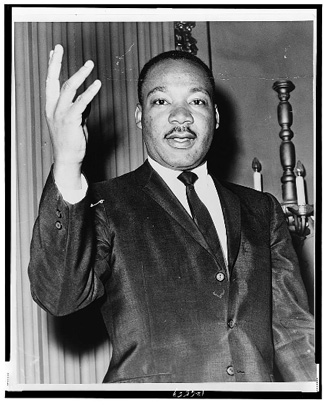
The Montgomery Improvement Association elected King president during the boycott launched after Rosa Parks’s arrest. Jo Ann Robinson and the Women’s Political Council helped mobilize residents, E. D. Nixon organized support, and thousands of participants sustained carpools and walking. The 1955–1956 campaign demonstrated the force of sustained collective protest against segregation. The federal lawsuit Browder v. Gayle provided a separate legal route to desegregation.
Michael King Jr. · Martin Luther King, Jr. · MLK
Abolitionist publishing and women’s rights
Verified FBA
Delaware, Canada and District of Columbia · Expansion and antebellum
Shadd Cary helped establish the Provincial Freeman in Canada with abolitionist Samuel Ringgold Ward. The newspaper argued for abolition, education, and Black self-determination across the U.S.–Canada border. Her work combined teaching, journalism, and later advocacy for women’s voting rights. The paper connected migrants and freedom seekers to debates over citizenship and opportunity.
Women’s organizing
Verified FBA
Tennessee and District of Columbia · Industrialization and Jim Crow
Terrell helped organize the National Association of Colored Women and served as its first president. The association connected Black women’s clubs working on education, suffrage, and community welfare.
New Deal administration and education
Verified FBA
South Carolina, Florida and District of Columbia · Depression and New Deal
Bethune served in the National Youth Administration under Franklin D. Roosevelt. She advocated for Black youth in federal education and employment programs and brought institutional experience from her school in Daytona Beach.
Field organizing and civil rights enforcement
FBA Verification Pending
Decatur and Jackson, Mississippi · Civil rights era
Evers became the NAACP's Mississippi field secretary in 1954. He organized membership and voter-registration work and pursued investigations and challenges to racial injustice. His work depended on local residents and the NAACP's wider network; his assassination in 1963 illustrates the lethal opposition faced by civil rights organizers. His contribution should remain distinct from the later prosecution pursued by his family and others.
Civil rights advocacy and legal accountability
FBA Verification Pending
Vicksburg and Jackson, Mississippi; California · Post-1965 America
Evers-Williams pursued justice for Medgar Evers for decades after his assassination. The 1994 conviction of Byron De La Beckwith followed earlier trials that had failed to produce convictions. Her persistence was part of a broader legal and investigative effort, and her independent leadership and civil rights work extend beyond her role in preserving her husband's legacy.
Education and institutional development
Verified FBA
Virginia and Alabama · Industrialization and Jim Crow
An educator trained at Hampton, Davidson worked with Booker T. Washington to develop Tuskegee Institute and raise support for its students and facilities.
Self-emancipation and testimony
Verified FBA
Virginia, Philadelphia and New Hampshire · Revolution and founding
Judge escaped the Washington household in Philadelphia in May 1796 with help from free Black contacts and passage aboard a ship to New Hampshire. She resisted later attempts to return her to slavery. Her nineteenth-century interviews preserve her own explanation of seeking freedom and expose the conflict between national ideals and the president’s household practices, including rotating enslaved workers out of Pennsylvania to evade emancipation rules.
Oney Judge · Ona Judge Staines
Congressional representation and anti-discrimination advocacy
FBA Verification Pending
Florence, Alabama; Chicago, Illinois; Washington, D.C. · Depression and New Deal
De Priest used a discharge petition in 1934 to challenge discrimination in the House’s restaurants. Elected from Illinois, he had returned Black representation to Congress after a prolonged absence. His effort exposes the contradiction between serving in the national legislature and confronting segregation within its facilities; the petition was a procedural challenge, not itself an end to all discrimination.
Maritime enterprise and citizenship
Verified FBA
Massachusetts and Sierra Leone · Revolution and founding
Paul Cuffe, his brother John, and other free Black petitioners challenged taxation without equal political rights in Massachusetts. Cuffe also built a maritime business with family and other partners. His later support for migration to Sierra Leone reflected his doubts about prospects for equality in the United States; it was one strategy within a wider, contested debate about Black freedom.
Theater and vocal performance
Verified FBA
New Jersey, New York and Britain · World War II
Robeson starred in a Broadway Othello directed by Margaret Webster, with Uta Hagen as Desdemona and José Ferrer as Iago. His performance followed his earlier London appearance in the role and helped challenge racial exclusion from major classical stage roles.
Civil rights law and family history
Verified FBA
Baltimore, Maryland; Durham, North Carolina; Washington, D.C. · Civil rights era
Murray's survey assembled state segregation and civil-rights laws into a reference used by lawyers challenging discrimination. The 1951 publication provided a research tool for collective legal work; it should not be credited as the sole cause of later court victories. Murray also used family history in the 1956 book Proud Shoes to examine slavery, freedom, kinship, and education across generations.
Reconstruction government and political representation
Verified FBA
Louisiana; Ohio; Mississippi · Reconstruction
Pinchback served as Louisiana’s acting governor during the political crisis of 1872–1873. His path included Union military service and Reconstruction organizing. He pursued disputed claims to seats in Congress but was never seated. His career illustrates the expansion of Black governmental authority and resistance to it; a surviving December 1872 commission documents his exercise of executive office.
Revolutionary service and community education
Verified FBA
Boston and Danvers, Massachusetts · Revolution and founding
After serving in the Continental Army, Hall joined Boston’s campaigns against slavery and educational exclusion. In 1798 he made his Beacon Hill home available for a community-run African School after efforts to obtain a public school failed. Yellow fever interrupted the school, which later operated in other locations. His work with Prince Hall and other residents connects revolutionary military service with the continuing struggle for equal citizenship.
Primus Trask
Abolition petitions and fraternal institution-building
Contribution documented · lineage not verified
Boston, Massachusetts · Revolution and founding
Hall joined seven other men in petitioning Massachusetts lawmakers in 1777 to end enslavement. Their appeal applied natural-rights arguments to people excluded from revolutionary liberty and asked legislators to extend freedom to the petitioners and their children. The petition did not succeed that year; it documents organized Black political action within the struggle over the meaning of independence.
Revolutionary military service and freedom
Contribution documented · lineage not verified
Portsmouth, New Hampshire · Revolution and founding
Whipple and other men of African descent petitioned New Hampshire’s legislature in 1779 to abolish slavery. Their argument applied the Revolution’s language of inherent rights to their own condition. The petition is preserved by the New Hampshire State Archives and interpreted by NPS. Whipple’s petitioning should be distinguished from later, disputed claims identifying him in the painting Washington Crossing the Delaware.
Reparations and international Black politics
FBA Verification Pending
New Iberia, Louisiana; Harlem, New York · Civil rights era
Moore developed her political work through Garveyism, labor and communist organizing, Black nationalism, and reparations advocacy. In 1963 she established a reparations committee calling for compensation to descendants of enslaved people. Her later participation in the Republic of New Africa connects demands for repair with debates about self-determination. Her relationships with other organizers illustrate that these movements developed through collective networks and disagreement as well as individual leadership.
Diplomacy, international mediation, and political science
Verified FBA
Detroit, Michigan; Los Angeles, California; United Nations; Middle East · Civil rights era
After the assassination of U.N. mediator Folke Bernadotte, Bunche became chief mediator and helped negotiate the 1949 armistice agreements between Israel and neighboring Arab states. The work earned him the 1950 Nobel Peace Prize. These were armistice agreements, not a permanent settlement of the conflict. His career links American political science and public service to the development of international mediation and U.N. peacekeeping.
Civil rights organizing and public leadership
Verified FBA
Linden and Montgomery, Alabama; Atlanta, Georgia; Washington, D.C. · Post-1965 America
Abernathy became president of the Southern Christian Leadership Conference after King’s assassination and continued organizing the Poor People’s Campaign. His earlier work included helping create the Montgomery Improvement Association and founding SCLC. His leadership combined local institution-building, mass meetings, and organizing; those contributions involved networks of residents, ministers, workers, and fellow activists.
Religion and institution building
Verified FBA
Philadelphia and Delaware · Expansion and antebellum
Richard Allen and other Black Methodist congregations organized the African Methodist Episcopal denomination in Philadelphia in 1816, and Allen became its bishop. This grew from earlier organizing that included Absalom Jones, the Free African Society, and Bethel church. Independent institutions created space for worship, mutual aid and education amid exclusion from white-controlled churches.
Congressional representation and civil rights
Verified FBA
Virginia, now West Virginia; Ohio; South Carolina; Washington, D.C. · Reconstruction
Cain was a prominent congressional advocate for the Civil Rights Act of 1875 and for federal investment in education. His work joined ministry, newspaper editing, and politics. Passage of the act was a collective legislative achievement; its protections and subsequent judicial destruction should be read alongside the speeches of Cain and his colleagues.
Civil rights organizing and public leadership
Contribution documented · lineage not verified
Tallahassee and St. Augustine, Florida · Civil rights era
Hayling, a dentist and local organizer, helped lead St. Augustine’s movement against segregation and worked with young activists and national civil-rights organizations. Local demonstrations and the violent response drew national attention during the struggle for the Civil Rights Act of 1964. The movement connected professional community leadership, youth activism, and national networks; the law should not be attributed to this campaign alone.
Congressional representation and civil rights
FBA Verification Pending
South Carolina; Washington, D.C.; birthplace disputed · Reconstruction
Elliott played a leading role in congressional debate on the legislation that became the Civil Rights Act of 1875. His arguments linked constitutional citizenship to the federal responsibility to protect Black Americans from exclusion and violence. His work with other legislators was substantial regardless of the unresolved contradictions in accounts of his birthplace and early education.
Congressional representation and civil rights
FBA Verification Pending
South Carolina; Washington, D.C. · Reconstruction
De Large took part in House debates on the Ku Klux Klan Act of 1871 and the Amnesty Act of 1872, pressing colleagues to protect Black civil and political rights. His term ended in January 1873 after a contested election caused the House to declare the seat vacant. His documented service should be distinguished from the unresolved details of his early family history.
Housing and federal administration
Verified FBA
Washington, D.C.; New York · Post-1965 America
Weaver became the first secretary of Housing and Urban Development in January 1966 after earlier work in federal housing administration. He advocated affordable housing and fair-housing legislation, bringing experience in economics and urban policy. His service connects New Deal-era efforts to include Black Americans in federal programs with the housing reforms of the 1960s.
Journalism and institution-building
Verified FBA
Georgia and Illinois · Industrialization and Jim Crow
Abbott launched the Chicago Defender in May 1905. Henrietta Lee provided space in her home as the struggling newspaper developed. Its reporting challenged racial violence and discrimination; in 1917 it promoted migration from the South through its Great Northern Drive. Editors, distributors, and readers helped build the paper’s national influence.
Reconstruction governance
Verified FBA
South Carolina and District of Columbia · Civil War and emancipation
Smalls, other crew members, and their families escaped Confederate Charleston aboard the Planter. He later represented South Carolina in Congress during and after Reconstruction.
Grassroots organizing and constituent service
Verified FBA
Alabama and Michigan · Civil rights era
Parks had served as a Montgomery NAACP secretary and worked with E. D. Nixon before her December 1 arrest for refusing to give up her seat. The Women’s Political Council and other local organizers mobilized a boycott, and the Montgomery Improvement Association coordinated the sustained campaign. Her action grew from years of organizing.
Rosa Louise McCauley Parks
Education, finance, and Reconstruction elections
Contribution documented · lineage not verified
Ohio; Shreveport, Louisiana · Reconstruction
Peters taught in Ohio before becoming cashier of the Shreveport Freedman’s Bank branch in 1871 and serving in educational administration. He won election to the House in 1872 but died during Shreveport’s 1873 yellow-fever epidemic before taking office. His record joins Black education, financial institutions, and electoral politics while distinguishing election from congressional service.
Education and women’s suffrage
Verified FBA
Brooklyn and Manhattan, New York · Industrialization and Jim Crow
Garnet’s long public-school career included service as a principal. She helped organize Brooklyn’s Equal Suffrage League and later led suffrage work within the National Association of Colored Women, founded in 1896. Her seamstress shop provided organizing space. Her educational and political work linked economic independence, community institutions, and voting rights; her sister Susan Smith McKinney Steward pursued medicine.
Antislavery poetry and organizing
Verified FBA
Philadelphia, Pennsylvania · Expansion and antebellum
Forten published antislavery writing under pen names including Ada and Magawisca. Her poem The Grave of the Slave was set to music by Francis Johnson, linking literary activism with Black musical performance. She also participated in the Philadelphia Female Anti-Slavery Society alongside her mother and sisters. Surviving sheet music documents the collaboration rather than assigning the song to a single creator.
Transatlantic abolition, suffrage, and medicine
Verified FBA
Salem, Massachusetts; Britain; Italy · Expansion and antebellum
Remond lectured against American slavery in Britain and Ireland after arriving in 1859. Her transatlantic activism linked abolition, racial equality, and women’s rights, including her signature on the 1866 British women’s suffrage petition. She studied in Britain and subsequently trained in Italy, where she practiced medicine. Her career belongs alongside brother Charles Lenox Remond and the women who organized antislavery networks.
Citizenship education and community organizing
Verified FBA
Charleston and Johns Island, South Carolina; the South · Civil rights era
Clark helped develop Citizenship Schools that connected literacy instruction to practical participation in civic life. Beginning on Johns Island and spreading through the South, the schools relied heavily on women as teachers and students. Clark's educational leadership worked through local teachers and organizing networks, helping communities confront literacy tests and other barriers to voting.
Abolition and women's rights
Verified FBA
Ulster County, New York; Massachusetts; Michigan · Expansion and antebellum
Truth dictated the narrative of her life, published in 1850, and spoke at the National Women's Rights Convention in Worcester that year. Her public work connected opposition to slavery with women's rights. Her memoir was a collaborative publication; later renderings of her speeches should be distinguished from contemporary transcripts rather than treated as interchangeable quotations.
Congressional representation and civil rights
FBA Verification Pending
South Carolina; Pennsylvania; Washington, D.C. · Industrialization and Jim Crow
After congressional and state legislative service, Miller helped establish the institution now known as South Carolina State University and became its first president in 1896. Its Black teaching staff expanded higher-education opportunities under segregation. His educational work followed unsuccessful efforts to prevent South Carolina’s 1895 constitution from stripping Black political rights.
Civil rights litigation and constitutional law
Verified FBA
Maryland and District of Columbia · Civil rights era
Marshall led NAACP legal work in the cases associated with Brown v. Board of Education. His mentor Charles Hamilton Houston helped build the earlier litigation strategy. Plaintiffs, local organizers, and a team of attorneys brought challenges that resulted in the Supreme Court declaring state-imposed public school segregation unconstitutional. Implementation required further litigation and organizing.
Local governance and community development
Contribution documented · lineage not verified
Lula and Mayersville, Mississippi · Post-1965 America
After participating in the Mississippi voting-rights movement, Blackwell won election as mayor of Mayersville in 1976. Her career connects grassroots civil rights organizing with the responsibilities of local government and community development. The National Park Service places her work within the history of Black women's political leadership; local governance should be represented alongside national officeholding in the timeline.
Autobiography and northern slavery
Contribution documented · lineage not verified
West Africa; Rhode Island, New York and Connecticut · Revolution and founding
Smith’s 1798 narrative describes capture in West Africa, slavery in New England, and efforts to purchase freedom and reunite his family. His account connects northern farming and commerce with the Atlantic slave trade. Contemporary advertisements and land records corroborate parts of the story. Historian John Wood Sweet notes that the often-repeated identification of Elisha Niles as the recorder lacks contemporary confirmation.
Broteer · Broteer Furro
Civil rights organizing and public leadership
FBA Verification Pending
Great Barrington, Massachusetts; Philadelphia; Atlanta; international · Industrialization and Jim Crow
Du Bois interviewed Philadelphia residents and combined empirical investigation with statistical analysis in The Philadelphia Negro. His later work joined scholarship, civil-rights organizing, editing The Crisis, and Pan-African advocacy. His historical writing challenged accounts that disparaged Black participation in Reconstruction. These contributions connect social science, publishing, and international political thought without treating all of his views as beyond criticism.
History writing and school desegregation
Verified FBA
Boston, Massachusetts · Expansion and antebellum
Nell organized petitions, boycotts, meetings and publicity against segregated schools over many years. The Massachusetts legislature prohibited public-school segregation in 1855, a collective victory involving families, activists and legislative allies. His historical writing also recovered Black revolutionary service, including Crispus Attucks, to strengthen claims to equal citizenship. His work connected research, community organization and changes in law.
Civil-rights law, military equality, and federal judging
FBA Verification Pending
Knoxville, Tennessee; Washington, D.C.; U.S. Virgin Islands; Philadelphia · Civil rights era
Hastie served as dean of Howard University’s law school, civilian aide to the secretary of war, governor of the U.S. Virgin Islands, and Third Circuit judge. His 1949 recess appointment was followed by Senate confirmation in 1950. His legal and administrative work connects civil-rights advocacy with debates over military segregation and Black access to federal authority.
Congressional oversight and executive organization
FBA Verification Pending
Albany, Georgia; Chicago, Illinois · Civil rights era
Dawson became chair of the House Committee on Expenditures in the Executive Departments in 1949 and sponsored the Reorganization Act that year. His committee work helped establish procedures for presidential proposals to restructure federal agencies, subject to congressional review. His career connected Chicago’s Democratic organization with national legislative authority and civil-rights advocacy.
Abolition and documentary preservation
Verified FBA
Burlington County, New Jersey; Philadelphia, Pennsylvania · Reconstruction
Still's Underground Rail Road preserved accounts, correspondence, and identifying information from people escaping slavery and those assisting them. His work with the Pennsylvania Anti-Slavery Society's Vigilance Committee connected direct assistance to documentary preservation. The book records a network of freedom seekers and collaborators, and remains evidence of their individual choices and collective organizing.