American history, connected
A kingdom, a palace and thousands of signatures
Native Hawaiian voices belong at the center of the story of U.S. expansion into Hawaiʻi.
A short read · 1893–1898 and continuing memory
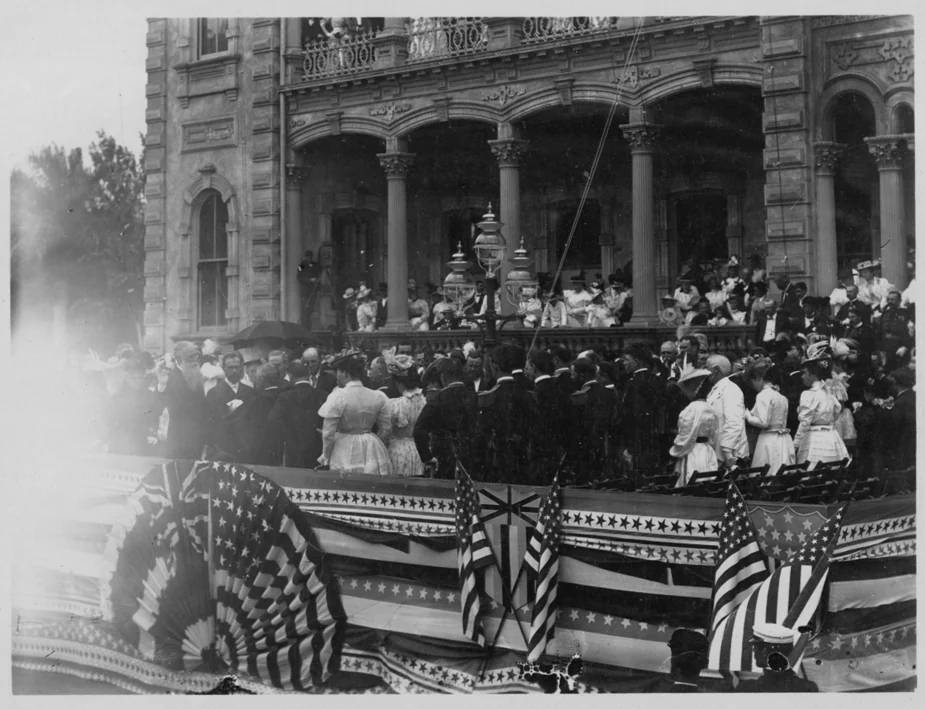
ʻIolani Palace helps us encounter Hawaiʻi as a kingdom with its own political life, rather than merely a future American state. The monarchy was overthrown in 1893. Queen Liliʻuokalani and many Native Hawaiians continued to resist the loss of their country’s independence.
In 1897, organizers gathered signatures against annexation. The National Archives preserves a petition from Hui Aloha ʻĀina bearing 21,269 names. A document like this makes opposition visible: people organized, met and signed rather than simply accepting a decision made elsewhere.
The wider American story
The United States annexed Hawaiʻi in 1898 through a congressional joint resolution after the proposed annexation treaty had failed to secure ratification. Reading the petition beside the resolution reveals a conflict over power and consent that a map of expanding U.S. territory can conceal.
Explore the palace and the petition together. They connect national expansion to a particular place and people. Native Hawaiian history has its own political setting; it should not be folded into a generic account of continental tribal history or treated as ending with annexation.
Pause and connect
What does this story add to the American history you already know?
Explore next
Sources and further reading
- NPS: ʻIolani Palace, History, Power and Prestige
- National Archives: The 1897 Petition Against Annexation
Sources checked November 16, 2026. This is an introductory story, not a complete account of every community.