
American history, connected
The same roads carried opportunity—and forced removal
Cherokee removal belongs inside the story of American transportation, land and slavery.
A short read · 1830s
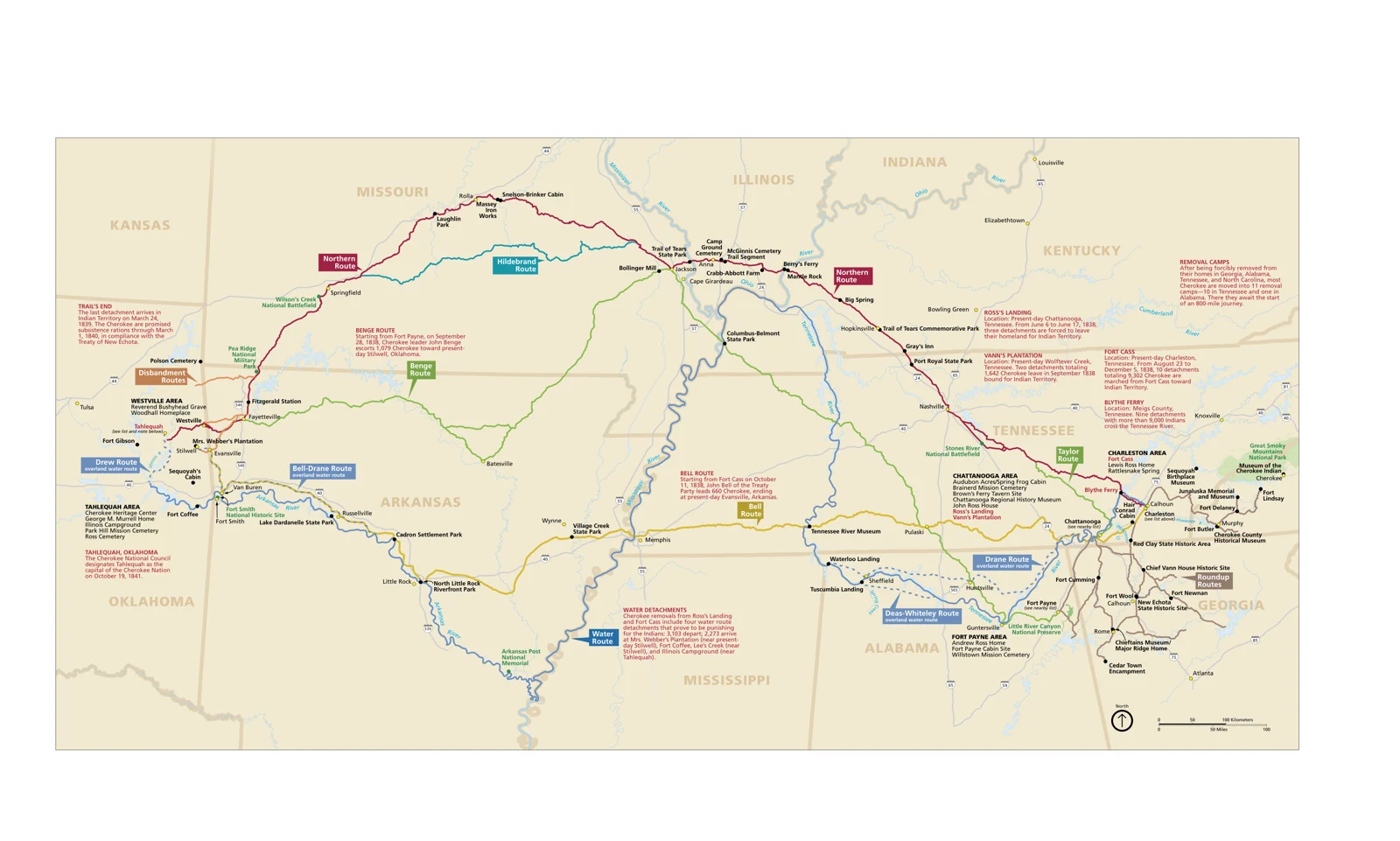
New roads, steamboats and railroads are often remembered as signs of American progress. They also helped carry Cherokee people away from their homes. In 1838–1839, forced removal sent communities from the Southeast toward Indian Territory, in what is now Oklahoma.
The Treaty of New Echota had been signed by a minority faction, against the opposition of most Cherokee people. Its enforcement brought soldiers, confinement and journeys marked by illness and loss. Survival required people to rebuild community life after displacement.
The wider American story
The National Park Service connects this removal to the era’s changing economy. Transportation made markets more accessible, helped expand a cotton economy dependent on enslaved Black labor, and supplied routes for forced migration. A train or riverboat could therefore mean very different things depending on who controlled the journey.
Read the Indian Removal Act alongside this history, then ask whose land and labor made expansion possible. Removal was not one identical experience across Native nations. This Cherokee account is one entry into a larger history requiring each nation’s own perspective.
Pause and connect
What does this story add to the American history you already know?
Explore next
Sources and further reading
Sources checked November 16, 2026. This is an introductory story, not a complete account of every community.