American history, connected
Chaco is a beginning, not an ending
Ancestral places connect us to living nations, artists, languages and communities.
A short read · Before European colonization–present
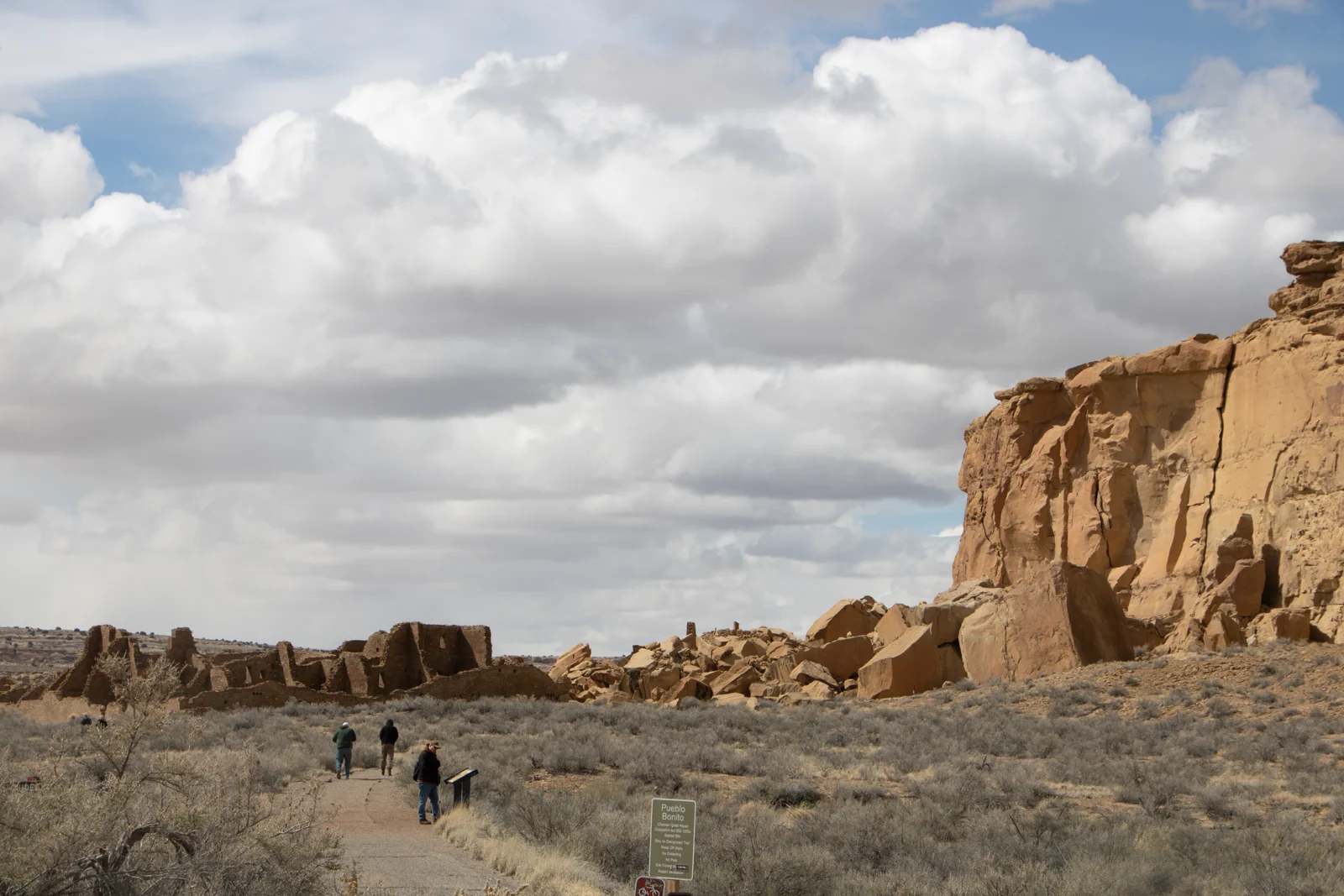
Long before the United States existed, builders at Chaco Canyon planned multistory great houses and connected communities across the Southwest. The canyon became a center of exchange and gathering. Its architecture points to careful observation, organization and knowledge of the surrounding landscape.
The story does not end when people leave an archaeological site. Chaco remains meaningful to descendant communities. The Indian Pueblo Cultural Center introduces New Mexico’s 19 Pueblos as distinct sovereign nations, not one vanished civilization. Their communities sustain traditions while their artists work in both established and contemporary forms.
The wider American story
Beginning American history here changes the questions we ask. Instead of treating the continent as an empty stage awaiting settlement, we encounter places already shaped by people, relationships and decisions. Then we can follow what changed—and what endured—through Spanish colonization, U.S. expansion and the present.
Explore the great houses, then visit the Cultural Center’s guide to living Pueblo communities. Cultural knowledge is not all public knowledge: follow each community’s own guidance about visiting, photography and ceremonies.
Pause and connect
What does this story add to the American history you already know?
Explore next
Sources and further reading
- Chaco Culture National Historical Park: History & Culture
- Indian Pueblo Cultural Center: The 19 Pueblos of New Mexico
Sources checked November 16, 2026. This is an introductory story, not a complete account of every community.