American history, connected
Freedom took a southern route
Near St. Augustine, people escaping slavery built a free Black community—and helped defend it.
A short read · Spanish Florida · 1738
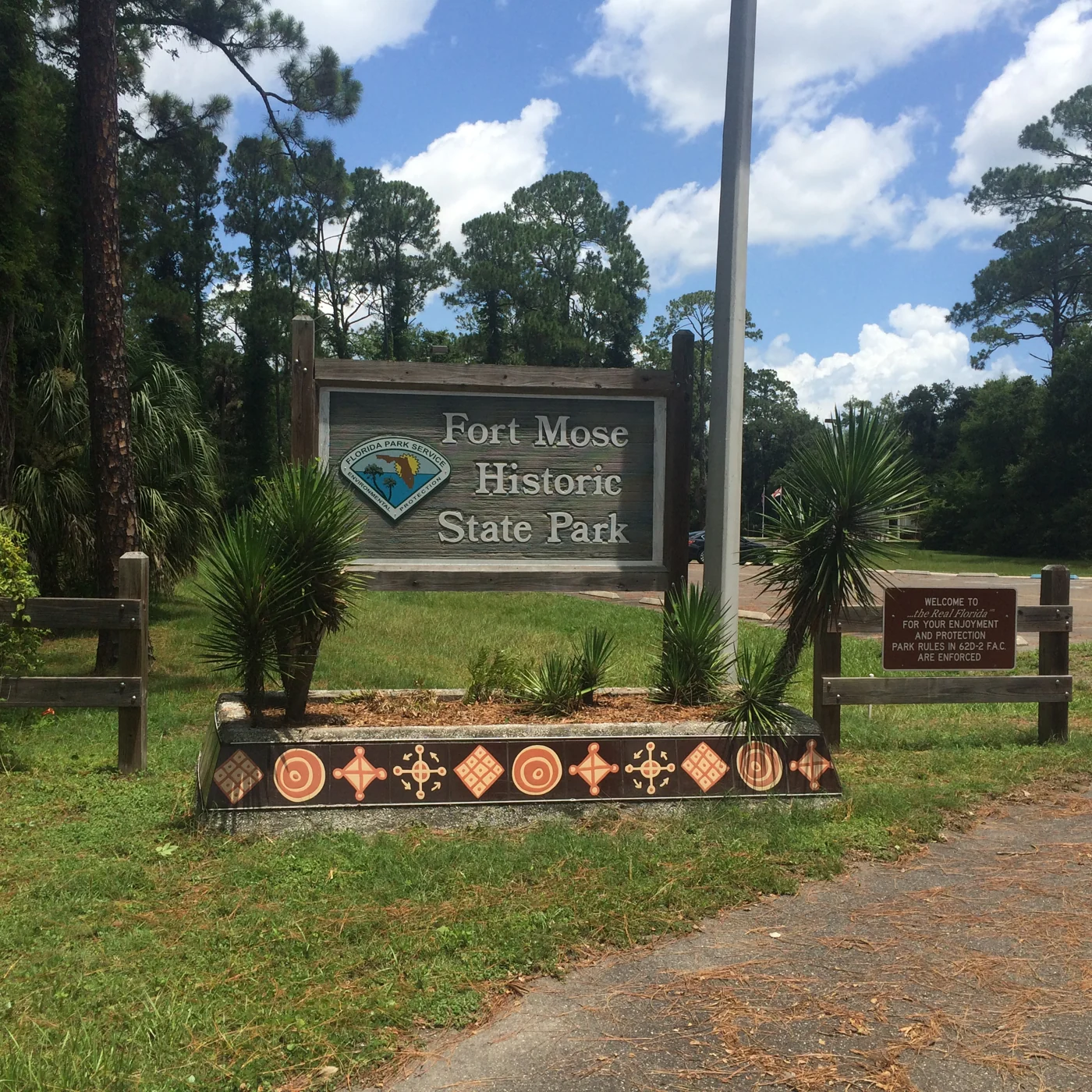
Freedom did not always lie to the north. People escaping enslavement in the Carolinas also traveled south into Spanish Florida. In 1738, Governor Manuel de Montiano established Gracia Real de Santa Teresa de Mosé near St. Augustine. The National Park Service identifies it as the first legally sanctioned free Black community within the present-day United States.
About a hundred people made a home there. Francisco Menéndez led its Black militia. Spain’s offer of freedom came with obligations, including Catholic conversion and service to the Crown; it did not mean slavery had disappeared from Spanish society. Residents made lives and defended their community within a struggle between European empires.
The wider American story
British forces occupied the fort during the 1740 attack on St. Augustine. Spanish forces and the Mosé militia recaptured it, but the settlement was destroyed. Residents later rebuilt. When Britain acquired Florida in 1763, the community left for Cuba.
Fort Mosé broadens the American story beyond the English colonies. It connects family, military service, imperial rivalry and people’s determined efforts to secure freedom.
Pause and connect
How did competing empires create openings for people seeking freedom—and impose new obligations?
Explore next
Sources and further reading
Sources checked November 16, 2026. This is an introductory story, not a complete account of every community.