American history, connected
Freedom brought another question: who belongs?
Cherokee Freedmen history connects the Civil War to a continuing struggle over citizenship.
A short read · Civil War–present
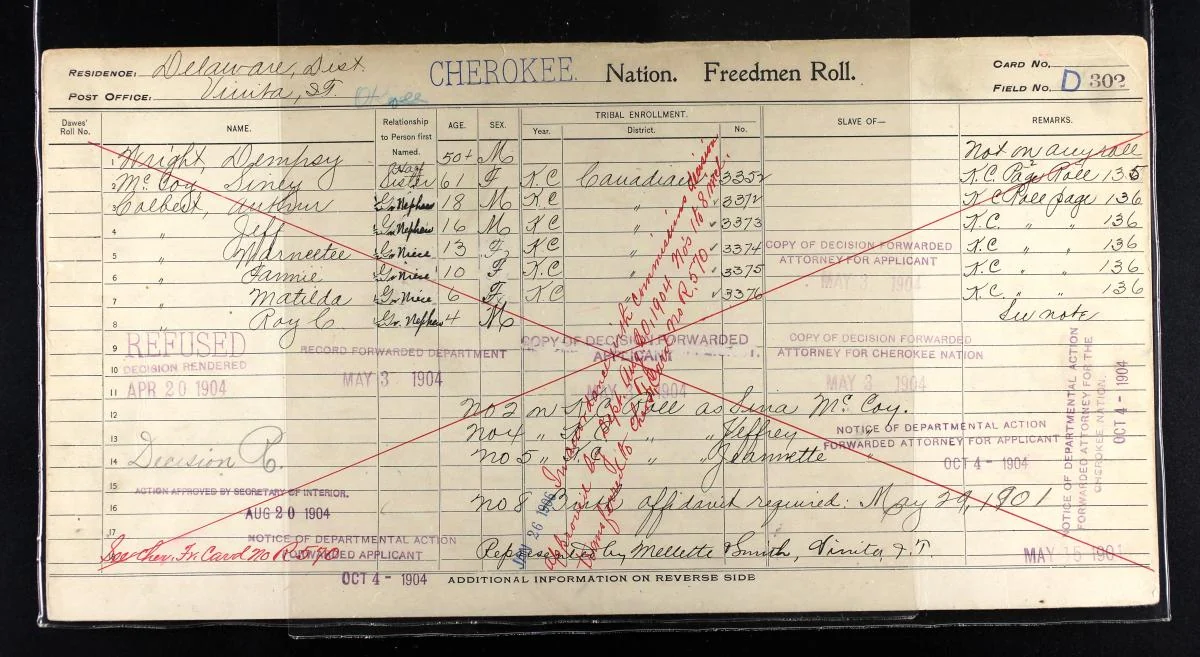
The Civil War divided Cherokee people as well as the United States. Some fought for the Confederacy; others supported the Union. In February 1863, the Cherokee National Council abolished slavery under tribal law. The nation’s 1866 treaty with the United States then recognized citizenship rights for qualifying Freedmen and their descendants.
Freedmen were people formerly enslaved within Native nations; their descendants’ histories cannot be reduced to a footnote about somebody else’s ancestry. Cherokee Nation’s own interpretation follows their experiences through slavery, removal and the long contest over treaty rights.
The wider American story
This story belongs beside the Reconstruction Amendments and Black political organizing. But the questions are not identical: tribal citizenship is membership in a political nation, not simply a racial category or proof of an Indigenous ancestor. A Black citizen of a Native nation need not fit someone else’s assumptions about what a citizen looks like.
The Cherokee, Chickasaw, Choctaw, Muscogee (Creek) and Seminole nations have distinct treaty and citizenship histories. Explore each separately rather than transferring one nation’s rules to another.
Pause and connect
What does this story add to the American history you already know?
Explore next
Sources and further reading
- Cherokee Nation: History
- Visit Cherokee Nation: Cherokee Freedmen
- GAO: Freedmen Descendants of the Five Tribes
Sources checked November 16, 2026. This is an introductory story, not a complete account of every community.