Explore documented contributors and their work. Verified FBA marks supported lineage; other entries remain part of the historical record without that designation.
Painting, murals, and arts education
Contribution documented · lineage not verified
Kansas, Harlem, and Nashville · Depression and New Deal
Aaron Douglas created Aspects of Negro Life for the 135th Street branch of the New York Public Library in 1934. His silhouettes and overlapping planes interpreted Black history in a public institution. His illustrations for Alain Locke, James Weldon Johnson, and Black periodicals linked literary and visual modernism; teaching at Fisk extended that work through education.
Cookbook authorship and food enterprise
Contribution documented · lineage not verified
South Carolina, Alabama, and San Francisco · Industrialization and Jim Crow
What Mrs. Fisher Knows About Old Southern Cooking was published in San Francisco by the Women’s Cooperative Printing Office in 1881. Its recipes preserved culinary knowledge across Fisher’s movement from the South to California. The Library of Congress documents her transition from enslaved cook to caterer and author. The book should be studied as evidence of food traditions and authorship without treating period health recipes as medical advice.
Religious institutions and mutual aid
Verified FBA
Delaware and Pennsylvania · Revolution and founding
Absalom Jones and Richard Allen organized the Free African Society to support their community through mutual aid. Jones later led the African Episcopal Church of St. Thomas and became an Episcopal priest in 1802. His work joined religious independence, education, and relief for people excluded from established institutions. In 1800 he also petitioned Congress against slavery and the slave trade.
Music performance, documentary direction and cultural history
FBA Verification Pending
Philadelphia; New York · Contemporary America
Ahmir Questlove Thompson directed Summer of Soul, bringing archival footage of the 1969 Harlem Cultural Festival into a documentary combining performance and historical reflection. The film reconnects music with the audience and community that sustained the event. Its contribution rests on earlier performers and recording crews as well as contemporary editing and direction. The American Film Institute recognized the documentary in its 2021 awards.
Track and field: high jump
Contribution documented · lineage not verified
Albany, Georgia; Tuskegee, Alabama; London · Civil rights era
Alice Coachman won the women’s high jump at the 1948 London Olympics, becoming the first Black woman to win an Olympic gold medal. Her training included work with Tuskegee coach Cleve Abbott after unequal access had forced her to improvise childhood practice facilities. She also competed in sprinting and relay events, then became an educator and supported younger athletes.
Tennis and professional sport
Contribution documented · lineage not verified
South Carolina, New York, and international tennis · Civil rights era
Althea Gibson won the French singles championship in 1956 and partnered with Angela Buxton to win the doubles title. These accomplishments preceded singles championships at Wimbledon and the United States Nationals in both 1957 and 1958. Her career challenged exclusion from elite tennis while demonstrating the importance of doubles partnerships and Black tennis institutions.
Modern dance
Contribution documented · lineage not verified
Texas, California and New York · Civil rights era
Revelations drew on spirituals and Ailey’s memories of Black life in Texas. His development included training with Lester Horton and encouragement from Carmen de Lavallade. The work became central to the Alvin Ailey American Dance Theater’s touring repertoire, bringing Black American experiences to audiences around the world.
Film acting and historical portrayal
FBA Verification Pending
New York; Florida; American stage and film industry · Post-1965 America
Angela Bassett portrayed Tina Turner in What’s Love Got to Do with It, earning an Academy Award nomination for the performance. Her wider screen work includes portrayals of Betty Shabazz and Rosa Parks and roles in contemporary drama and speculative fiction. The Academy’s career account documents a sustained range of performances; screen portrayals should be read alongside independent histories of the people represented.
Fashion and dressmaking
Verified FBA
Alabama, Florida, and New York · Civil rights era
Ann Lowe designed Jacqueline Bouvier’s 1953 wedding dress and dresses for the wedding party. Her expertise came from a multigenerational dressmaking practice taught by her mother Janie Cole and grandmother Georgia Thompkins. Her custom gowns demonstrate technical skill in construction and floral ornament. Collections at the Metropolitan Museum and Smithsonian preserve her broader career beyond this prominent commission.
Education and Black feminist thought
Verified FBA
Raleigh, North Carolina; Washington, D.C. · Industrialization and Jim Crow
Cooper's A Voice from the South argued for Black women's education and participation in public life. Her analysis connected racial exclusion, gender, and educational opportunity; her teaching and school leadership put educational commitments into institutional practice. Sources differ on her birth year: 1858 and 1859 both appear, so the displayed year is approximate pending reconciliation.
Beauty culture and institution building
Verified FBA
Illinois; St. Louis, Missouri · Great Migration and world wars
Annie Turnbo Malone developed hair-care products and a training and distribution system employing Black women as sales agents and beauty workers. The Poro College complex opened in St. Louis in 1918, combining business training with space for civic and community activities. Malone’s enterprise shows how beauty culture could sustain education, employment, and institutions amid racial exclusion.
Soul and gospel performance
Contribution documented · lineage not verified
Tennessee, Michigan and New York · Post-1965 America
Franklin’s recording reinterpreted Otis Redding’s song through a gospel-informed vocal approach. It became associated with demands for dignity and women’s equality. Credit includes Redding’s original songwriting and Franklin’s transformative performance and arrangement.
Sculpture and arts education
Verified FBA
Florida, Harlem, and Paris · Depression and New Deal
Augusta Savage’s monumental plaster sculpture The Harp was displayed at the 1939 New York World’s Fair. Inspired by Lift Every Voice and Sing, it connected visual form to the Johnson brothers’ music and poetry. Savage also taught artists and organized community art education in Harlem. The original sculpture was destroyed after the fair when funds for durable casting were unavailable.
Abolition, business and cross-border community building
Verified FBA
Virginia; Rochester and Brighton, New York; Upper Canada · Expansion and antebellum
Steward became vice president of the 1830 Black national convention in Philadelphia after establishing a business and educational work in Rochester. He invested in the Wilberforce settlement in Upper Canada, seeking opportunities for Black families, but returned to New York after the project’s financial and administrative failures. His career demonstrates cross-border institution-building, ambition and setbacks rather than a simple narrative of inevitable progress.
Revolutionary military service and freedom
Verified FBA
Groton, Chelmsford, Dracut and Lowell, Massachusetts · Revolution and founding
Lew enlisted as a fifer in John Ford’s company in 1775, following earlier French and Indian War service. Muster and pay records cited by NPS trace subsequent service, including Ticonderoga in 1776. He also worked as a cooper and farmer. The musical abilities of Lew, his wife Dinah, and their children connect Revolutionary service to a broader family tradition of performance.
Blues singing and recording
Contribution documented · lineage not verified
Tennessee and national touring circuits · Great Migration and world wars
Bessie Smith’s 1923 recording of Down-hearted Blues brought her voice to a national recording audience. Alberta Hunter and Lovie Austin wrote the song. Smith developed her performance practice in Black touring and vaudeville circuits and later recorded with musicians including Louis Armstrong. Her contribution lies in interpretation and performance as well as the commercial reach of her recordings.
Popular music and visual albums
FBA Verification Pending
Houston, Texas; international performance and recording · Contemporary America
Beyoncé’s visual album Lemonade combined songs and film to explore relationships, Black women’s experiences, and Southern cultural memory. Her solo career followed work in Destiny’s Child and included performance, songwriting, and business leadership. The National Women’s History Museum documents her career and the album’s cultural context. A full production account should preserve individual song and film credits rather than treating the collaborative album as the work of one person alone.
Jazz singing and protest performance
FBA Verification Pending
Philadelphia, Baltimore, and New York · Depression and New Deal
Holiday’s 1939 recording of Strange Fruit brought an anti-lynching work to record-buying audiences. Abel Meeropol wrote the song; Holiday’s interpretation became central to its cultural impact. Her broader career included collaborations with Teddy Wilson, Lester Young, and Benny Goodman. Songwriting, performance, and political circulation should receive distinct credit.
Baseball coaching, scouting and public history
FBA Verification Pending
Florida; Kansas City; Chicago · Civil rights era
John Jordan Buck O’Neil became the first Black coach on an American or National League roster in 1962. His earlier work with the Kansas City Monarchs encompassed playing and managing; his scouting helped develop later major-league talent. He also helped establish and lead the Negro Leagues Baseball Museum, preserving the record of players and institutions excluded from older mainstream baseball narratives.
Architecture and architectural education
Verified FBA
Tennessee and the southeastern United States · Great Migration and world wars
Calvin McKissack brought architectural practice and teaching experience to the partnership established with his brother Moses in 1922. He had taught architectural drawing at Tennessee Agricultural and Industrial State Normal School and directed industrial arts at Pearl High School. The brothers’ firm later received a 1942 contract for the Tuskegee air base. Individual and firm responsibilities should be distinguished in project-specific records.
Dance, choreography and theater
Contribution documented · lineage not verified
Los Angeles; New York; international dance circuits · Civil rights era
Carmen de Lavallade made her Broadway debut in House of Flowers alongside Alvin Ailey in 1954. She had trained with Lester Horton and helped introduce Ailey to his school. Her later career encompassed the Metropolitan Opera, choreography, film, and teaching movement to actors at Yale. Collaborations with Geoffrey Holder, John Butler, and other choreographers contributed to an extensive repertoire.
Education, theater, and library building
Verified FBA
Georgia and Little Rock, Arkansas · Industrialization and Jim Crow
Carrie Still began teaching English at Little Rock’s Union School in 1896. Her later cultural organizing included staging Shakespeare performances to raise funds for books when Black residents were denied the city’s public library. The resulting collection supported a library at Capitol Hill High School. She was also the mother of composer William Grant Still; her educational and cultural work deserves a record of its own. The year 1896 marks the teaching appointment, not a verified date for the library campaign.
Photography and contemporary visual art
Contribution documented · lineage not verified
Oregon, California, and New York · Post-1965 America
Carrie Mae Weems’s Kitchen Table Series stages a woman’s relationships and domestic life through photographs and text. The artist appears as the central character; the work examines race, gender, and representation. The National Gallery’s 2003 portfolio edition credits Pamela VanderZwan for design, John Marcy for photograph printing, and Peter Kruty Editions for text printing, preserving the distinction between the 1990 work and later production.
Historical scholarship and education
Verified FBA
Virginia and District of Columbia · Industrialization and Jim Crow
Woodson joined William B. Hartgrove, George Cleveland Hall, Alexander L. Jackson, and James E. Stamps to establish the Association for the Study of Negro Life and History. Through its journal, publications, and educational work, the organization built an institutional base for studying Black American history. Woodson introduced Negro History Week in 1926. Mary McLeod Bethune later led the association.
Education and documentary writing
Verified FBA
Philadelphia, Pennsylvania; Salem, Massachusetts; Sea Islands, South Carolina · Civil War and emancipation
Forten arrived in the Sea Islands in October 1862 to teach formerly enslaved students. Her journals record classroom work, community life, and the uncertainties of wartime emancipation. Her contribution belongs alongside the students’ pursuit of education, local Black communities, and fellow teachers rather than a story in which outside educators alone created learning.
Rock and roll guitar and songwriting
FBA Verification Pending
St. Louis, Missouri; national recording circuits · Civil rights era
Chuck Berry combined sharply observed lyrics, guitar figures, and rhythmic drive in Roll Over Beethoven. Pianist Johnnie Johnson and other musicians contributed to the sound of his recordings. Berry drew on existing blues and rhythm-and-blues practices, and his songs became important material for later rock performers. The National Recording Registry essay places his achievement within those musical relationships rather than attributing an entire genre to one inventor.
Civil rights organizing and public leadership
Verified FBA
Marion, Alabama; Boston, Massachusetts; Atlanta, Georgia; international · Post-1965 America
After Martin Luther King Jr.’s assassination, Coretta Scott King led a Memphis sanitation-workers march and helped launch the Poor People’s Campaign. She founded the King Center and later led efforts for the federal King holiday. Her independent activism also included disarmament, freedom concerts, women’s organizations, and opposition to apartheid; her contribution should not be reduced to supporting her husband.
Civil rights organizing and public leadership
Contribution documented · lineage not verified
Huttig and Little Rock, Arkansas · Civil rights era
As Arkansas NAACP president, Bates advised and supported the nine Black students who desegregated Little Rock Central High School in 1957. She and L. C. Bates used the Arkansas State Press to challenge segregation and publicize injustice. The students’ own actions, their families, legal advocates, and federal intervention must remain visible alongside Bates’s organizing.
Abolitionist publishing and political thought
Verified FBA
Wilmington, North Carolina; Boston and Atlantic circulation networks · Expansion and antebellum
Walker’s Appeal challenged slavery, racism and schemes to remove free Black Americans from the country. Its biblical and historical arguments called readers to resist oppression and claim citizenship. Sailors helped circulate copies into southern ports, prompting alarm among authorities. His writing emerged from Boston organizing, business and newspaper networks and influenced abolitionists including Frederick Douglass.
Film acting
FBA Verification Pending
Missouri; American film industry; international film audiences · Contemporary America
Don Cheadle played hotel manager Paul Rusesabagina in Hotel Rwanda, directed by Terry George, with Sophie Okonedo as Tatiana Rusesabagina. His acting brought audiences into a dramatized account set during the 1994 genocide against the Tutsi. The American Film Institute catalog records the film and its collaborators. A dramatic portrayal is distinct from evidence establishing every event depicted in the screenplay.
Modern dance and choreography
Contribution documented · lineage not verified
Harlem, New York; California; international dance companies · Civil rights era
Donald McKayle’s Games brought urban children’s play into concert dance. His later works, including Rainbow Round My Shoulder and District Storyville, explored labor, confinement, and Black cultural history. He directed his own company and worked in Broadway theater, film, and education. Carmen de Lavallade was among the performers associated with his work; the University of California, Irvine preserves his creative archive.
Jazz composition and orchestration
FBA Verification Pending
District of Columbia and New York · World War II
Ellington presented Black, Brown and Beige at Carnegie Hall as an extended work for jazz orchestra addressing African American history. The work expanded the scale and concert setting of jazz composition and depended on the expressive capabilities of his orchestra’s individual players.
Sculpture
Contribution documented · lineage not verified
New York, Boston, and Rome · Reconstruction
Edmonia Lewis carved The Death of Cleopatra in marble and exhibited it at Philadelphia’s 1876 Centennial Exhibition. Working in Rome, she represented the queen after death rather than merely anticipating it. The sculpture’s later rediscovery and conservation reveal how the survival of objects shapes art history. Her African American and Indigenous heritage should be described without converting broad ancestry accounts into an unsupported FBA designation.
Foodways and culinary writing
Verified FBA
Virginia and New York · Post-1965 America
Lewis organized The Taste of Country Cooking around seasonal meals and the agricultural life of Freetown, Virginia. Her writing preserved Black Southern food knowledge and the social relationships behind the recipes, bringing that tradition to a national cookbook readership.
Baseball administration and civil rights organizing
Contribution documented · lineage not verified
Philadelphia; Newark, New Jersey · Civil rights era
Effa Manley co-owned the Newark Eagles with Abe Manley and handled contracts, travel, promotion, and player welfare. The team won the Negro League World Series in 1946. She also organized support for civil rights causes and advocated recognition of Negro League players. Her managerial contribution belongs alongside the achievements of the Eagles’ players and coaches.
Printmaking, sculpture, and political art
FBA Verification Pending
Washington, Iowa, and Mexico · Civil rights era
Catlett’s linocuts portrayed Black women’s labor, oppression, resistance, and achievement. Created in 1946–1947, the series also exists in later printings: MoMA’s 1989 edition credits the Robert Blackburn Printmaking Workshop. Catlett worked within Mexico’s Taller de Gráfica Popular and taught at UNAM. Her career connects African American experience with Mexican collective printmaking and political art.
Dressmaking and memoir
Verified FBA
Virginia and District of Columbia · Reconstruction
Keckly’s memoir recorded her life in slavery, skilled dressmaking, and relationship with Mary Lincoln. Her work also included philanthropy for newly freed people through the Contraband Relief Association. The memoir’s reception shows the constraints faced by a Black woman claiming authority as both a professional and an author.
Jazz singing and song interpretation
Contribution documented · lineage not verified
Virginia, New York, and international touring · Civil rights era
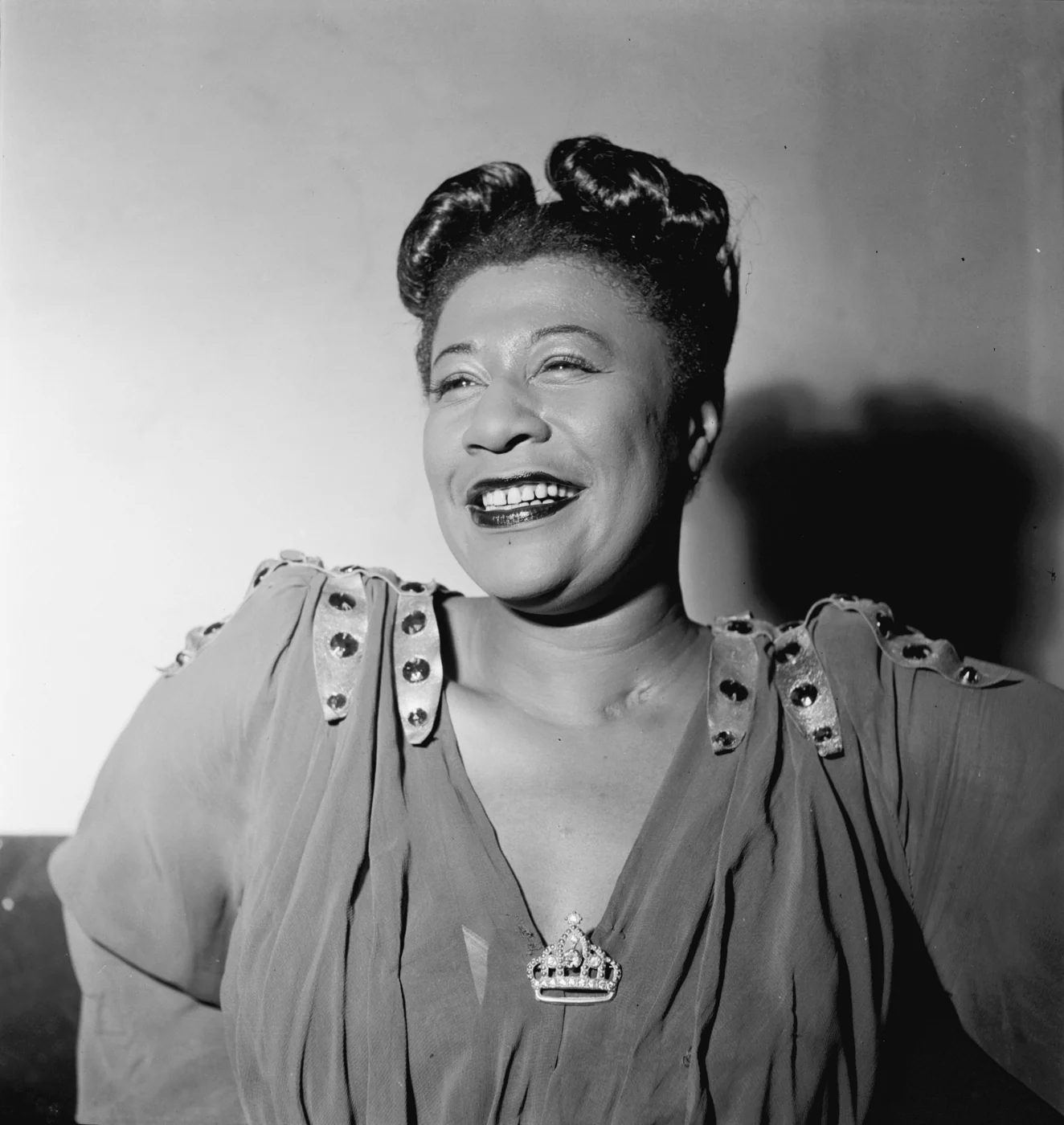
Fitzgerald’s 1956 Cole Porter Song Book launched a major series interpreting American composers and lyricists. Her career combined lyric interpretation, rhythmic invention, and scat singing. Producer Norman Granz and arrangers including Buddy Bregman and Nelson Riddle contributed to the broader songbook project; the Library of Congress preserves arrangements and performance materials that allow those roles to be examined.
Orchestral composition
Verified FBA
Arkansas and Chicago, Illinois · Depression and New Deal
The Chicago Symphony Orchestra premiered Florence Price’s Symphony No. 1 on June 15, 1933, conducted by Frederick Stock. Chicago Music Association leader Maude Roberts George raised funds for the concert. Price’s work brought her own treatment of musical traditions into symphonic form. The event’s significance includes the composition, performers, and Black cultural organizers who enabled its presentation.
Literature, abolition, and women's rights
Verified FBA
Baltimore, Maryland; Philadelphia, Pennsylvania · Reconstruction
From the Philadelphia home she occupied beginning in 1870, Harper continued a career spanning anti-slavery lectures, poetry, fiction, women's rights, and temperance reform. Her writing addressed African American experience, while her organizing pressed for education, employment opportunities, and political rights for Black women. This event marks the beginning of her documented residence, not the beginning of her activism.
Household management and skilled domestic labor
Verified FBA
Mount Vernon, Virginia · Revolution and founding
As butler, Lee oversaw tableware and provisions, supervised cleaning, served meals and greeted visitors. The 1799 estate inventory identified a storage area under his direction. His managerial work sustained the household in which public hospitality and political relationships operated. He and his brother William Lee were separated from their mother and sisters through sale; professional responsibility did not remove the coercion of slavery.
Literature and abolition
Verified FBA
Maryland and Massachusetts · Expansion and antebellum
Douglass published his account of enslavement and escape. William Lloyd Garrison and Wendell Phillips contributed introductory material. The book gave readers firsthand testimony that challenged defenders of slavery.
Linguistics and language education
Contribution documented · lineage not verified
Michigan and United States · Post-1965 America
Geneva Smitherman’s Talkin and Testifyin: The Language of Black America appeared in 1977. Her scholarship connected African American language to cultural expression and challenged judgments that treated it as deficient English. Her later institutional work included cofounding Michigan State University’s African American and African Studies doctoral program. Purdue preserves recordings of her 1982 lecture and radio interview for further research.
Photography and film
Contribution documented · lineage not verified
Kansas, District of Columbia and New York · Post-1965 America
Parks adapted his autobiographical novel The Learning Tree into a feature film. His career had already included Farm Security Administration photography under Roy Stryker and photo essays for Life. Moving between photographs, prose, music, and film, he documented racial inequality and developed narratives drawn from Black American life.
Poetry and literary community
FBA Verification Pending
Kansas and Chicago, Illinois · Civil rights era
Gwendolyn Brooks’s poetry made the lives of Chicago’s Black communities central to American literary art. Annie Allen received the 1950 Pulitzer Prize for poetry. Her formal experiments drew on modernist technique and Black speech and musical traditions. Her later support of younger writers and Black publishing connects literary achievement to community institutions.
Radio, broadcasting ownership, and cultural programming
Contribution documented · lineage not verified
Washington, D.C., and New York · Post-1965 America
Hal Jackson joined other Black entrepreneurs in establishing Inner City Broadcasting in 1971. His work combined radio programming, sports coverage, television, and scholarship initiatives. His long-running Sunday Classics program connected music and community memory. The National Association of Broadcasters inducted him into its broadcasting hall of fame in 1990.
Abolition, public oratory, and religion
Verified FBA
Kent County, Maryland; New York; Washington, D.C.; Liberia · Civil War and emancipation
On February 12, 1865, Garnet delivered a sermon in the House chamber commemorating the House’s passage of the Thirteenth Amendment. He spoke to a worship service, not a legislative session or a joint address to Congress. The published discourse, introduced by James McCune Smith, records an abolitionist intervention at a moment when nationwide constitutional abolition still awaited ratification.
Painting
Verified FBA
Pennsylvania and France · Industrialization and Jim Crow
Tanner portrayed intergenerational musical instruction with close attention to gesture and light. He studied with Thomas Eakins in Philadelphia and pursued much of his career in France, where his paintings reached French exhibition audiences.
Investigative journalism
Verified FBA
Mississippi and Illinois · Industrialization and Jim Crow
Wells worked with Frederick Douglass and other advocates on a pamphlet challenging the exclusion of Black Americans at the Chicago fair. The publication put American racial discrimination before visitors to an international exposition.
Baseball
Verified FBA
Georgia, California and New York · Civil rights era
Robinson’s April 15 debut for the Brooklyn Dodgers broke the modern major leagues’ exclusion of Black players. His play, public visibility, and endurance of racial hostility made the season a landmark in American sports and civil rights. The event followed a much longer history of Black professional baseball.
Painting and narrative history
Contribution documented · lineage not verified
New Jersey, Harlem, and Seattle · World War II
Jacob Lawrence’s sixty-panel Migration Series narrated the mass movement of Black Americans from the South through images and captions. Gwendolyn Knight prepared panels and helped with captions. Harlem teachers and institutions, including Charles Alston and Augusta Savage, supported his development. The series makes labor, violence, family decisions, and urban opportunity part of a collective historical narrative.
Essays and literature
Contribution documented · lineage not verified
New York and France · Civil rights era
The Fire Next Time paired a letter to Baldwin’s nephew with an essay examining religion and race. Its personal address connected family experience to the national history of racial power, making it an important literary intervention during the civil rights movement.
Soul, funk and live performance
Contribution documented · lineage not verified
South Carolina; Georgia; Harlem, New York · Civil rights era
Recorded at Harlem’s Apollo Theater in October 1962 and released in 1963, Live at the Apollo preserved James Brown’s singing, dramatic pacing, and interaction with an audience. The Famous Flames and accompanying musicians were integral to the performance. The album helped bring a Black theatrical performance tradition to a wider record-buying public and documents the collaborative musical discipline behind Brown’s stage presence.
Culinary arts and transatlantic foodways
Verified FBA
Virginia, Paris, Philadelphia, and New York · Revolution and founding
James Hemings trained in French kitchens while enslaved by Thomas Jefferson and subsequently cooked in American households central to the new republic’s political life. Jefferson made his freedom conditional on teaching a replacement cook, his brother Peter. James completed that work and received manumission in 1796. The brothers’ skills and coerced labor belong in accounts of elite dining and culinary exchange; particular food-invention claims require separate evidence.
Photography and community documentation
Contribution documented · lineage not verified
Lenox, Massachusetts, and Harlem, New York · Post-1965 America
James Van Der Zee photographed Harlem families, storefronts, ceremonies, and associations through studio and community work. His images received renewed attention in the Metropolitan Museum’s controversial 1969 Harlem on My Mind exhibition. Gaynella Greenlee helped establish his studio enterprise. His photographs record community self-presentation, including deliberate staging and retouching, rather than offering neutral windows into the past.
Literature and songwriting
Verified FBA
Florida and New York · Industrialization and Jim Crow
James Weldon Johnson wrote the words of Lift Every Voice and Sing, and his brother John Rosamond Johnson composed the music. Their collaboration grew from their Jacksonville educational and musical work. The song acquired an enduring place in Black civic life, while James later worked as a writer, diplomat, and civil rights organizer.
Ballet and choreography
Contribution documented · lineage not verified
New Orleans; Los Angeles; New York · Civil rights era
Janet Collins made her Metropolitan Opera debut in Aida on November 13, 1951. The institution identifies her as its first Black permanent company member and prima ballerina. Her achievement followed years of dance training, choreography, and solo performance amid exclusion from ballet opportunities. The Metropolitan Opera’s performance archive documents the debut and its larger cast rather than presenting the production as an individual achievement.
Track and field
FBA Verification Pending
Alabama, Ohio and Germany · Depression and New Deal
Owens won the 100 meters, 200 meters, long jump, and 400-meter relay at the Berlin Olympics. His athletic achievements challenged the racial claims surrounding the Nazi-hosted Games, even as racial discrimination continued in the United States.
Composition and music education
Verified FBA
Florida and New York · Industrialization and Jim Crow
John Rosamond Johnson supplied the music for words written by his brother James Weldon Johnson. His training at the New England Conservatory and work supervising music in Jacksonville schools informed a career spanning composition, teaching, and performance. The brothers’ distinct roles should be credited together.
Political representation and journalism
FBA Verification Pending
Kaskaskia, Illinois; Louisiana; Florida · Reconstruction
Menard won a Louisiana congressional election in 1868, but the House did not seat him after a challenge. On February 27, 1869, he addressed the chamber to defend his claim. He also worked as a journalist and writer. His election and speech are distinct from actual service as a Member of Congress.
Dance, theater and international performance
Contribution documented · lineage not verified
St. Louis, Missouri; Paris, France · Great Migration and world wars
Josephine Baker’s appearance in La Revue Nègre in Paris in 1925 helped establish an international performing career. Her dancing and comic stage presence emerged from Black American touring and theatrical traditions. Baker worked within a company of performers, and her reception also reflected European racial stereotypes. She later supported the French Resistance and opposed racial segregation, linking performance celebrity with political action.
Baseball catching and hitting
Contribution documented · lineage not verified
Georgia; Pittsburgh; Negro League baseball circuits · World War II
Josh Gibson’s hitting and catching helped make the Homestead Grays a leading Negro League team. Working with teammates including first baseman Buck Leonard, Gibson contributed to the Grays’ 1943 and 1944 Negro World Series championships. His career demonstrates the high level of professional baseball sustained outside segregated American and National League rosters. Incomplete surviving statistics require care when comparing totals and records across leagues.
Poetry and religious writing
FBA Verification Pending
New York · Colonial America
Hammon composed An Evening Thought in 1760 and published it in 1761. His religious poetry explored salvation and enslavement within the eighteenth-century Black Atlantic. He later addressed a poem to Phillis Wheatley Peters, linking two early Black literary voices. His surviving work needs to be read alongside the restrictions under which he remained enslaved.
Dance and anthropology
Contribution documented · lineage not verified
Illinois, New York and the Caribbean · Depression and New Deal
Dunham combined anthropological fieldwork with choreography, drawing on African American and Caribbean movement traditions. Her touring company, school, and technique carried this research into concert performance and dance training. The communities she studied supplied knowledge central to the work and deserve recognition alongside her choreographic authorship.
Poetry and literature
Verified FBA
Missouri, Kansas, Harlem, and international travel · Great Migration and world wars
The Weary Blues brought blues rhythm, Black urban life, and poetic experiment into a 1926 collection. Hughes’s writing extended across poetry, fiction, drama, journalism, and translation. His work belongs within the Harlem Renaissance and the wider networks of Black publishers, performers, and readers that sustained it.
Film acting and speculative fiction
FBA Verification Pending
Georgia; New York; American film industry · Post-1965 America
Laurence Fishburne played Morpheus in The Matrix, alongside Keanu Reeves and Carrie-Anne Moss. The character guides the central protagonist through questions about perception, freedom, and control. The film’s effect combines ensemble acting with the Wachowskis’ direction, action choreography, design, and visual effects. Cornell Cinema and the American Film Institute document the film and its principal cast.
Educational broadcasting and acting
FBA Verification Pending
Sacramento; American television and literacy education · Post-1965 America
LeVar Burton began hosting Reading Rainbow in 1983 and served as its host and executive producer through 2006. The series used books and documentary-style experiences to encourage children’s engagement with reading. Burton worked with a production team, authors, and illustrators; the program’s educational contribution followed his acting work in Roots and continued alongside Star Trek: The Next Generation.
Creole cuisine and restaurant institution building
Contribution documented · lineage not verified
New Orleans and Madisonville, Louisiana · Civil rights era
Leah Chase and Edgar Dooky Chase Jr. transformed the family restaurant in New Orleans into a center of Creole dining during the early 1950s. Her cooking, mentorship, and support for Black art connected food with civic life. The restaurant also welcomed civil rights organizing. Later public recognition, including the influence on Disney’s Princess Tiana, carried aspects of this local culinary history to wider audiences.
Jazz composition, performance, and bandleading
Verified FBA
Memphis and Chicago · Great Migration and world wars
The Library of Congress preserves Lil Hardin’s 1923 copyright deposits for My Sweet Lov-in Man, with Walter Melrose, and Tears, with Louis Armstrong. A pianist, composer, arranger and bandleader, she was an active creator in early jazz and later led her own ensembles. Her musical authorship and career support for Louis Armstrong are distinct contributions that should both be credited.
Rock and roll singing and piano
Contribution documented · lineage not verified
Macon, Georgia; New Orleans, Louisiana · Civil rights era
Little Richard’s 1955 recording of Tutti Frutti brought his explosive vocal style and piano-driven performance to a wide audience. Dorothy LaBostrie helped reshape the lyrics, producer Robert Blackwell directed the session, and Cosimo Matassa’s New Orleans studio supplied the recording setting. Its enduring influence belongs to this collaborative history as well as Little Richard’s distinctive performance.
Jazz performance
Verified FBA
Louisiana, Illinois and New York · Great Migration and world wars
Armstrong’s Hot Five and Hot Seven sessions of 1925–1928 helped establish improvised solo performance as a central force in jazz. The records were ensemble achievements, with collaborators including pianist Lil Hardin Armstrong. Their preservation in the National Recording Registry recognizes their lasting influence on musical performance.
Painting and arts education
Contribution documented · lineage not verified
Boston, Washington, Paris, and Haiti · Depression and New Deal
Les Fétiches brought African masks into a modernist composition in 1938. Jones worked across painting, textile and costume design, and teaching. Her American, French, and Haitian experiences shaped a career that crossed national art contexts. At Howard University she taught artists including Elizabeth Catlett, linking her own practice to the education of another generation.
Track and field; community sport
Verified FBA
Georgia, California, Oregon, and Berlin · Depression and New Deal
Matthew MacKenzie “Mack” Robinson won the 200-meter silver medal at the 1936 Berlin Olympics behind United States teammate Jesse Owens. He later competed for the University of Oregon and won national sprint titles in 1938. His achievement belongs alongside, rather than beneath, the histories of Owens and younger brother Jackie Robinson. University of Oregon reporting documents his later community work in Pasadena and support for Special Olympics participants.
Beauty culture and entrepreneurship
Verified FBA
Louisiana; Indianapolis, Indiana · Industrialization and Jim Crow
Sarah Breedlove, known as Madam C.J. Walker, developed a hair-care manufacturing, training, and sales business. Her Indianapolis establishment provided a base for production and beauty education. A network of women agents sold products and built businesses of their own. Walker had earlier worked with Annie Turnbo Malone’s products; her achievement belongs within a wider history of Black women’s entrepreneurship, philanthropy, and hair care.
Education and abolitionist institutions
Verified FBA
Philadelphia, Pennsylvania · Expansion and antebellum
Forten worked for decades as an educator, including teaching at Sarah Mapps Douglass’s school and opening her own school in 1850. She helped draft the Philadelphia Female Anti-Slavery Society’s constitution and served as an officer. These educational and organizational contributions show the work required to sustain community learning and reform.
Abolitionist oratory and Black women’s political thought
FBA Verification Pending
Hartford, Connecticut; Boston, Massachusetts · Expansion and antebellum
Stewart used lectures and published essays to argue against slavery, racial exclusion and restrictions on Black women’s intellectual lives. Her 1832 Franklin Hall address challenged conventions that confined women’s political speech. David Walker influenced her thinking and William Lloyd Garrison published her work; her religious arguments made Black women’s education and political agency central to liberation.
Maria Miller
Concert singing
Contribution documented · lineage not verified
Pennsylvania, District of Columbia and Europe · Depression and New Deal
After exclusion from Constitution Hall, Anderson performed outdoors at the Lincoln Memorial. Accompanist Kosti Vehanen joined her in a program combining concert repertoire, patriotic song, and spirituals. The broadcast made the event a national encounter with racial exclusion in American cultural institutions.
Abolitionist publishing and women’s rights
Verified FBA
Delaware, Canada and District of Columbia · Expansion and antebellum
Shadd Cary helped establish the Provincial Freeman in Canada with abolitionist Samuel Ringgold Ward. The newspaper argued for abolition, education, and Black self-determination across the U.S.–Canada border. Her work combined teaching, journalism, and later advocacy for women’s voting rights. The paper connected migrants and freedom seekers to debates over citizenship and opportunity.
Jazz composition, arranging and piano
FBA Verification Pending
Atlanta; Pittsburgh; Kansas City; New York · World War II
Mary Lou Williams composed Zodiac Suite as twelve musical portraits associated with astrological signs. She developed the work for her radio program and recorded it in 1945. Her compositions and arrangements also shaped the repertoire of Andy Kirk’s Clouds of Joy and other bands. Manuscripts and recordings held at Rutgers document the changing forms of the suite and make her compositional labor assessable beyond performance alone.
Memoir, poetry, and performance
FBA Verification Pending
Missouri, Arkansas, California, and international travel · Post-1965 America
Angelou’s 1969 memoir brought childhood, racial violence, gender, family, and language into an influential autobiographical narrative. Her work also encompassed performance and civil rights activism. In 1993 she read On the Pulse of Morning at a presidential inauguration, connecting literary voice to national civic ritual.
Sculpture and historical representation
Verified FBA
Philadelphia, Paris, and Massachusetts · Great Migration and world wars
Commissioned for the 1921 America’s Making exposition, Ethiopia presented a figure emerging from mummy-like bindings. Fuller used allegory to connect Black cultural renewal with African antiquity. W. E. B. Du Bois and James Weldon Johnson helped commission the work. It belongs alongside Fuller’s earlier historical tableaux as an intervention in who represents American history.
Pop singing, songwriting and performance
FBA Verification Pending
Gary, Indiana; national and international recording industry · Post-1965 America
Michael Jackson’s Thriller joined his singing and songwriting with producer Quincy Jones’s studio leadership. The album included collaborations with Paul McCartney, Eddie Van Halen, and Vincent Price. Its recordings crossed pop, rock, and rhythm-and-blues audiences and became part of an international entertainment phenomenon. Library of Congress catalog and preservation materials document both the album and the production partnership.
Film acting and narration
FBA Verification Pending
Mississippi; national stage and film industry · Post-1965 America
Morgan Freeman portrayed Red opposite Tim Robbins in The Shawshank Redemption, written and directed by Frank Darabont from Stephen King’s novella. His characterization and narration helped shape the story of imprisonment and friendship. The Library of Congress’s National Film Registry account credits the two lead performances alongside the film’s music and larger production.
Architecture and architectural education
Verified FBA
Tennessee and the southeastern United States · Industrialization and Jim Crow
Moses McKissack III designed Fisk University’s Carnegie Library in 1908. His architectural practice grew from construction skills learned in his family. In 1922 he formed a partnership with his brother Calvin, joining design, education, housing and institutional commissions within a Black-owned professional firm.
Music and television
Contribution documented · lineage not verified
Alabama, Chicago, and Los Angeles · Civil rights era
Jazz pianist and singer Nat King Cole hosted a television variety series beginning in 1956. His broadcasting career encountered discriminatory sponsor resistance while his music reached audiences through records, film, and television. His piano training began with his mother, a church choir director, connecting his commercial career to family and church musical education.
Singing, composition and civil rights music
FBA Verification Pending
North Carolina; national and international performance · Civil rights era
Nina Simone composed Mississippi Goddam in response to racist violence, including the murder of Medgar Evers and the bombing of Birmingham’s Sixteenth Street Baptist Church. Her 1964 recording paired direct political language with an energetic musical setting. The song became part of her sustained engagement with the civil rights struggle, demonstrating how composition and performance could confront national audiences with racial injustice.
Self-emancipation and testimony
Verified FBA
Virginia, Philadelphia and New Hampshire · Revolution and founding
Judge escaped the Washington household in Philadelphia in May 1796 with help from free Black contacts and passage aboard a ship to New Hampshire. She resisted later attempts to return her to slavery. Her nineteenth-century interviews preserve her own explanation of seeking freedom and expose the conflict between national ideals and the president’s household practices, including rotating enslaved workers out of Pennsylvania to evade emancipation rules.
Oney Judge · Ona Judge Staines
Broadcasting and media institution building
Verified FBA
Mississippi; Chicago, Illinois; national broadcasting · Post-1965 America
The Oprah Winfrey Show entered national syndication in 1986 and continued for twenty-five seasons. Winfrey’s work as host and media entrepreneur helped reshape daytime television through interviews, personal narratives, and cultural discussion. Producers, researchers, guests, and audiences also shaped the program. Smithsonian exhibitions document her broadcasting career and the relationship between her public influence and changes in American society.
Independent film
Verified FBA
Illinois, South Dakota and New York · Great Migration and world wars
Micheaux moved from homesteading and writing into filmmaking with The Homesteader. His independent production and distribution created work for Black performers and crews and brought complex Black characters to audiences facing exclusion and stereotyping in mainstream cinema. The Academy Museum documents his role in more than forty films.
Poetry and literature
Verified FBA
Ohio · Industrialization and Jim Crow
Dunbar wrote poetry in standard English as well as dialect. Critic William Dean Howells brought wider attention to his work. Dunbar also wrote fiction and lyrics, extending his work across literary and performance traditions.
Architecture and housing design
Contribution documented · lineage not verified
Los Angeles and Southern California · Depression and New Deal
Paul Revere Williams was chief architect for Pueblo del Rio, built to house Black defense workers in Los Angeles. The Southeast Housing Architects team included Richard Neutra, Gordon Kaufmann, Adrian Wilson, and Wurdeman & Becket. His work also encompassed homes, churches, hotels, and civic buildings, showing how architectural labor shaped everyday institutions as well as celebrity residences.
Theater and vocal performance
Verified FBA
New Jersey, New York and Britain · World War II
Robeson starred in a Broadway Othello directed by Margaret Webster, with Uta Hagen as Desdemona and José Ferrer as Iago. His performance followed his earlier London appearance in the role and helped challenge racial exclusion from major classical stage roles.
Civil rights law and family history
Verified FBA
Baltimore, Maryland; Durham, North Carolina; Washington, D.C. · Civil rights era
Murray's survey assembled state segregation and civil-rights laws into a reference used by lawyers challenging discrimination. The 1951 publication provided a research tool for collective legal work; it should not be credited as the sole cause of later court victories. Murray also used family history in the 1956 book Proud Shoes to examine slavery, freedom, kinship, and education across generations.
Dance and dance anthropology
Contribution documented · lineage not verified
Trinidad; New York; African research locations · Civil rights era
Pearl Primus combined modern dance with study of African and Caribbean movement traditions. The Wedding drew on Congolese ritual dances; Alvin Ailey American Dance Theater brought the work into its repertoire in 1974. Primus also choreographed responses to American racial violence and Langston Hughes’s poetry. Her work connects American concert dance with a wider African diaspora and the communities whose traditions informed it.
Foodways, brewing, and tailoring
Verified FBA
Monticello and Charlottesville, Virginia · Expansion and antebellum
Peter Hemings trained as a cook under his brother James, served as Monticello’s principal cook from 1796 to 1809, and learned brewing in 1813. He then managed malting and brewing, with correspondence documenting the value assigned to his technical skill. After Jefferson’s death he obtained freedom through a relative’s purchase and worked as a tailor. His story connects skilled production, slavery, and the transfer of expertise.
Songwriting and music production
FBA Verification Pending
Virginia Beach; international recording industry · Contemporary America
Pharrell Williams wrote and performed Happy for Despicable Me 2, and the recording subsequently reached international audiences. His work also includes the Neptunes production partnership with Chad Hugo and the group N.E.R.D. with Hugo and Shay Haley. These distinct roles show how songwriting, production, performance, and collaboration connect film music with popular recording culture.
Poetry and transatlantic literature
Historical anchor · Editorial review
Massachusetts and England · Colonial America
Wheatley’s poetry collection reached print in London in 1773 after barriers to colonial publication. Selina Hastings supported the publishing effort. Her poems drew on classical and biblical traditions and circulated across the Atlantic, challenging racist claims about Black intellectual capacities. Her literary achievement occurred while her freedom was controlled by the Wheatley household.
Phillis Wheatley
Popular music composition, production and performance
FBA Verification Pending
Minneapolis, Minnesota · Post-1965 America
Purple Rain joined Prince’s songwriting, instrumental work, and production with the Revolution’s performances. The album connected rock, funk, pop, and rhythm-and-blues practices and accompanied a film that widened its reach. Its catalog credits and National Recording Registry essay provide a basis for distinguishing Prince’s multiple roles from the contributions of his band and other collaborators.
Abolition petitions and fraternal institution-building
Contribution documented · lineage not verified
Boston, Massachusetts · Revolution and founding
Hall joined seven other men in petitioning Massachusetts lawmakers in 1777 to end enslavement. Their appeal applied natural-rights arguments to people excluded from revolutionary liberty and asked legislators to extend freedom to the petitioners and their children. The petition did not succeed that year; it documents organized Black political action within the struggle over the meaning of independence.
Religion and institution building
Verified FBA
Philadelphia and Delaware · Expansion and antebellum
Richard Allen and other Black Methodist congregations organized the African Methodist Episcopal denomination in Philadelphia in 1816, and Allen became its bishop. This grew from earlier organizing that included Absalom Jones, the Free African Society, and Bethel church. Independent institutions created space for worship, mutual aid and education amid exclusion from white-controlled churches.
Figurative sculpture
Contribution documented · lineage not verified
Mississippi, Chicago, New York, and international commissions · Depression and New Deal
Richmond Barthé’s Feral Benga sculpture translated a dancer’s movement into bronze. The work foregrounds the Senegalese performer as its subject and places African American sculpture in a transatlantic performance context. Catalogued versions in museum collections date the design to 1935. Attribution belongs to Barthé as sculptor while preserving Benga’s identity and embodied artistic contribution.
Architecture and technical education
Verified FBA
North Carolina and Alabama · Industrialization and Jim Crow
Taylor graduated from MIT in 1892 and joined Tuskegee, where he designed campus buildings and developed architectural and industrial instruction. Students and skilled workers supplied essential construction labor. His designs and teaching linked professional architecture to the institution-building ambitions of Booker T. Washington and the wider Black community.
Journalism and institution-building
Verified FBA
Georgia and Illinois · Industrialization and Jim Crow
Abbott launched the Chicago Defender in May 1905. Henrietta Lee provided space in her home as the struggling newspaper developed. Its reporting challenged racial violence and discrimination; in 1917 it promoted migration from the South through its Great Northern Drive. Editors, distributors, and readers helped build the paper’s national influence.
Collage and painting
FBA Verification Pending
North Carolina, New York, and Pittsburgh · Post-1965 America
Back Porch Serenade uses collage to depict three musicians and evoke Southern community life. Bearden repeatedly returned to music, trains, neighborhoods, and memories in his visual narratives. The Mint Museum connects this work to his 1977–1978 exploration of Southern recollection. His art’s cultural meanings should be distinguished from unverified assumptions about individual relatives.
Baseball and sports institution building
Verified FBA
Texas; Chicago; Negro League baseball circuits · Great Migration and world wars
Andrew Rube Foster combined pitching, team management, and organizational leadership. In 1920 he helped establish the Negro National League, creating a structure for Black professional clubs operating under baseball’s color barrier. His Chicago American Giants connected on-field strategy with business management. The league depended on other owners, players, and local audiences, while Foster supplied sustained coordination and leadership.
Film acting
FBA Verification Pending
Chattanooga; Atlanta; American film industry · Post-1965 America
Samuel L. Jackson played Jules Winnfield in Quentin Tarantino’s Pulp Fiction. His performance was part of an ensemble that included John Travolta and Uma Thurman. The film’s interwoven stories and distinctive dialogue made the cast’s timing and characterization central to its effect. The British Film Institute identifies Jackson’s portrayal as a defining contribution to this influential 1990s film.
Antislavery poetry and organizing
Verified FBA
Philadelphia, Pennsylvania · Expansion and antebellum
Forten published antislavery writing under pen names including Ada and Magawisca. Her poem The Grave of the Slave was set to music by Francis Johnson, linking literary activism with Black musical performance. She also participated in the Philadelphia Female Anti-Slavery Society alongside her mother and sisters. Surviving sheet music documents the collaboration rather than assigning the song to a single creator.
Baseball pitching
Contribution documented · lineage not verified
Mobile, Alabama; Kansas City; Cleveland; Dominican Republic · Civil rights era
Satchel Paige joined Cleveland in 1948 after a long career in Negro League and touring baseball. His pitching helped the club win the American League pennant and World Series. Earlier work with the Pittsburgh Crawfords and Kansas City Monarchs, and seasons abroad, linked Black baseball to national and international audiences. His career should be assessed through documented games alongside the storytelling and promotion that surrounded him.
Ragtime composition
Verified FBA
Texas and Missouri · Industrialization and Jim Crow
Joplin’s Maple Leaf Rag was published by the Stark Music Company of Sedalia in 1899. Its circulation helped establish composed piano ragtime as a major American musical form. Credit for the music belongs to Joplin, while John Stark’s publishing business helped distribute it.
Gospel singing and electric guitar
Contribution documented · lineage not verified
Arkansas; national and international gospel circuits · Depression and New Deal
Sister Rosetta Tharpe brought gospel singing and forceful guitar playing to recording and concert audiences. Her early recordings in 1938 and subsequent use of electric guitar helped connect sacred music with popular performance. Her musical practice developed through church, touring, and collaboration, including work with her mother Katie Bell Nubin. Her influence on later rock musicians should be understood alongside other gospel, blues, and rhythm-and-blues innovators.
Abolition and women's rights
Verified FBA
Ulster County, New York; Massachusetts; Michigan · Expansion and antebellum
Truth dictated the narrative of her life, published in 1850, and spoke at the National Women's Rights Convention in Worcester that year. Her public work connected opposition to slavery with women's rights. Her memoir was a collaborative publication; later renderings of her speeches should be distinguished from contemporary transcripts rather than treated as interchangeable quotations.
Film direction, writing and production
Verified FBA
Atlanta; Brooklyn, New York · Post-1965 America
Spike Lee wrote, directed, and acted in Do the Right Thing, a film set on a Brooklyn block during a hot summer day. Its ensemble and the recurring Public Enemy song Fight the Power build an account of neighborhood life, racial conflict, and police violence. The film connects an individual filmmaker’s perspective with collective performance and contemporary urban history.
Songwriting, singing and musical production
Contribution documented · lineage not verified
Michigan; national and international recording industry · Post-1965 America
Stevie Wonder’s Songs in the Key of Life combined soul, jazz, pop, and other musical forms with songs about relationships and social experience. His work as composer, singer, instrumentalist, and producer extended the possibilities of the studio album. The recording involved additional musicians and collaborators; its recognition in the National Recording Registry documents its enduring cultural significance.
Modern dance and choreography
Contribution documented · lineage not verified
Louisiana; Chicago; national and international dance companies · Post-1965 America
Talley Beatty built a career as dancer and choreographer after training and performing with Katherine Dunham. Stack-Up became one of several Beatty works performed by Alvin Ailey American Dance Theater. His dances reached companies in Europe, Israel, and the United States. His oral history distinguishes the literary inspiration for Southern Landscape from his family’s own experience of racial violence and displacement.
Literature
FBA Verification Pending
Ohio and New York · Post-1965 America
Beloved examines slavery, memory, family, and the enduring effects of violence through fiction. Alfred A. Knopf published the novel in 1987. Its preservation in the Smithsonian collection documents its place in the American literary record.
Autobiography and northern slavery
Contribution documented · lineage not verified
West Africa; Rhode Island, New York and Connecticut · Revolution and founding
Smith’s 1798 narrative describes capture in West Africa, slavery in New England, and efforts to purchase freedom and reunite his family. His account connects northern farming and commerce with the Atlantic slave trade. Contemporary advertisements and land records corroborate parts of the story. Historian John Wood Sweet notes that the often-repeated identification of Elisha Niles as the recorder lacks contemporary confirmation.
Broteer · Broteer Furro
Blues composition and publishing
Verified FBA
Alabama, Mississippi and Tennessee · Industrialization and Jim Crow
Handy brought blues material into commercial sheet-music circulation through The Memphis Blues and subsequent compositions. His work drew on musical practices he encountered in the South and on touring performance circuits. His publishing and arranging helped popularize the blues, while the form itself had community roots preceding his publications.
Civil rights organizing and public leadership
FBA Verification Pending
Great Barrington, Massachusetts; Philadelphia; Atlanta; international · Industrialization and Jim Crow
Du Bois interviewed Philadelphia residents and combined empirical investigation with statistical analysis in The Philadelphia Negro. His later work joined scholarship, civil-rights organizing, editing The Crisis, and Pan-African advocacy. His historical writing challenged accounts that disparaged Black participation in Reconstruction. These contributions connect social science, publishing, and international political thought without treating all of his views as beyond criticism.
History writing and school desegregation
Verified FBA
Boston, Massachusetts · Expansion and antebellum
Nell organized petitions, boycotts, meetings and publicity against segregated schools over many years. The Massachusetts legislature prohibited public-school segregation in 1855, a collective victory involving families, activists and legislative allies. His historical writing also recovered Black revolutionary service, including Crispus Attucks, to strengthen claims to equal citizenship. His work connected research, community organization and changes in law.
Orchestral composition
Verified FBA
Mississippi, Arkansas and California · Depression and New Deal
Still’s Afro-American Symphony brought blues-inflected musical language into a large orchestral work. His career connected concert composition with professional arranging and performance, including work associated with W. C. Handy. The symphony helped expand the place of Black composers in American orchestral programming.
Abolition and documentary preservation
Verified FBA
Burlington County, New Jersey; Philadelphia, Pennsylvania · Reconstruction
Still's Underground Rail Road preserved accounts, correspondence, and identifying information from people escaping slavery and those assisting them. His work with the Pennsylvania Anti-Slavery Society's Vigilance Committee connected direct assistance to documentary preservation. The book records a network of freedom seekers and collaborators, and remains evidence of their individual choices and collective organizing.
Track and field: sprinting
Contribution documented · lineage not verified
Tennessee; Rome, Italy · Civil rights era
Wilma Rudolph won three track-and-field gold medals at the 1960 Rome Olympics, after earning relay bronze in 1956. Her achievement included both individual sprinting and a team relay. Back in Tennessee, she insisted that her homecoming celebration be integrated. She later worked in education and community sports, extending her influence beyond competitive athletics.
Literature and anthropology
Verified FBA
Alabama and Florida · Great Migration and world wars
Hurston’s interviews with Oluale Kossola, also known as Cudjo Lewis, became the basis of Barracoon, published posthumously in 2018. Her research followed work supported by Carter G. Woodson and Elsie Clews Parsons, on Franz Boas’s recommendation. The interviews preserved an individual account of captivity, forced Atlantic passage, enslavement, and life in Africatown. NPS also documents plagiarism in her earlier 1927 article, a limitation that must accompany discussion of that article.